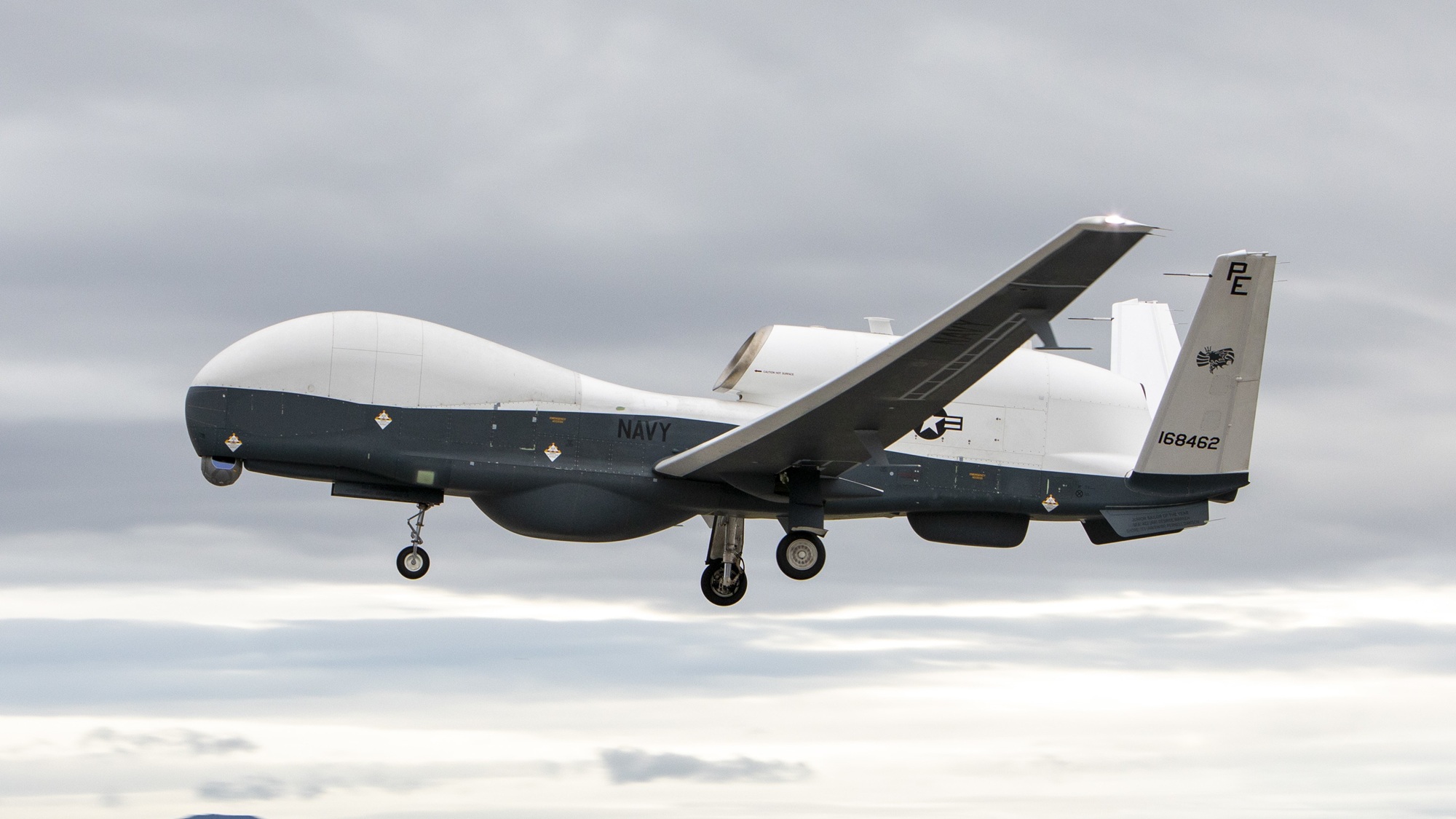
The US Navy acknowledged the loss of an MQ-4C Triton last week in a new Mishap Summaries report published by Naval Security Command.
As we reported last week, a US Navy MQ-4C Triton unmanned aerial system (UAS) disappeared from flight tracking websites over the Persian Gulf on April 9, 2026. The aircraft indicated an emergency via transponder and began a descent from its cruising altitude of 52,000 feet to 9,500 feet, where the signal was lost.
It was thus observed that the Triton could have crashed in the Persian Gulf, although this was not confirmed. We contacted the United States Central Command (CENTCOM), but they were unable to offer any comment at the time.
Now, on April 14, the US Navy confirmed for the first time that the MQ-4C had indeed been lost. In fact, as first reported The war zoneNaval Safety Command released a new Mishap Summaries report, listing the incident among Class A flight mishaps:
April 9, 2026 (Hidden Location – OPSEC) MQ-4C crashed, no injuries.
The causes of the accident are not yet known, but an investigation is probably already underway. Among the possibilities could be a probable equipment failure (the transponder signaled a loss of communication link before switching to general emergency) or a less likely external interference/interference.
Likewise, the location of the accident site is unknown, since the signal was lost when it passed at 9,500 feet in the middle of the Persian Gulf in the direction of Iran. Considering the rate of descent, it is unlikely that the Triton has reached Iranian territory, but we also cannot exclude the possibility that American fighters in the area will be sent to shoot it down after determining that control cannot be regained.
It is unclear whether the U.S. Navy plans to recover the wreck or has already begun. However, to begin recovery operations, the US Navy will likely have to conduct demining operations to create safe passage for the ships involved, after Iran said it had mined the Strait of Hormuz.
The incident
A US Navy MQ-4C Triton unmanned aerial system (UAS) disappeared from flight tracking websites over the Persian Gulf on April 9, 2026. Shortly before disappearing, the aircraft squawked 7400, the transponder code indicating a loss of communication link with the remote pilot.
#USNAVY United States Navy – 🚨 7700 General Emergency
Northrop Grumman MQ-4C Triton 1x#AE7815 169804 – C/S unknown
A US Navy MQ-4 drone operating over the Persian Gulf and Strait of Hormuz has declared an emergency on its way back to Naval Station Sigonella.
At 0956z he made a… pic.twitter.com/xbqvrOby2t
– Armchair Admiral 🇬🇧 (@ArmchairAdml) April 9, 2026
The Triton, returning to Naval Air Station Sigonella, Italy, began a descent from its cruising altitude of 52,000 feet to 9,500 feet, where the signal was lost. The descent lasted just under 15 minutes and began shortly before the coast of Saudi Arabia.
Before disappearing, the squawk supposedly changed to 7700, which is the general emergency code. In it last phase of descentThe drone also appeared to be heading toward Iran.
The Triton MQ-4C
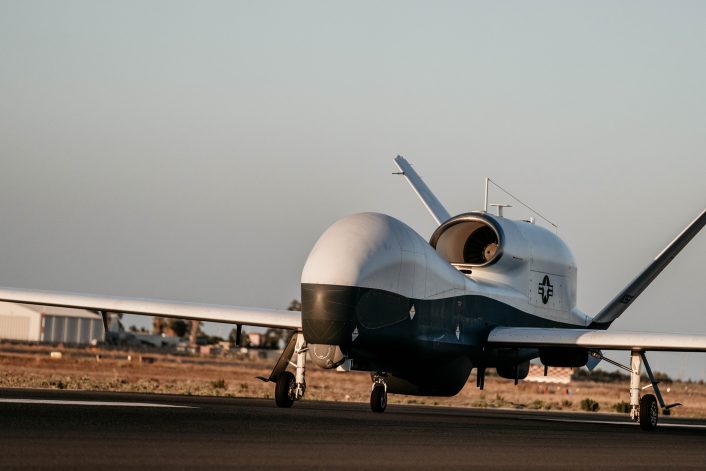
The MQ-4C Triton is the Navy’s newest intelligence, surveillance and reconnaissance maritime patrol asset and augments the capabilities of the P-8 Poseidon maritime patrol aircraft. The aircraft is based on the US Air Force’s RQ-4B Global Hawk, while its sensors are based on components (or complete systems) already included in the Department of Defense inventory, according to NAVAIR’s description.
Also known as Wide Area Maritime Surveillance (BAMS), the MQ-4C platform complements the P-8A Poseidon within the Navy’s family of Maritime Patrol and Force Reconnaissance systems. Aircrew collect and process surveillance information using data fusion tools that integrate sensor data from multiple aircraft into a comprehensive networked image to further help create an accurate representation of threats.
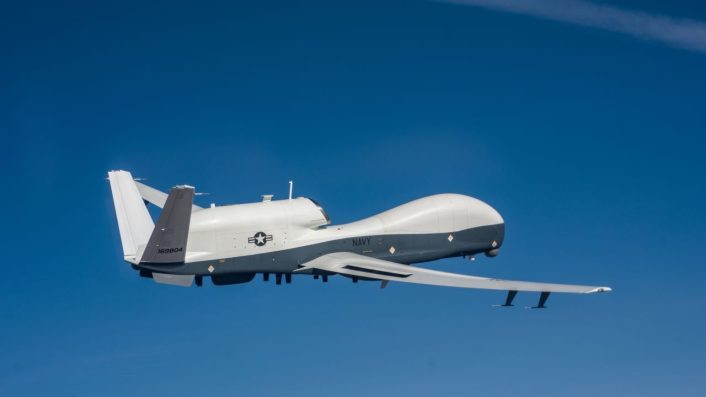
After gathering lessons learned from Triton’s initial deployment to Guam in 2020, the MQ-4C received significant upgrades, including an improved sensor suite. These upgrades increase Triton’s ability to provide a persistent maritime intelligence, surveillance, reconnaissance and targeting (MISR-T) capability.
The MQ-4C is believed to be some sort of Block 20 and Block 30 Global Hawk hybrid, carrying a Navy payload that includes an AN/ZPY-3 multi-function active sensor (MFAS) radar system. This gives Triton the ability to cover more than 2.7 million square miles in a single mission that can last up to 24 hours at a time, at altitudes above 50,000 feet, with an operational range of 8,200 nautical miles.
Initially, the Navy planned to acquire 68 aircraft and 2 prototypes. However, the Joint Requirements Oversight Council (JROC) later MQ-4C Triton inventory requirement re-evaluated. and reduced it to 27 fuselages.
VUP-19 achieved initial operational capability in September 2023 (two years later than initially planned) during its redeployment to Andersen Air Force Base. As the Navy’s first unmanned patrol squadron, the unit established a foundation to train sailors and officers in MQ-4C Triton tactics, techniques and operating procedures for future combat.