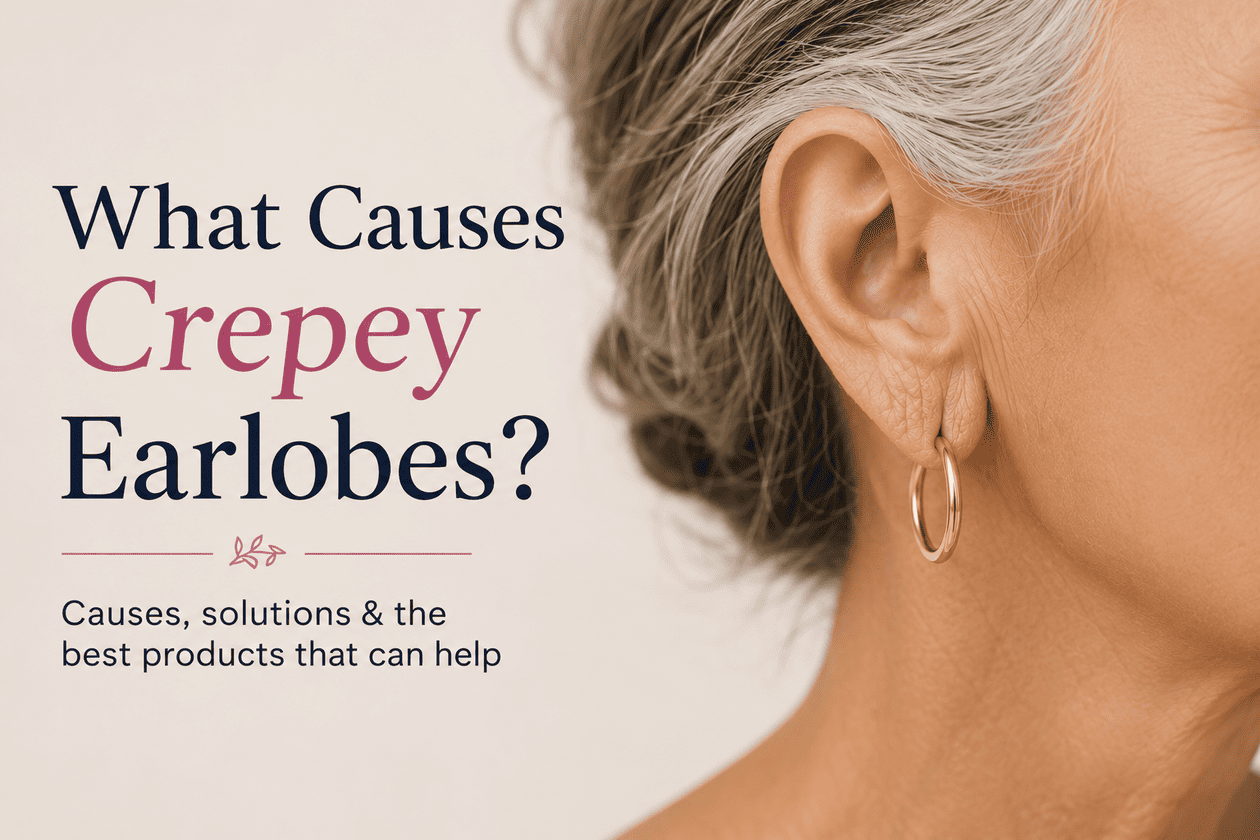
One day you are putting on your favorite pair of earrings and catch a glimpse of your earlobes in the mirror. Instead of looking smooth and plump, they suddenly appear thinner, wrinklier, and… well… a little wrinkly.
That’s right, our earlobes age too. In fact, I have lived in fear of this my entire life because my great aunt Katie’s earlobes were very long and crunchy from wearing heavy Native American jewelry her entire life.
If you’ve noticed that your earlobes look wrinkled, you’re not alone. It’s one of those small changes that no one warns you about, but once you see it, you can’t unsee it. The good news is that wrinkled earlobes are completely normal, and in fact, there are quite a few things you can do to improve their appearance.
Let’s talk about why it happens and, more importantly, how to keep your favorite statement earrings looking fabulous for years to come.
Why do earlobes become crepey?
Like the skin on your face, neck, and hands, your earlobes change as you age. Over time, the body naturally produces less collagen and elastin, the proteins responsible for keeping skin firm, smooth and resilient. Starting at 40 and accelerating after menopause, Collagen production decreases significantly.. Without that support framework, the skin becomes thinner and more fragile.
Unlike many other parts of the body, earlobes do not contain cartilage. They are made up primarily of skin and fatty tissue, which means they are especially vulnerable to losing volume.
As that volume disappears, the skin can begin to wrinkle and take on the thin, wrinkled appearance that many women notice after age 50.
Sun Damage Plays a Bigger Role Than You Think
Most of us are diligent about applying sunscreen to our faces. Our ears? Not so much. Unfortunately, your ears receive a lot of sun exposure throughout your life, especially if you wear your hair short or tie it back frequently.
Years of exposure to UV rays gradually break down collagen and elastin, accelerating the aging process. This damage doesn’t always become evident until later in life, when natural collagen loss begins to take its toll.
If you’re investing in great skin care, don’t limit yourself to your jawline. Spread your sunscreen all the way to your ears every day.
Heavy earrings can stretch the skin
If you’ve been wearing oversized hoops or chunky statement earrings since the ’80s, your earlobes have been doing some heavy lifting.
Over time, heavy earrings can stretch the piercing hole and gradually thin the surrounding tissue. As the skin loses elasticity with age, it is less able to recover, leaving the earlobe looking longer, thinner and more wrinkled.
This doesn’t mean you have to give up fun earrings forever. It simply means that it’s smart to save heavier pairs for special occasions rather than wearing them every day.
If you love statement earrings, consider wearing earring support patches as Wonder of the lobe either BlingGuard Ear Lifts. They stick behind the earlobe and help distribute weight more evenly, reducing stress on the piercing.
Menopause has something to do with it
If you feel like everything changed after menopause, you’re not imagining it. The drop in estrogen affects your skin from head to toe. Estrogen helps maintain collagen, hydration, and skin thickness. As levels decrease, the skin becomes drier, thinner and less elastic.
That includes your earlobes. It’s one more reason why post-menopausal skin care often requires richer moisturizers and ingredients specifically designed to strengthen the skin barrier.
Your genetics matter too
Some women develop wrinkled earlobes much earlier than others. Genetics influence everything from skin thickness to collagen production and even how the body distributes fat as it ages. If your mother or grandmother had thinner earlobes later in life, chances are you’ll notice similar changes.
The good news is that genetics are not everything. Daily skin care and sun protection continue to make a significant difference.
Can skin care really help?
To some extent, yes. No cream can magically restore decades of lost collagen, but a consistent skin care routine can improve hydration, smooth the skin’s surface, and promote healthier-looking skin over time.
When applying facial skin care, don’t limit yourself to the neck. Your ears deserve some attention too.
Look for products that contain ingredients such as:
- Retinol or retinal to stimulate collagen production.
- Peptides to promote firmer-looking skin
- Hyaluronic acid to attract moisture.
- Ceramides to strengthen the skin barrier.
- Vitamin C to help protect collagen from environmental damage
Products worth trying
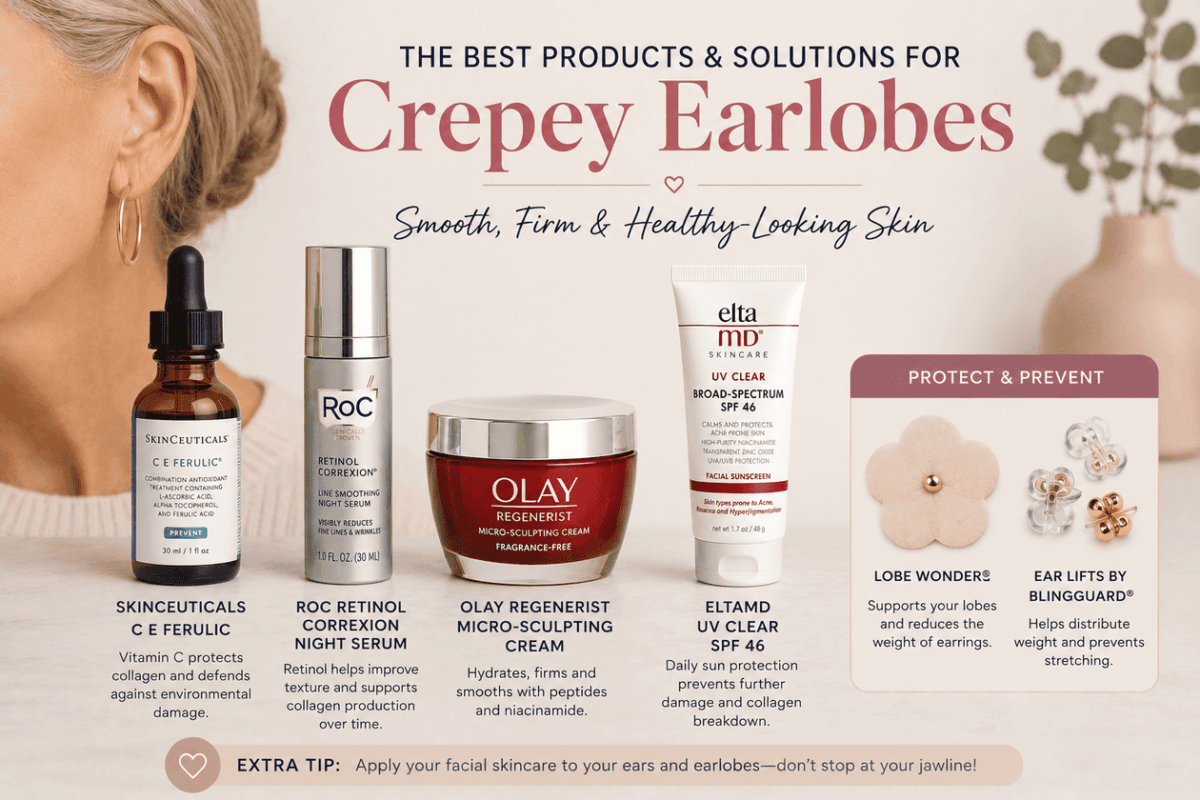
You don’t need a separate “ear lobe cream.” Products that work well on your face will work well on your ears. Here are some great options:
RoC Retinol Correxion Line Smoothing Night Serum
This affordable retinol serum helps improve skin texture and promotes collagen production over time. Simply apply a small amount to your earlobes a few nights a week and gradually increase use as your skin tolerates it.
Olay Regenerist Micro-Sculpting Cream
One of my favorite drugstore moisturizers, this cream contains niacinamide, peptides, and hydrating ingredients that help mature skin look plumper and softer.
SkinCeuticals CE Ferulic
If you already splurge on a vitamin C serum, remember to spread it into your ears every morning. Vitamin C helps defend against free radical damage while supporting healthy collagen production.
EltaMD UV Clear SPF 46
This lightweight sunscreen is a dermatologist favorite because it disappears into the skin without feeling greasy. Don’t forget to cover your ears every morning.
What about cosmetic treatments?
If wrinkled earlobes really bother you, dermatologists and plastic surgeons have several options.
Hyaluronic acid fillers
Small amounts of filler can restore lost volume to thinned earlobes, making them appear fuller and providing better support for the earrings.
The procedure is quick, relatively comfortable, and the results usually last six to twelve months.
microneedling
Microneedling creates controlled micro-injuries that stimulate collagen production. While it won’t drastically change your earlobes overnight, multiple treatments can improve skin texture over time.
Radiofrequency microneedling
This combines traditional microneedling with thermal energy to encourage even greater collagen remodeling. It is becoming increasingly popular to treat wrinkled skin in various areas of the body, including delicate areas such as the earlobes.
Laser rejuvenation
Fractional laser treatments can improve skin texture and stimulate collagen production. Recovery varies depending on the type of laser used, but results can last longer than many topical treatments.
Don’t forget your jewelry habits
Sometimes the simplest changes make the biggest difference.
Incorporate lighter earrings into your everyday wardrobe. Save the statement pieces for nights out and consider removing your earrings when relaxing at home. If your piercing holes have stretched significantly, an earlobe repair procedure performed by a plastic surgeon can often restore a more youthful appearance.
The conclusion
Crepey earlobes may not have been on your aging bingo card, but they are incredibly common. Like so many other changes that occur after 50, they are largely the result of collagen loss, sun exposure, hormonal changes, and just living life.
The good news is that you don’t need a drawer full of expensive products to care for them. Consistently applying facial skin care to your ears, using sunscreen every day, choosing lighter earrings when possible, and wearing supportive accessories can go a long way toward keeping your earlobes looking healthier.
After all, you have invested in a beautiful jewelry collection over the years. Your earlobes deserve some love too.