Boeing confirmed that the MQ-28 Ghost Bat has completed three flights in the Point Mugu Sea Range after initially flying only in Australia.
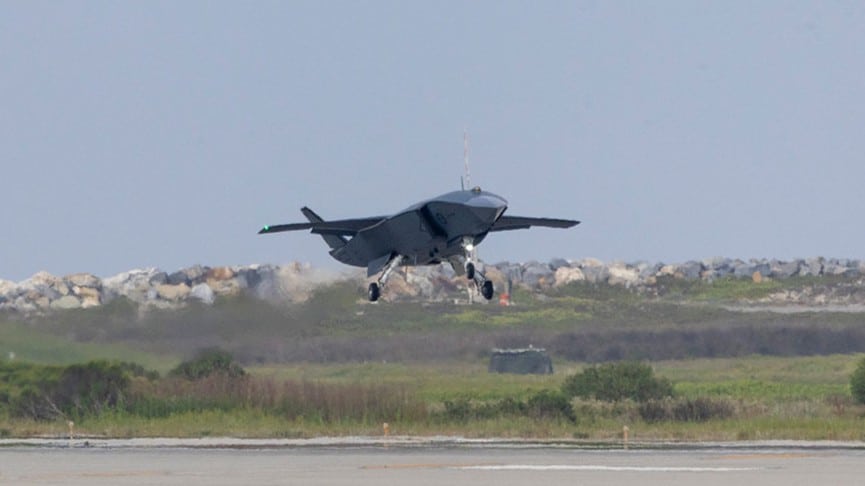
Boeing announced on May 27, 2026 that the MQ-28 Ghost Bat is now flying in the US, in what has been defined as the first overseas flights after previously flying only in Australia, where the MQ-28 was developed and built by Boeing Australia. So far, the drone has completed three operational flight tests in the Point Mugu Sea Range at the United States Naval Base in Ventura County, Point Mugu, California.
The objective of the test flights was to validate autonomous operations and demonstrate rapid deployment and sustained operations from an allied location. The company also said that these first operations out of Australia indicate “growing global interest in autonomous unmanned combat capability” as well as “demonstrate the maturity of the aircraft and potential export opportunities.”
MQ-28 just went international! 🌏✈️
Three flights from Point Mugu demonstrated rapid allied deployment, autonomous operations and payload integration, paving the way toward an exportable unmanned capability. pic.twitter.com/TpvvLtfnZ0
– Boeing Defense (@BoeingDefense) May 27, 2026
“The activity at Point Mugu is part of Boeing’s ongoing flight test program to mature the MQ-28 and demonstrate operations from allied locations,” said Glen Ferguson, MQ-28 global program manager. “MQ-28 is using this location to further demonstrate the maturity of the program and inform future exportability.”
The company did not reveal when these flights took place. However, at least one MQ-28 was already known to be at the Ventura County NAS, as the aircraft was clearly visible in a video released after US Secretary of War Pete Hegseth visited the facility in December 2025.
.@SECWAR spoke to our warriors at Point Magu Naval Air Station:
He reminded them that WE BACK THEM! pic.twitter.com/SzlklDHbfX
— DOW Quick Response (@DOWResponse) December 6, 2025
However, there may currently be two planes there. In fact, the December video showed one of the initial MQ-28 fuselages, as indicated by the livery with the high-visibility orange stipes.
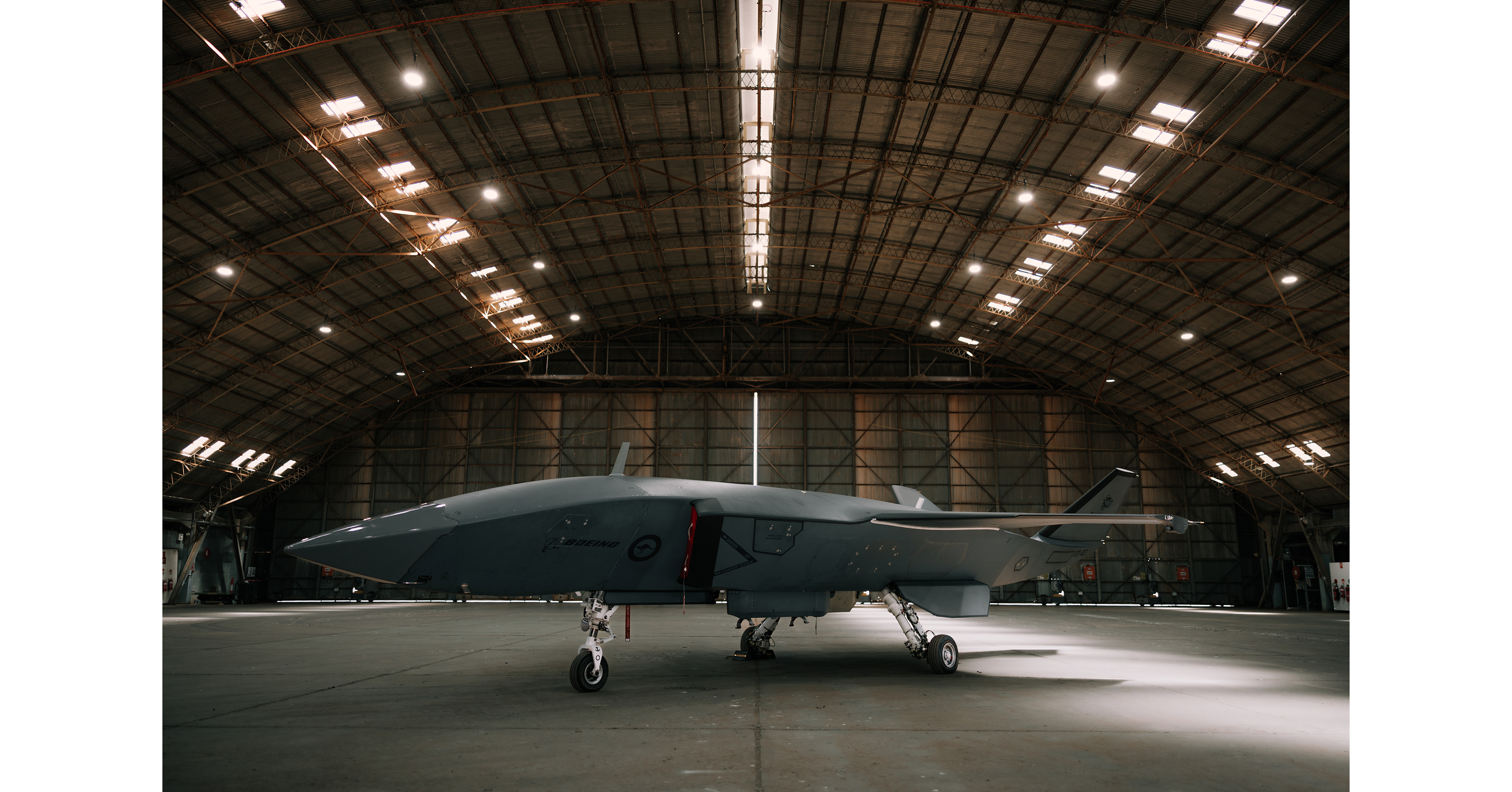
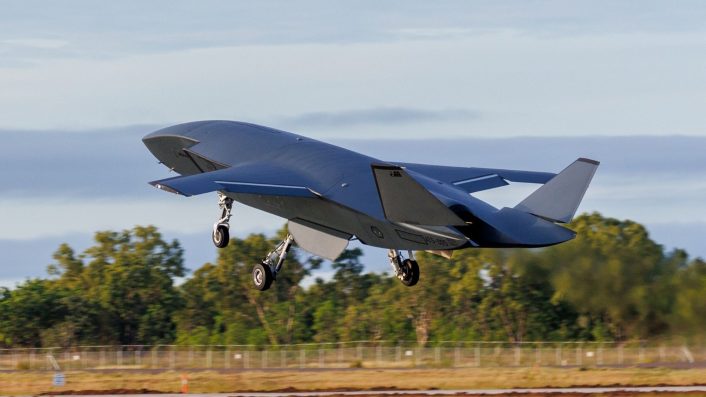
On the other hand, the aircraft shown in the video of flight operations from NAS Ventura County looks like one of the newer MQ-28s in all-gray livery. The aircraft, ATS-008, also features an infrared search and track (IRST) sensor on the nose and Boeing’s Phantom Works logo on the tail.
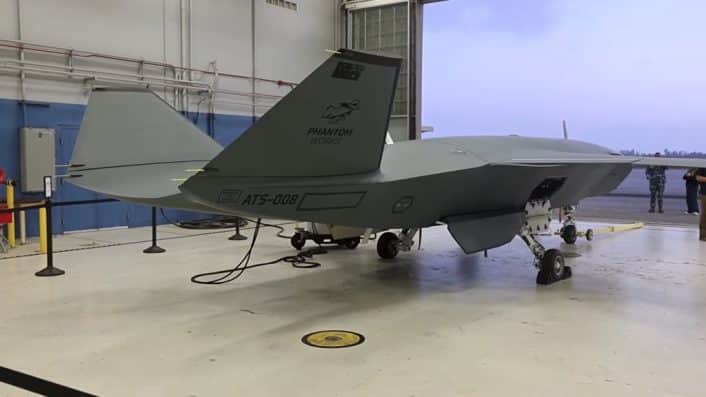
Prior to test flights in the US, US Navy test pilots were sent to Australia to work on the aircraft as part of an agreement with Australia. It is unclear whether US Navy pilots also participated in the flights over the Point Mugu Sea Range.
The MQ-28 Ghost Bat: Boeing Airpower Teaming System
Designed by Boeing Defense Australia for the RAAF as a multi-role system capable of operating alongside manned aircraft, the Ghost Bat was initially known as the Boeing Airpower Teaming System (ATS). Development began in 2013, with the prototype first unveiled during the 2019 edition of the Australian Airshow and maiden flight on February 27, 2021 at the Woomera Range Complex in South Australia.
The multi-purpose unmanned platform has a 1.5 cubic meter nose that can contain interchangeable payloads for ISR (Intelligence, Surveillance and Reconnaissance), aerial radar surveillance, EW/ELINT sensors and other attack munitions. The aircraft has been described as a next-generation Loyal Wingman, which 55 Australian companies were involved in developing and, as of February 2024, had received $600 million in funding.
According to Boeing, the Ghost Bat employs “AI (Artificial Intelligence) to work as an intelligent team with existing military aircraft to complement and expand aerial missions.” The size of a small, light fighter, with side air intakes, canted kite-shaped wings and sloping V-tails, the MQ-28 can fly almost 3,200 km and “fly independently” with its AI.
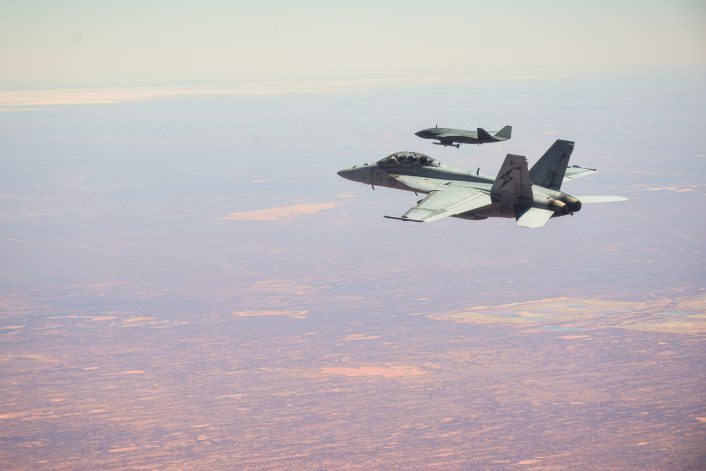
Boeing renders have shown the Ghost Bat flying with support and special mission aircraft such as the E-7A Wedgetail AEW&C aircraft and the F-15EX. According to Ferguson, “during a typical mission, a launch and recovery operator […] I would supervise the plane while it takes off.”
“It would then be handed over to a manned aircraft, such as an E-7A, F-35A or F/A-18F, whose crew would task it to perform, for example, an intelligence, surveillance and reconnaissance mission,” Ferguson added while explaining the concept of operations. MUM-T (Manned Unmanned Teaming) may not necessarily be performed in close formation, but could work even with aircraft far apart over tens of kilometers, depending on mission requirements.
The strongly stealth-oriented design has also been shown in renderings with three different nose sections, one of which integrates an IRST (infrared search and track) sensor. Based on their appearance, the other two could possibly be intended for ISR and EW/ELINT roles, the latter involving locating, jamming or overwhelming adversary ground radars.
The MQ-28 could also perform an escort role for high-value support assets such as the E-7A AEW&C aircraft or KC-30 refueling aircraft. However, it is not known whether the drone is considered a suitable system to improve the survivability of manned platforms. Once the mission was completed, “the aircraft would be returned to the launch and recovery operator to supervise the landing, deceleration and complete stop of the vehicle,” Ferguson said.
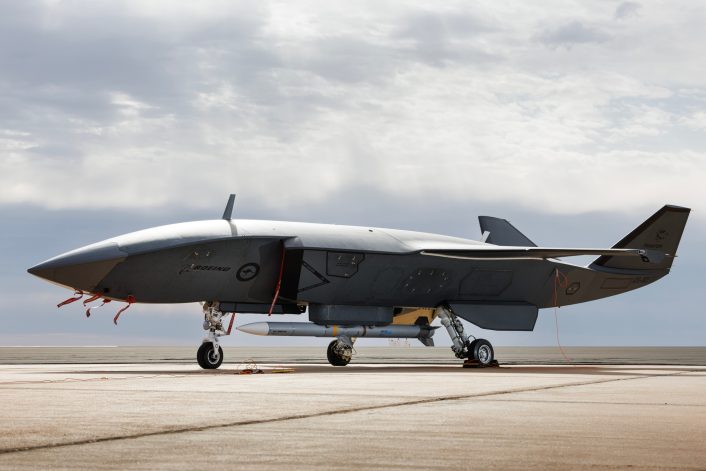
The drone reached some major milestones over the past year. Among them was the June 2025 test in which an E-7 Wedgetail controlled two MQ-28s on a mission against a simulated aerial target.
In December 2025, Boeing revealed the first live-fire test of the MQ-28 with an AIM-120 advanced medium-range air-to-air missile (AMRAAM). On that occasion, the aircraft was teamed with an E-7 Wedgetail and an F/A-18F Super Hornet of the Royal Australian Air Force (RAAF).
The RAAF described it as “a demonstration of a collaborative combat aircraft (CCA) employing an air-to-air weapon against an aerial target in an operationally relevant scenario.” The Ghost Bat likely acted as an external weapons launch platform, leveraging sensor, detection, control and guidance data from manned platforms.
Future developments
In February 2024, the Australian government announced $259.5 million in funding to further develop key systems for the Boeing MQ-28A and build three new aircraft in the Block 2 Configuration. Block 2 will have an improved design and enhanced capabilities, and the funding will also support additional critical sensors and mission payloads.
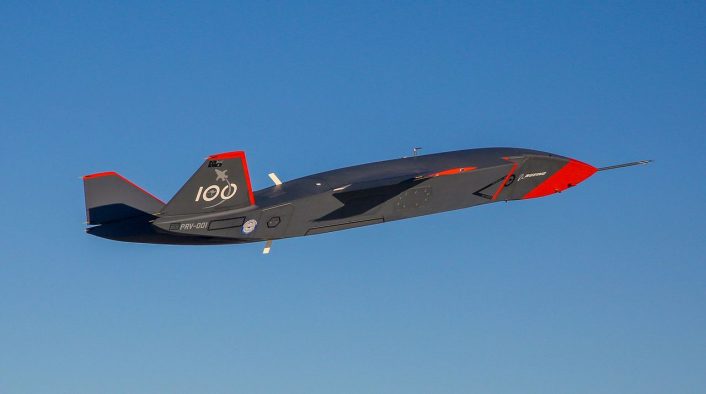
Boeing is currently producing the Block 2 variant at its Melbourne facility, which was initially expected to fly in late 2025. The Block 2 will have no significant changes to the airframe and, in fact, has been described as an operational variant of the Block 1.
Block 2 will have no major changes to the Block 1 fuselage, with the main external change being the removal of the Block 1 dogtooth wing, while internally the aircraft will receive changes that will improve maintainability. Block 2 will also receive a new Global Positioning System (GPS)/Inertial Navigation System (INS).
The Block 1 planes, eight in total, will be retired once those in Block 2 are ready. The Australian Minister of Defense Industry, Pat Conroy, stated that one of the objectives of the program, after the demonstration phase in 2025, will be the ability to produce MQ-28A at 10% of the cost of an aircraft like the F-35A.
At the same time, Boeing is already working on Block 3, which will be the variant committed to the international market and will be produced starting in 2028. The company plans to put Block 2 into operation the same year.
According aviation weekBlock 3 will see the wings extended 3 m each side. This will allow a 30% increase in fuel and, therefore, a “quite significant increase in autonomy.”
Block 3 will also include the internal weapons bay, sized for AIM-120 AMRAAM or GBU-39 and GBU-53 small diameter bombs. The weapons bay could also be adapted to Block 2, should the RAAF require it.
Similar to the Block 1 and 2 airframes, Block 3 will be powered by a Williams International FJ44-A engine, according to aviation week. It should be noted that the FJ44 is also used by another CCA, the Anduril YFQ-44.