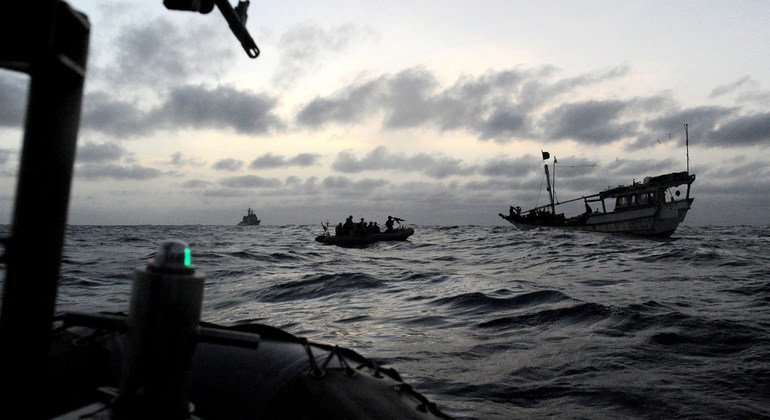
The United States on Tuesday revoked a general license authorizing the sale of Iranian oil, as a US official warned that Iran’s actions in the Strait of Hormuz were “totally unacceptable” and would have consequences following attacks on oil tankers in the strategic waterway.
Oil prices rose more than five percent following the announcement. The US Treasury said it would allow a liquidation period until July 17 for Iranian oil transactions that had been permitted under the now-revoked license.
The U.S. official said negotiators continued to work in good faith toward a final deal with Iran despite the latest escalation.
The US move came after three oil tankers reported being hit by unknown projectiles in and near the Strait of Hormuz in recent days, the British navy-affiliated UKMTO agency said in a report. There was no immediate comment from Tehran or any claim of responsibility.
The attacks and the US response threaten to put the fragile diplomatic understanding between Washington and Tehran on shaky ground, raising the risk that further retaliation could derail negotiations on a broader deal.
Related videos

Another U.S. official, speaking on condition of anonymity, said initial indications were that Iran had fired on three commercial vessels.

Receive the latest national news
Get the latest Canadian news delivered to your inbox as it happens so you don’t miss any breaking news.
The potential escalation comes as both sides had been working to reach a deal that included limits on Iran’s nuclear program and relief from some sanctions, including restrictions on oil exports.
The Strait of Hormuz, a narrow waterway between Iran and Oman, is one of the world’s most important energy hotspots, passing through about a fifth of global oil consumption and large volumes of liquefied natural gas shipments each day.
Any prolonged disruption could drive up energy prices and increase pressure on consumers and governments already facing higher fuel costs.
Oil exports remain a key source of revenue for Iran, providing billions of dollars in hard currency that help finance government spending and support an economy weakened by years of U.S. sanctions.
Despite the restrictions, Tehran has managed to expand shipments in recent years, largely to China, making oil sales one of the country’s most important economic lifelines.
Any renewed efforts to curb those exports could put additional pressure on Iran’s finances and its ability to sustain domestic programs and regional activities.