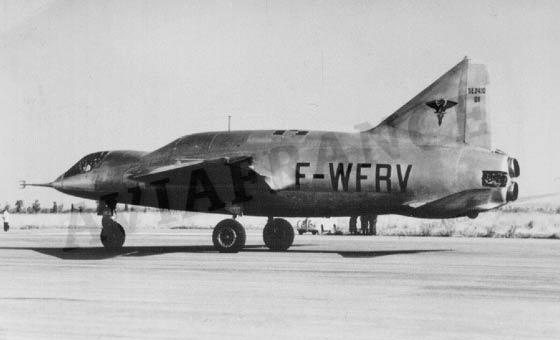
There are strange planes and then there is the Sud-Est Grognard.
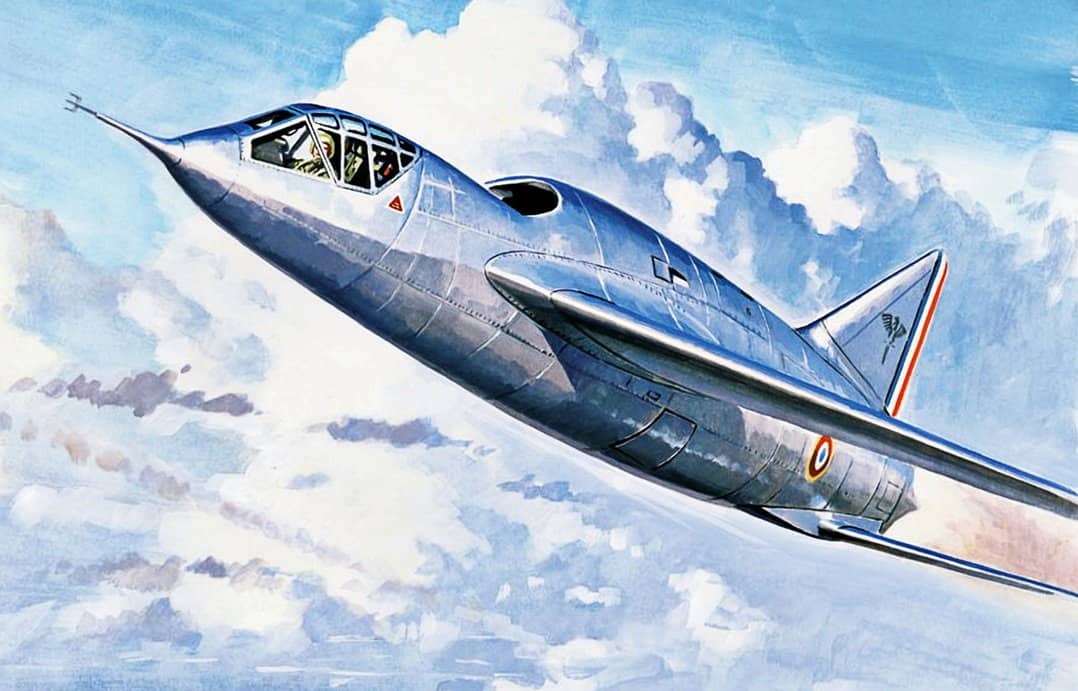
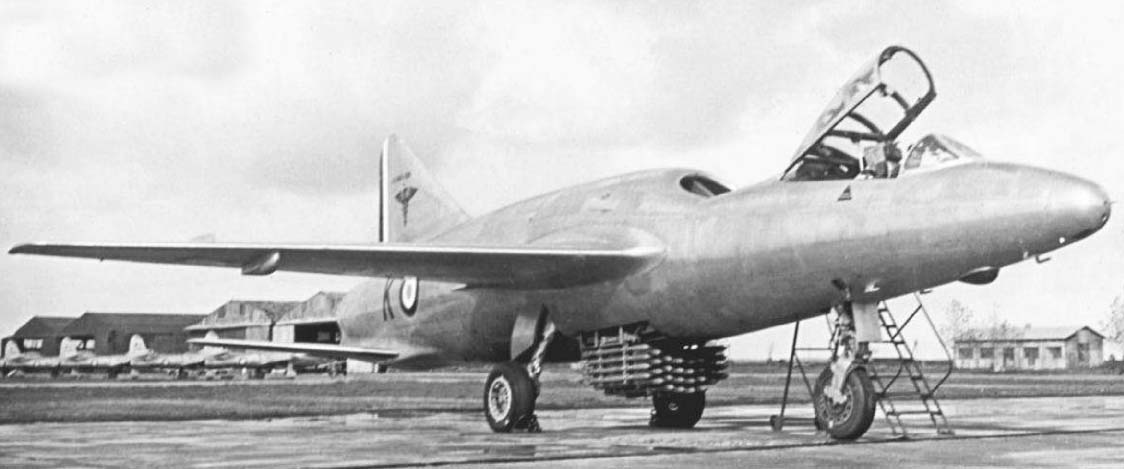
At first, the French prototype did not look like a sleek jet-age attack aircraft. Rather, it seemed the result of a clash between streamlined ideas and practical needs. The cockpit was very forward in the nose and the fuselage rose to form a visible hump behind the pilot. A single inlet at the top fed two turbojets stacked on top of each other inside the body. The plane looked strange, almost cartoonish, but it had a clear purpose: to give postwar France a fast, jet-powered aircraft for low-altitude attacks.
The name Grognard fit the plane perfectly. “Grognard” means “grumpy” and was used for soldiers of Napoleon’s Old Guard. It was an appropriate name for such an unusual aircraft. Officially it was called Sud-Est SE.2410 Grognard, developed by the French company Sud-Est/SNCASE after World War II. The first prototype, the F-ZWRJ, first flew on April 30, 1950. Only two prototypes were built.
France was rebuilding more than an airplane
The Grognard emerged from a very specific moment in the history of French aviation. After World War II, France was trying to rebuild an aviation industry that had been severely disrupted by occupation, destroyed factories, and dispersed design teams. In jet propulsion, France also lagged behind countries such as the United States and the United Kingdom, which had rapidly entered the jet age during and immediately after the war.
This background is important because the Grognard was not unusual for its own sake. It was part of France’s push to rebuild its aerospace industry and create its own jet-powered military aircraft. The Rolls-Royce Nene turbojet played an important role in this effort. Hispano-Suiza manufactured the Nene in France under license, and many early French aircraft used it as the country developed its own engines.
In 1946, the French Air Force requested a new ground attack aircraft. Southeast answered the call with the SE.2410, a small, rounded, single-seat aircraft powered by two Nene turbojets. Obviously the French didn’t care about its appearance, but in terms of speed, firepower, and ability to attack at low altitude, it was actually quite a futuristic machine at a time when jet fighters were still a new idea.
The hunchback had a purpose
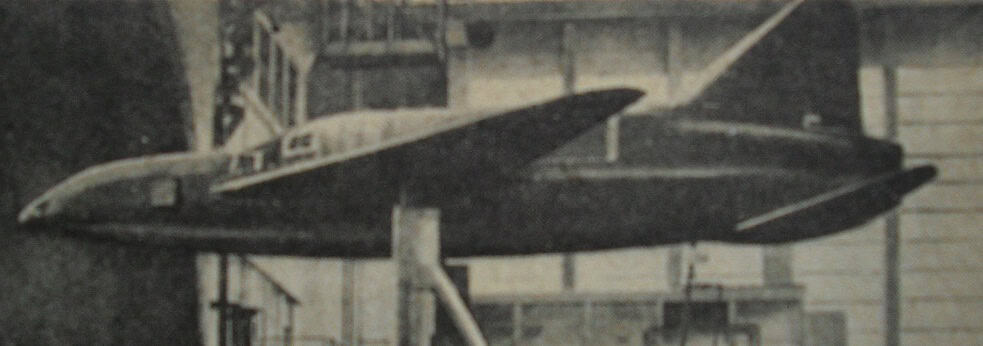
The Grognard looked like that for a reason. The first designs were formed through wind tunnel testing with scale models at the ONERA facility in Chalais-Meudon. The end result was a compact fuselage, highly curved wings and the distinctive upper intake that fed two engines stacked inside.
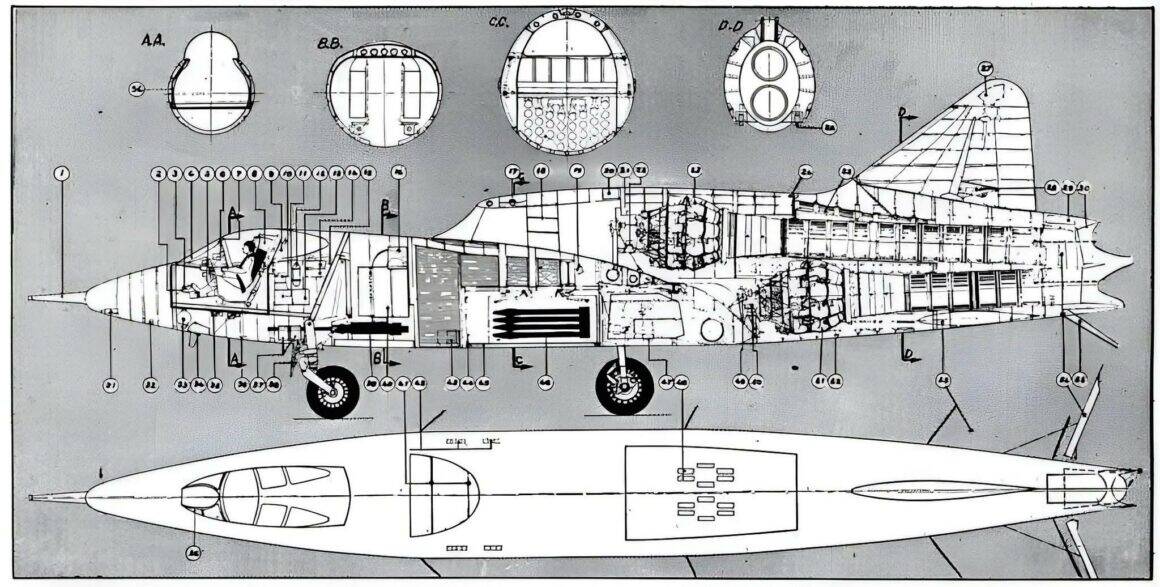
The air intake at the top was what made the plane look so unusual. Air entered the fuselage from the top, just behind the cockpit, and fed the two engines, stacked on top of each other. This gave the Grognard its “hunchback” appearance and its memorable nickname.
The cockpit was also located very forward in the nose, which made sense for a low-flying attack aircraft. Pilots need good visibility when flying low and aiming at targets. The planned weapons were consistent with this mission: the Grognard was supposed to carry two 30mm DEFA cannons, bombs and rockets, with some rocket ideas stored in a retractable bay under the fuselage.
Other than that, Grognard had a legitimate performance to back it up. The SE.2410 reportedly reached about 645 mph, climbed to approximately 38,000 feet, and had a range of about 530 miles. It was certainly unconventional, but it was not lacking in power.
The Grognard II tried to civilize the beast
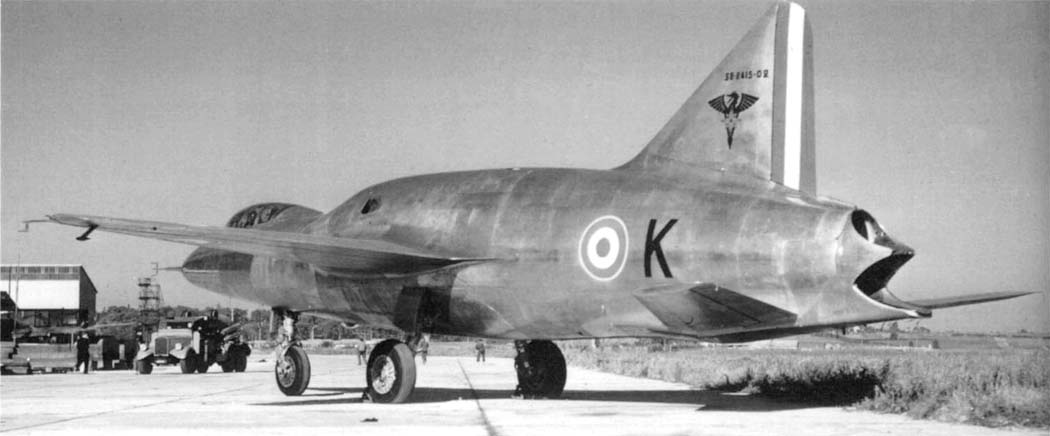
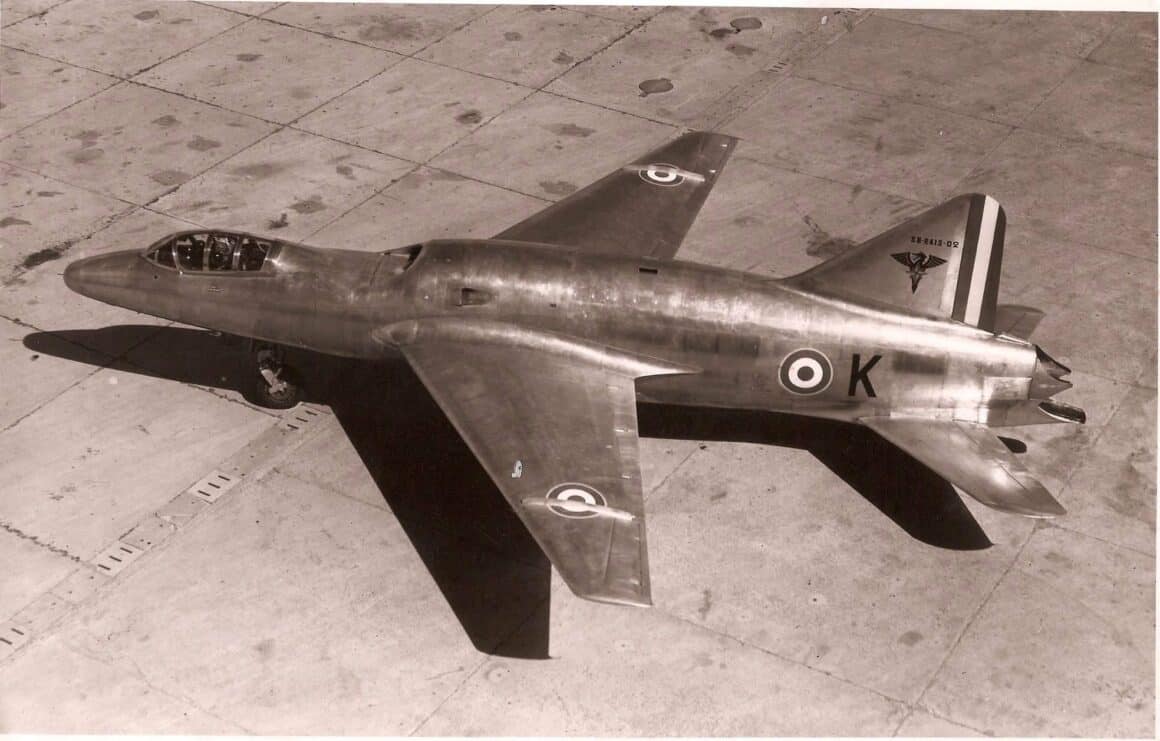
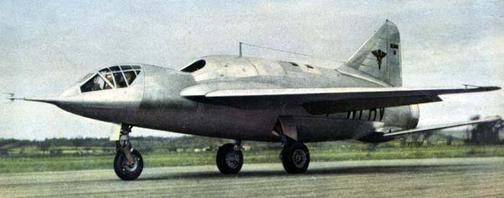
Sud-Est continued after the first prototype. In 1951, they built a second version called SE.2415 Grognard II. This was longer, had two seats, a raised cockpit with a bubble canopy, and wings tilted back at 32 degrees instead of the original 47. The second prototype, F-ZWRK, flew for the first time on February 14, 1951.
The Grognard II seemed a little more polished, but still had the same familiar features. It was still hunchbacked, compact and unconventional… a clear example of early jet age experimentation.
The program also reached an important milestone. During weapons tests, the Grognard reportedly became the first French aircraft to fire an air-to-air missile, the Matra T-10. This gives it a special place in the history of French aviation. Although primarily remembered for its strange appearance, the Grognard helped pave the way for missile-armed aircraft that would come later.
The problem wasn’t just the plane.
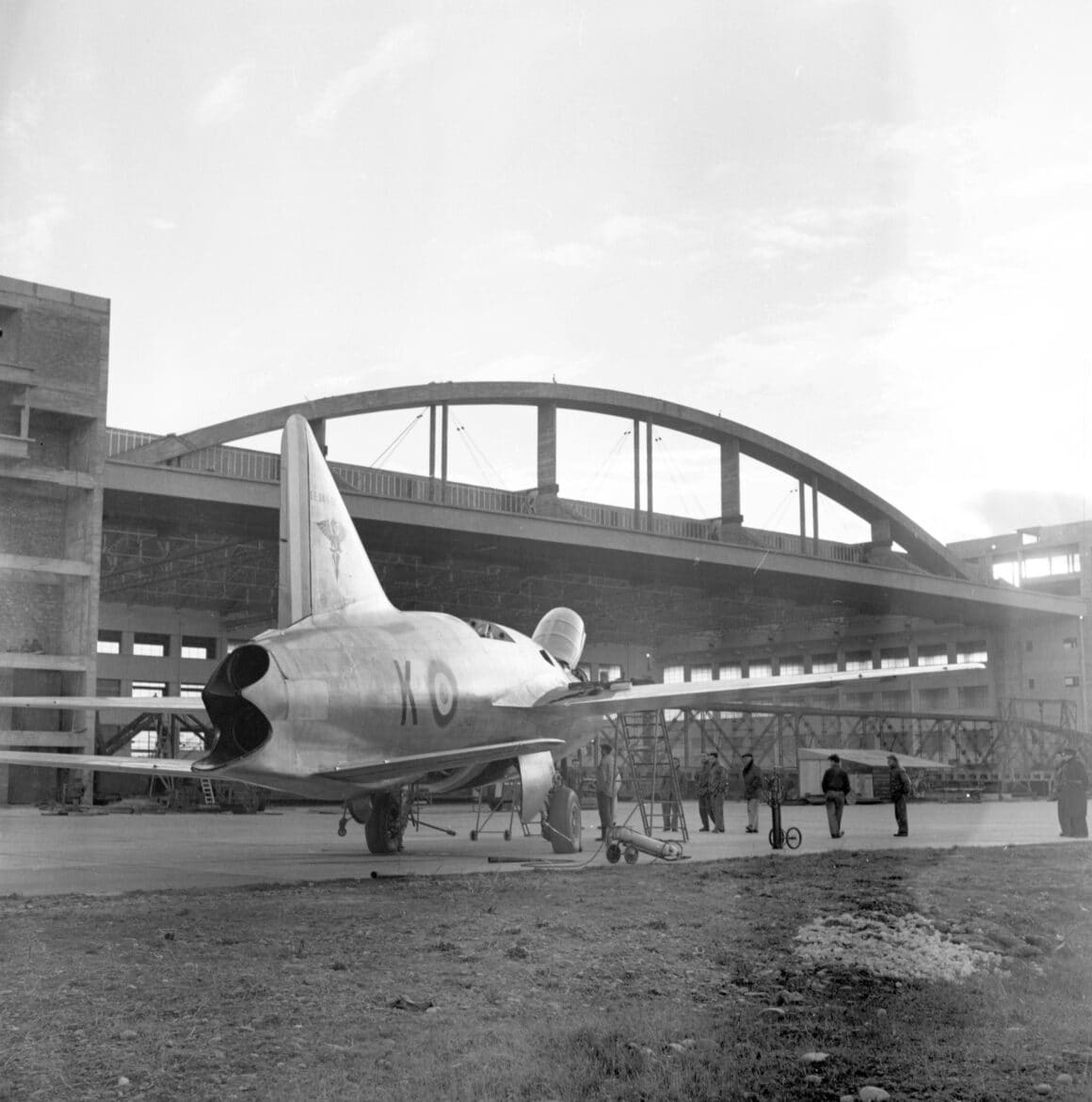
Like many prototypes of that era, the Grognard had its technical problems. Test flights caused changes to the tail and ailerons, and the SE.2415 experienced tailplane flutter. The second prototype was severely damaged in a belly landing after a false fire warning, but the fuselage was saved and later used as a target for firing tests.
But the biggest problem for Grognard was that things changed too quickly around him.
While the Grognard was being tested, the French Air Force revised its requirements for fighters and bombers so much that the attack aircraft category was almost abandoned. This left Grognard in a difficult situation. It was built for low-level attacks and its pressureless body made it difficult to use for other functions.
Sud-Est considered future versions. The SE.2418 was planned as a production attack model with Rolls-Royce Tay engines, and the SE.2421 was studied as a two-seat all-weather fighter with radar. The SE.2418 would have used the original wing of the Grognard I with the longer body and improvements of the Grognard II. At one point, Sud-Est was even preparing to produce the SE.2418 in larger quantities.
So Grognard’s story feels less like a dead end and more like a prototype overtaken by new ideas, competition, and changing times.
Defeated by a better future
The Grognard program ended in 1952. In the end, French officials chose the Sud-Ouest Vautour II. The Vautour was larger, more versatile and could be used as a fighter-bomber, interceptor or attack aircraft. Compared to the specialized and unusual Grognard, the Vautour was a more obvious choice for the future.
The original SE.2410 was withdrawn from service and supposedly scrapped in 1954. The Grognard II, which was damaged and reused, did not perform much better. No production models were built, no squadron flew it in regular service, and it never had a chance to become well known.
Still, the Grognard is hard to forget.
Strange, ambitious and very typical of its time
It’s easy to make fun of the Sud-Est Grognard. The nickname “Hunchback” almost encourages him. But this plane deserves more than just a quick glance or a joke about its appearance.
The Grognard showed France’s effort to catch up in the jet age. He tried swept wings, compact twin engines, heavy weapons, missile tests, and low-altitude jet flight when all of these ideas were still new and untested. The plane may have looked uncomfortable, but the ideas behind it were ambitious.
Some airplanes become famous because they set the direction of the future. Others are important because they show the experiments that engineers tried before the future was clear. The Grognard is definitely in that second group.
It was a hunched, grumpy French plane made for a mission that disappeared almost as soon as it appeared. It never entered production, never entered service and never became the attack aircraft France hoped for.
But at least it’s fun to watch.