New non-invasive anemia screening method uses nail images and smartphone apps
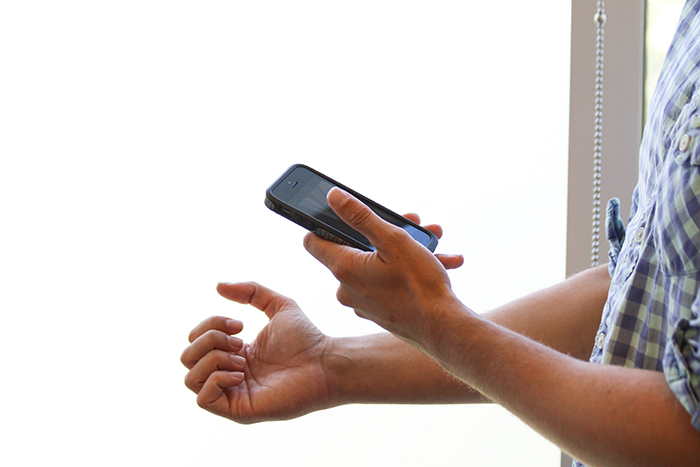
Biomedical engineers have developed a smartphone app for anemia detection that can assess blood hemoglobin levels through the window of the user’s fingernail. Medical results are based on the color of the nail bed; Rapid and painless detection could benefit a large number of people affected by anemia around the world. The team is led by researchers from the Wallace H. Coulter Department of Biomedical Engineering at the Georgia Institute of Technology and Emory University and the Aflac Cancer and Blood Disorders Center at Children’s Healthcare of Atlanta and the Department of Pediatrics at Emory University, in Atlanta, Georgia, and was funded by the National Institute of Biomedical Imaging and Bioengineering (NIBIB).
“Smartphones are part of the communications infrastructure everywhere, even in low-resource settings around the world,” said Tiffani Lash, Ph.D., director of the NIBIB programs in Point-of-Care Technologies and Connected Health (mHealth and Telehealth). “A self-monitoring approach to accurately assess anemia, a medical condition that affects so many people, will have a far-reaching positive impact.”
Anemia is a condition caused by a low red blood cell count or a low level of the protein hemoglobin in red blood cells. The iron in hemoglobin carries oxygen to fuel the numerous metabolic processes that occur throughout our body. Anemia takes many forms, from a mild condition that can be improved by changes in diet, to chronic anemia, which requires close monitoring and possibly blood transfusions throughout life. In total, anemia affects a quarter of the world’s population and causes symptoms ranging from paleness, fatigue and apathy to more serious outcomes, including life-threatening heart failure.
People with chronic anemia require frequent hemoglobin level testing to monitor their disease and guide their clinical treatment. The standard test for measuring hemoglobin is a complete blood count, based on a blood draw performed by trained technicians and processed in a laboratory using expensive equipment and reagents. Despite the high prevalence of anemia, there is no non-invasive, economical and accurate hemoglobin assessment technology that allows patients with chronic anemia to better self-manage their disease.
In his laboratory at Georgia Tech and Emory University, Wilbur Lam, M.D., Ph.D., combines his experience as a pediatric hematologist-oncologist and as a bioengineer. Its team is dedicated to developing technologies to study, diagnose and treat blood disorders. The team includes Robert Mannino, Ph.D., who has struggled his entire life with an inherited form of chronic anemia, called beta thalassemia major, also known as Cooley anemia. He joined the lab while still an undergraduate, and the smartphone app for anemia detection became his Ph.D. research project a few years later, which culminated in an article published on December 4, 2018 in Nature Communications.
“When it came time to choose his thesis project, Rob came to me and told me he wanted to work on something related to his own illness,” Lam said. Lam acknowledged that Mannino would be the best person to test a pilot experiment based on smartphone imaging data over several transfusion cycles.
In medical school, doctors are taught that anemia can cause certain parts of the body to be paler than others, such as the lips, just below the whites of the eyes, the folds of the palms of the hands, and the fingernails. Nail beds contain minimal amounts of melanin compared to other parts of the skin, allowing people with any skin tone to adopt the method. Mannino took samples of his own skin during the transfusion cycles, while he was anemic and nonanemic, and compared the images to correlate with his blood draws.
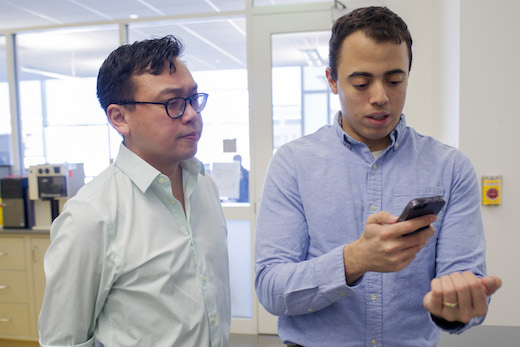
“Sure enough, after a few cycles, Rob showed me the data and there was a perfect match between aspects of the metadata obtained on the phone and the actual hemoglobin values. [from blood testing]” Lam said. “I remember saying, ‘Okay, I think you have your PhD project there.’
For the study published last December, the team went beyond Mannino’s one-person pilot data to gather data from 337 children and adults, men and women, a mix of 72 healthy individuals and 265 people with anemia from various causes, including sickle cell anemia, beta thalassemia, hemophilia and a variety of cancers. The researchers used a mathematical algorithm to calibrate data from 237 of the participants who determined a hemoglobin level value based on nail bed coloration, calibrated to their levels from a complete blood count test obtained during the same visit.
They used data from the remaining 100 participants to test the algorithm, which the researchers incorporated into mobile apps for Android and iOS smartphone devices. The smartphone method calculated hemoglobin levels close to those obtained by the traditional blood collection method (accuracy of 2.4 grams/deciliter and sensitivity of 97%).
The researchers conducted a nail imaging screening study on four patients over several weeks using the system.
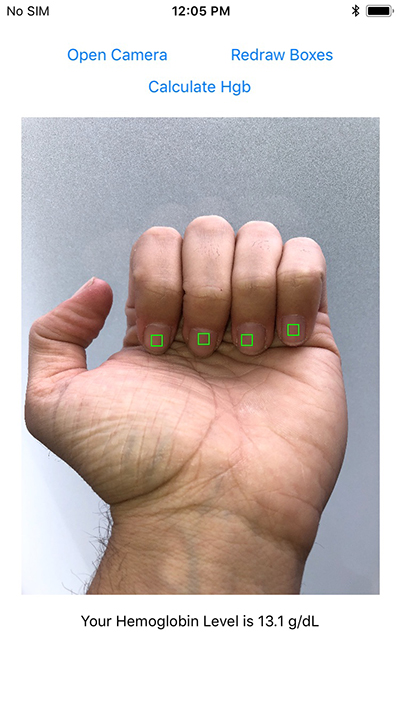
The app’s algorithm that provided more data on individuals’ coloration was further adjusted to detect that participant’s hemoglobin levels (0.92 grams/deciliter), or about the same as blood hemoglobin tests.
“Making this public is an important immediate boost to our efforts,” Lam said. “We’re now collaborating with people in the global health space, people in different countries, trying to create impact and make it constantly more precise. The other thing that’s underway is trying to get this to people in the developing world as well.”
Mannino says he and other people with beta thalassemia major could easily benefit from the app. “Sometimes I show up for my transfusion and my hemoglobin level will be a little lower than we had predicted,” he explained. “If I had this technology, I could dynamically set my transfusion schedule based on when I have anemia and really need it.”
Lam explained that there are two ways to use this device, either for screening among the general population or for diagnosis in people with chronic anemia. “The app can learn and weight its data against the person’s blood counts,” Lam said. “In theory, the app would weight the individual’s data more heavily and therefore recalibrate, further increasing the app’s accuracy in estimating blood hemoglobin levels.” So far, the study has validated smartphone images of nail beds as an effective tool for screening. More testing is required for it to be adopted and approved for individual diagnosis.
The team plans to make the app publicly available in the coming months and will continue to conduct individual calibration studies to confirm the high level of diagnostic accuracy that would be required to use the smartphone app instead of blood anemia tests.
Since participating in the development of the smartphone app, Mannino received the $100,000 Cisco Problem Solver Award in April 2018 and the $100,000 Student Technology Award for Primary Health Care from Massachusetts General Hospital in October 2017.
For more information about anemia, go to https://www.nhlbi.nih.gov/health-topics/anemia.
Funding for the project included a NIBIB grant (EB025646).
Reference: Smartphone application for non-invasive detection of anemia using only patient photographs. Mannino RG, Myers DR, Tyburski EA, Caruso C, Boudreaux J, Leong T, Clifford GD, Lam WA. National communications. December 4, 2018.