- Tokenized stocks showed a 114% increase in total value and a 188% increase in wallet base, becoming one of the best performing RWA sectors in 2026.
- Of the approximately 300,000 new RWA wallets added across all categories in 2026, 74% came from tokenized stocks.
- The average value per wallet in tokenized shares is approximately $4,200, making it one of the most retail-oriented segments of the RWA market.
Despite a challenging market environment, demand for real-world assets continued to expand in the first half of 2026. While the broader crypto market lost 28% of its value and DeFi TVL fell more than 25%the RWA sector rose more than 40%, exceeding $32 billion.
Much of the sector’s momentum came from tokenized stocks. More than any other RWA category, they attracted new entrants, emerging as the leading gateway for users entering the RWA ecosystem.
Tokenized Stocks Now Capture 40% of Total RWA Wallet Base
In early 2026, tokenized stocks were a mid-tier RWA category. About 122,000 wallets contained them and the market capitalization was only $691 million. Today, the category has approximately 352,000 portfolios and a market capitalization of $1.48 billion, an increase 188% and 114% respectively in less than six months.
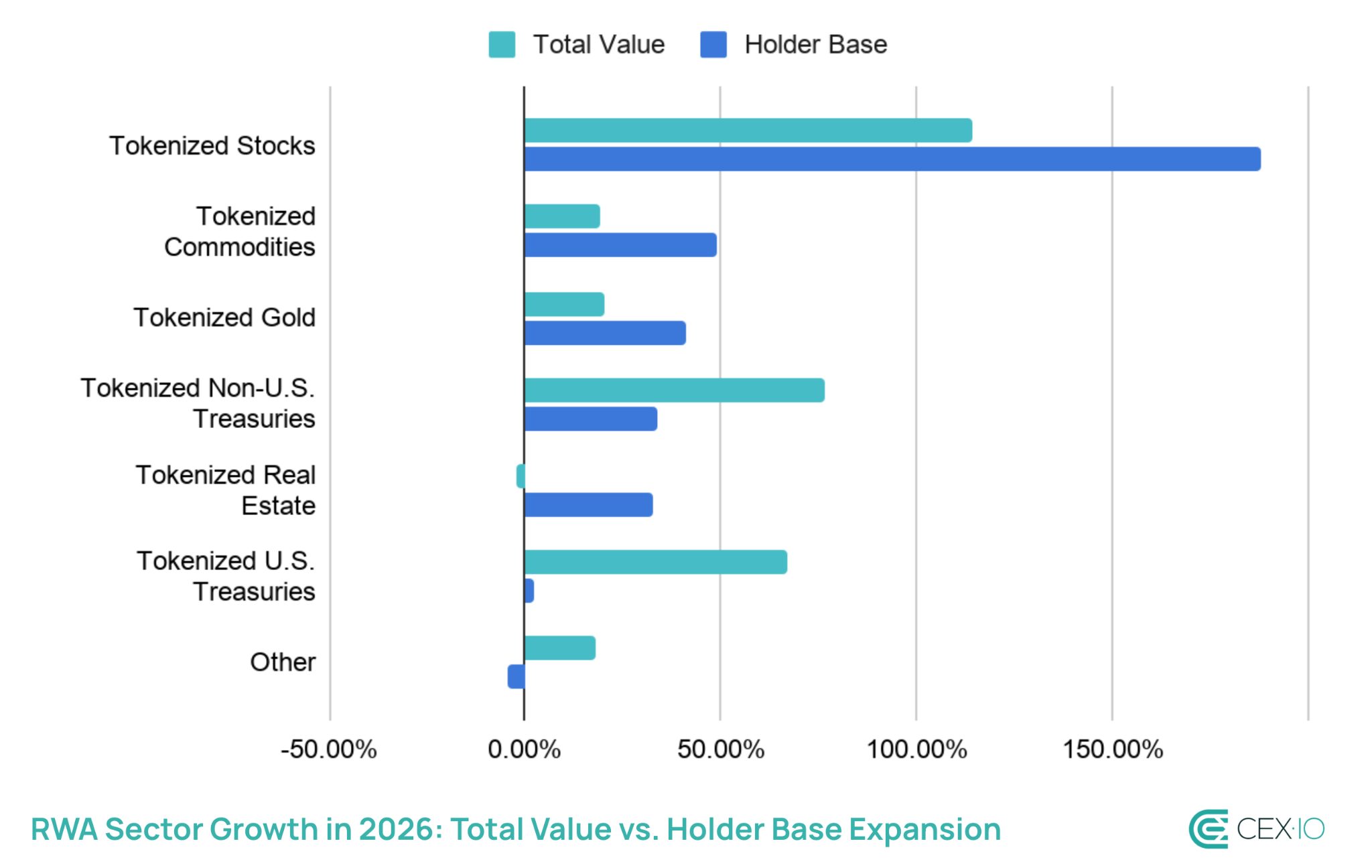
This growth helped tokenized stocks. become the largest RWA category by number of wallets, recently outperforming tokenized products like gold and silver.
Tokenized shares now represent 40% of all RWA portfolios, rising from 21% by early 2026. However, in terms of total value, tokenized stocks remain a relatively modest sector, with their share of RWA increasing from 3% to 4.7% in 2026.
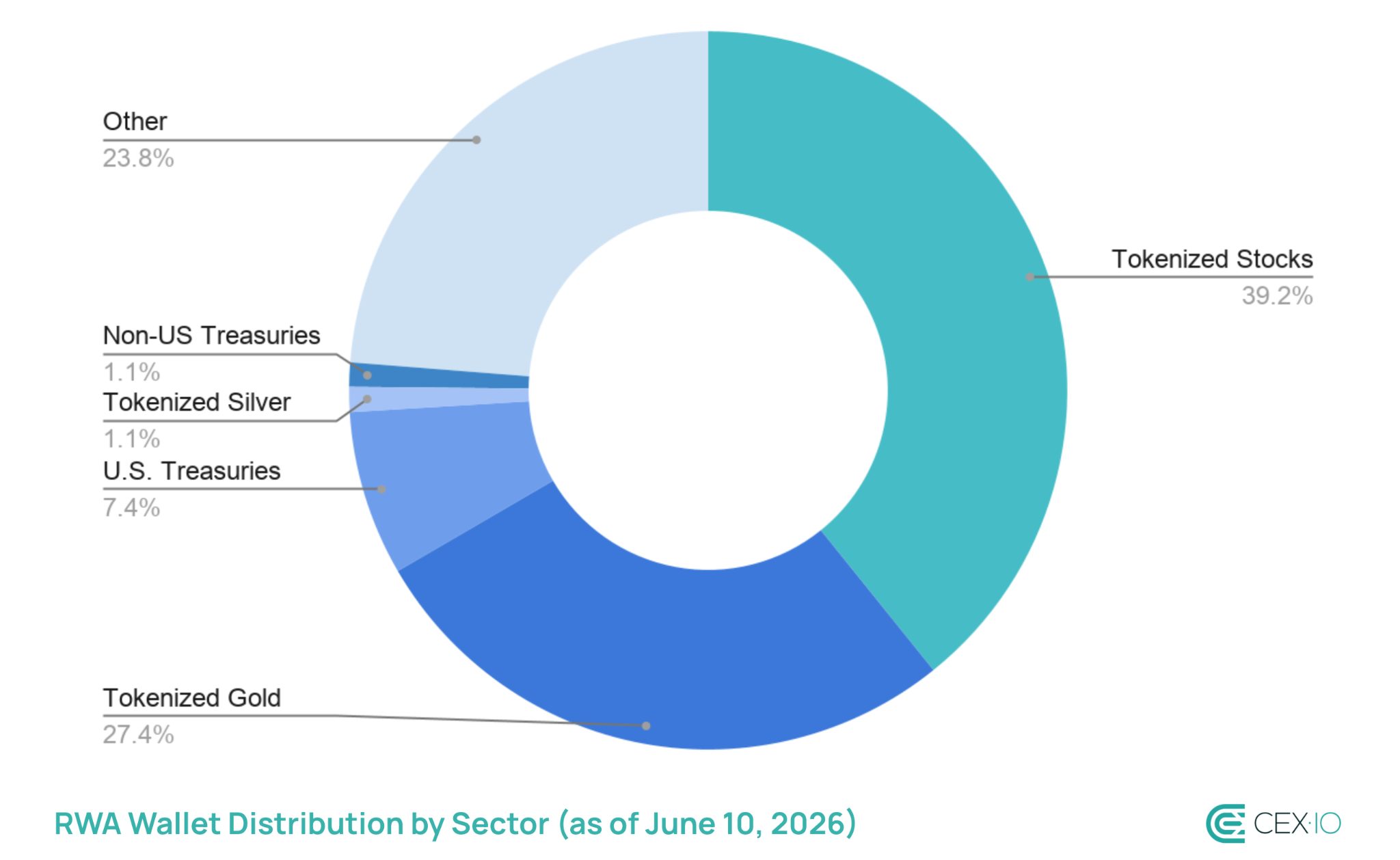
Overall, tokenized stocks have become a major driver of RWA adoption. Of the approximately 300,000 new RWA wallets added across all categories in 2026, 74% came from tokenized stocks. This suggests that for many newcomers, tokenized stocks are becoming the preferred entry point into RWAs.
Q2 2026 Already Fastest Growth Period for Tokenized Stocks
Throughout 2026, the growth of tokenized stocks will continue to accelerate. In the first quarter, the sector added $280 million in market capitalization and around 80,000 portfolios. However, as of early June, the second quarter has already surpassed both, adding approximately $511 million in market capitalization and approximately 149,000 new portfolios.
This means that Nearly half (48%) of all tokenized stock portfolios that exist today were created this quarter.. For reference, Q3 2025 was the previous peak, driven by the launch of xStocks and the expansion of Ondo’s tokenized capital, but Q2 2026 surpassed it in absolute terms.
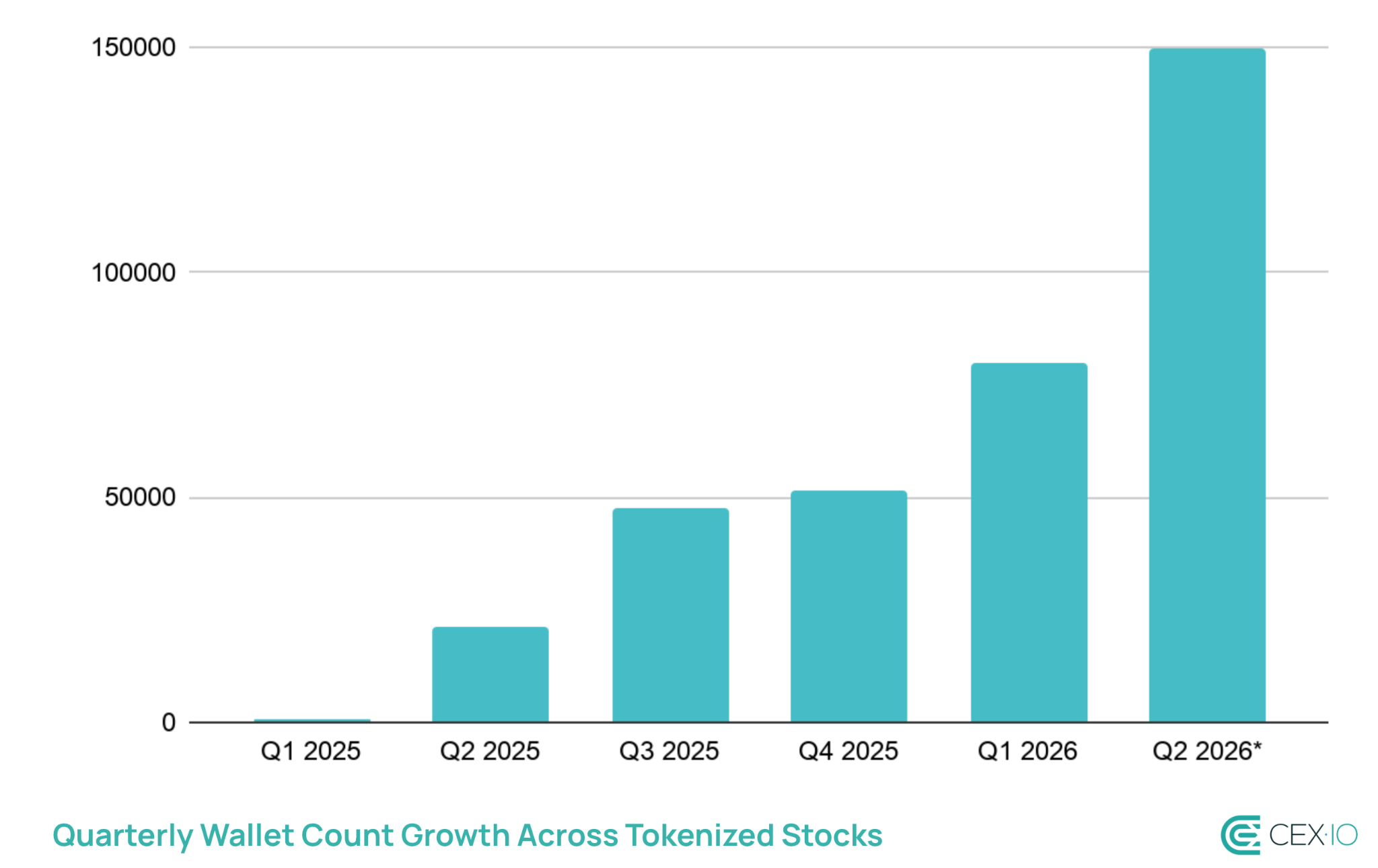
*Note: Growth from the second quarter of 2026 to June 10, 2026.
Tokenized Stock Sector Is Extremely Retail-Driven
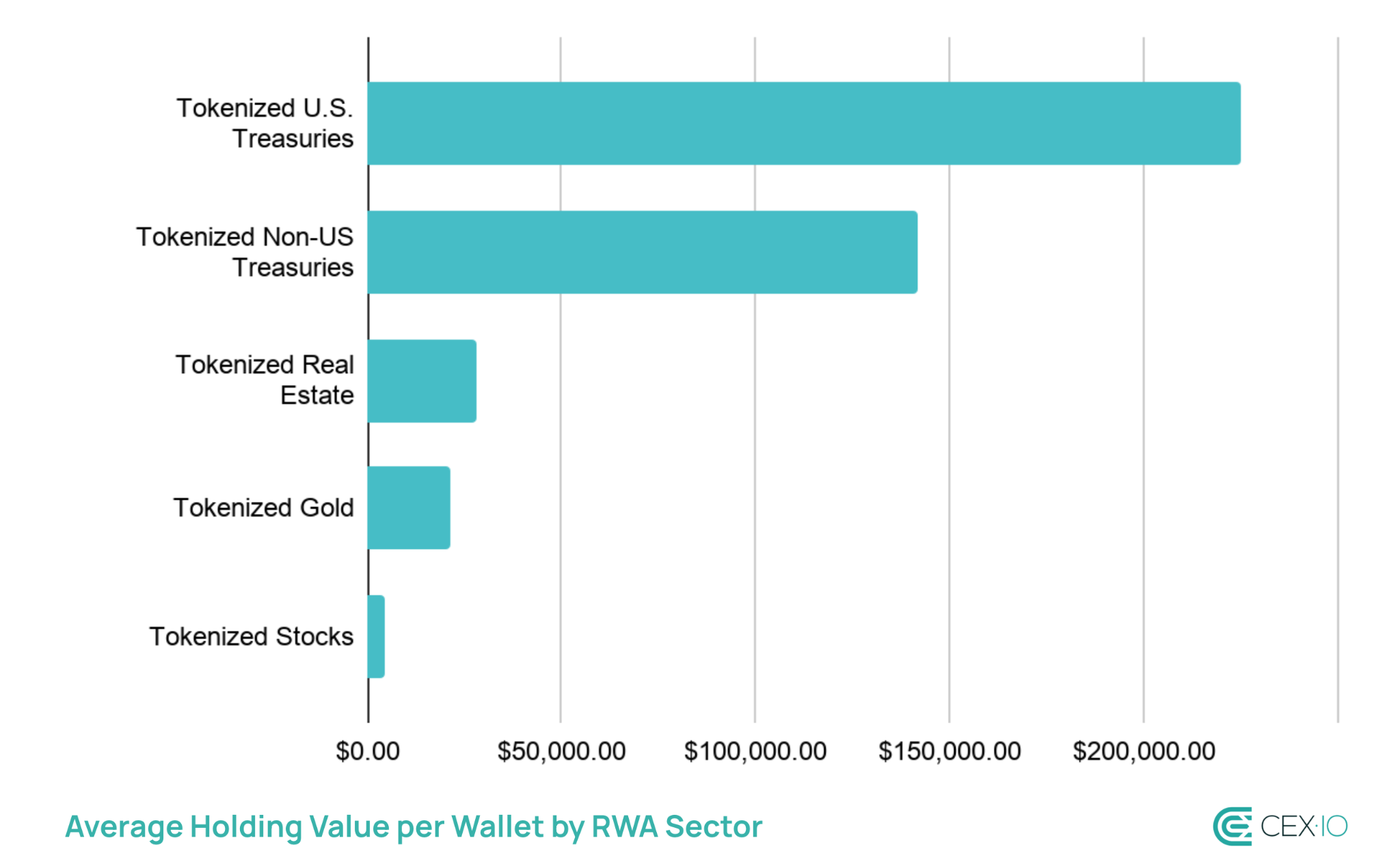
The average value per wallet in tokenized shares is approximately $4,300, making it one of the most retail-oriented segments of the RWA market. By comparison, tokenized gold averages around $21,250 per wallet, while US Treasuries are closer to $225,000. Even traditional brokerage platforms report higher numbers: Robinhood has approximately $12,500 per funded user, and the average Charles Schwab account balance is around $260,000.
Taken together, these figures suggest that tokenized stocks are attracting a broad base of smaller investors who are primarily allocating relatively modest amounts of capital. This is most likely because the adoption of tokenized stocks is still in its early stages.
As far as growth is concerned, the second quarter alone has added approximately 149,000 new tokenized stock portfolios. For reference, Webull, one of the fastest growing retail brokers in the US, aggregate around 80,000 accounts funded last quarter, meaning tokenized stocks nearly doubled that pace. In turn, Interactive Brokers, a much larger and more established platform, aggregate approximately 350,000 accounts over the same period, approximately 2 times more than tokenized stocks. The gap remains real, but the speed of adoption of a nascent on-chain asset class is now in the same conversation as some of the most active players in traditional retail brokerage.
That said, wallet growth of tokenized stocks is currently outpacing value growth. Average holdings per wallet may continue to decline as the base expands.
What is driving the increase?
Three catalysts are primarily driving the current wave of demand for tokenized stocks.
- Tech trading found a crypto-native home. Tech and crypto stocks have dominated market narratives for over a year. Some crypto-native investors wanted exposure but didn’t feel like going back to a traditional brokerage, and tokenized stocks solved that. Today’s most popular tokenized stock holdings read like a list of Robinhood’s biggest: NVDA, TSLA, AAPL, MSTR, and CRCL stocks, along with index trackers S&P 500 and Nasdaq. They are the same assets that drive retail everywhere else, only they can be accessed on-chain.
- The access of the private company opened a door that was previously closed. Retail investors have never had a real path into pre-IPO companies like SpaceX, Anthropic, or leading private AI companies — those allocations go to institutions and insiders. Tokenized stock platforms attempted to change that calculus. With SpaceX aiming to list on Nasdaq this Friday at a valuation of $1.75 trillion, which would make it the Largest IPO in historyand several major IPOs that could happen this year, tokenized stocks in general saw increased attention and demand.
- The broader tokenization of stocks is becoming infrastructure. This is no longer just a crypto-native trend, as companies like DTCC It aims to bring tokenized treasuries, stocks and ETFs in 2026-2027. US and Japanese banks are moving in the same direction, with several planning near-term product launches in tokenized deposits and stocks. All of that normalizes tokenized stocks as an asset class, providing a boost to existing offerings.
What could come next?
The sector’s market capitalization briefly hit a local high of around $1.68 billion before retreating slightly in mid-May, in line with broader RWA trends. But the structural impulse has not been reversed. At the recent pace of about $50 million in new value per week, the $2 billion milestone appears achievable before the end of the year.
As for the holder base, it is currently showing no signs of slowing down, suggesting that the sector may reach half a million total wallet base by the end of Q3 2026.
Overall, while the near-term demand outlook appears strong, the larger issue is structural. As the regulated institutional infrastructure matures, it could significantly expand the total market for tokenized stocks. Alternatively, it could gradually shift demand away from crypto-native platforms as mainstream investors gain access through familiar channels. That tension, between crypto-native and TradFi rails for the same underlying assets, will likely define the next phase of this sector more than any single catalyst.
Sources
The data used for this research consists of publicly available information from RWA.xyz, CoinGecko, DeFiLlama, and Dune. Please note that wallet count is not the same as user count as a single investor can control multiple wallets. However, wallet count remains one of the most consistently available and comparable adoption measures across all RWA categories. The observation period of this study focused on the performance of tokenized stocks in 2026, and the data points ended on June 10, 2026.
The web content provided by CEX.IO is for educational purposes only. The information and tools provided are not and should not be construed as an offer, a solicitation of an offer or a recommendation to buy, sell or hold any digital asset or to open a particular account or engage in a specific investment strategy. Digital asset markets are very volatile and can lead to loss of funds.
The availability of products, features and services on the CEX.IO platform is subject to jurisdictional limitations. To understand what products and services are available in your region, please see our list of supported countries and territories. This page includes additional links to information about individual products and their accessibility.