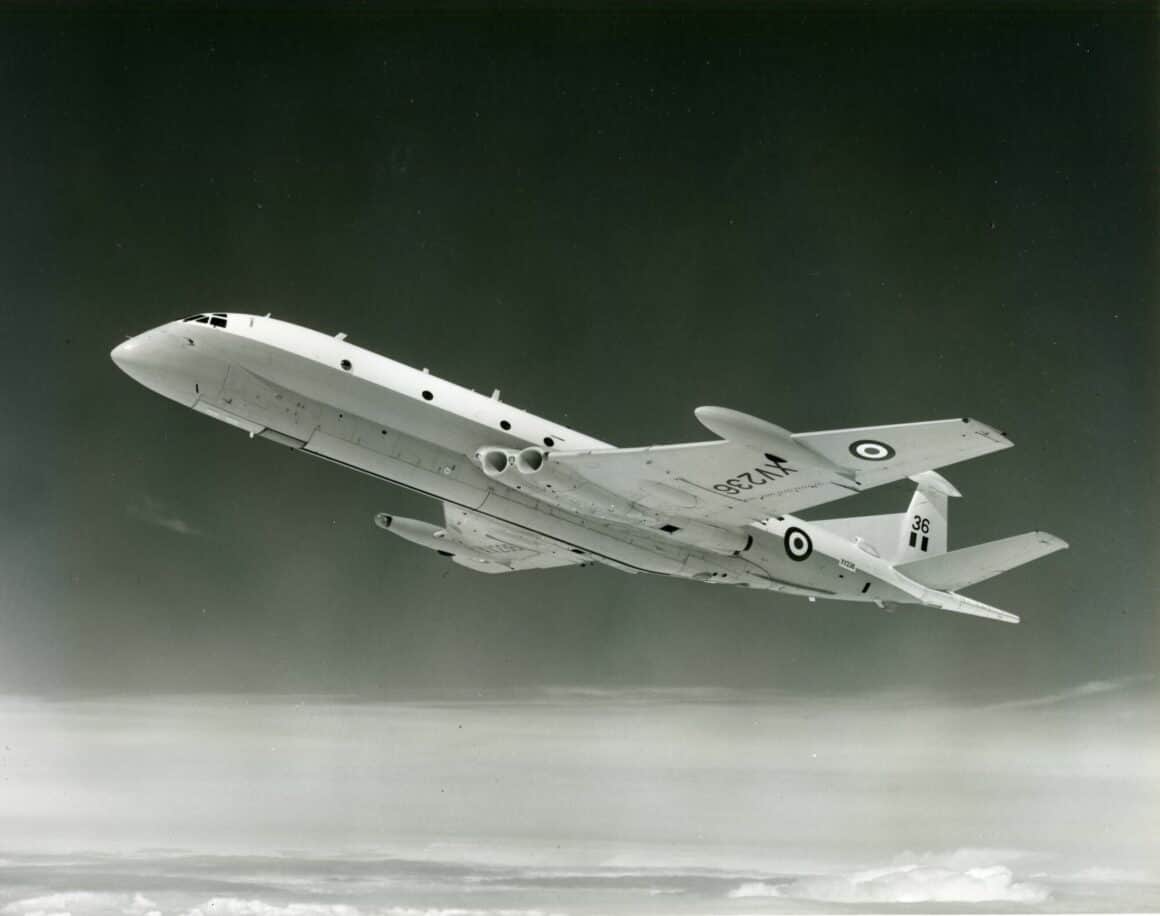
The Hawker Siddeley Nimrod was one of those airplanes that shouldn’t have performed so well, at least not on paper.
The Nimrod did not start out as a purpose-built submarine hunter. Instead, it was a heavily modified version of the de Havilland Comet 4, which was the world’s first operational airliner. In the mid-1960s, the Royal Air Force (RAF) needed to replace its aging Avro Shackleton maritime patrol aircraft, which were powered by piston engines and were approaching the end of their service life. On 4 June 1964, the British government issued Air Personnel Requirement 381, beginning the search for a new long-range maritime patrol aircraft.
The government considered several options, including the Lockheed P-3 Orion and the Breguet Atlantic. But on February 2, 1965, they chose Hawker Siddeley’s HS.801, a maritime patrol version of the Comet. It was an unusual decision, but a classic British move: take a passenger plane, make major changes and turn it into a plane built to hunt submarines across the North Atlantic.
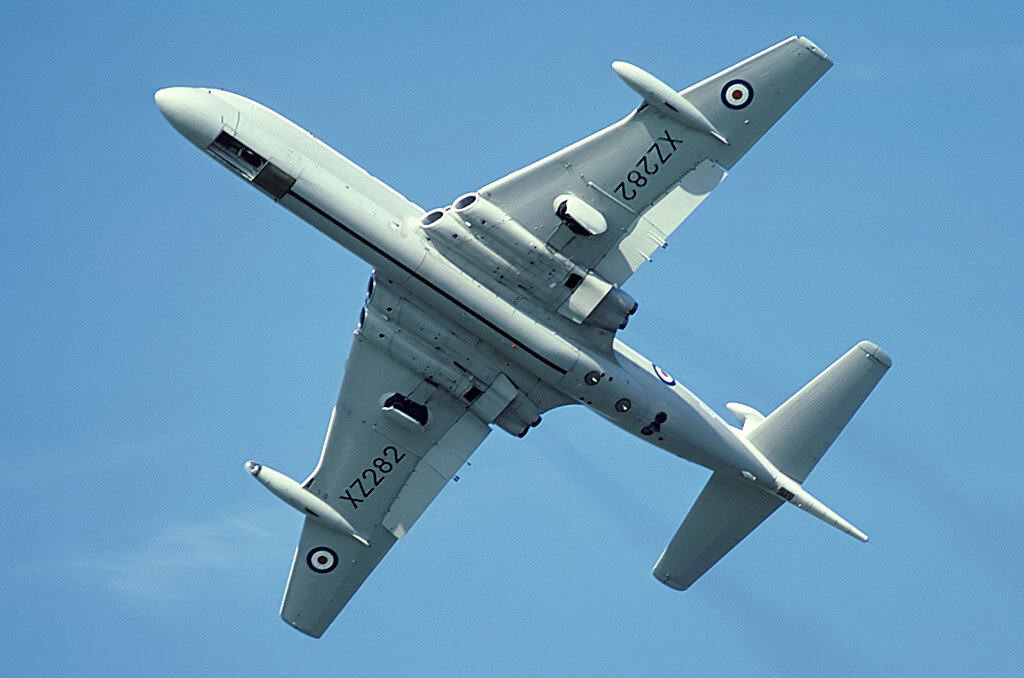
The changes to the comet were significant. Its original Rolls-Royce Avon turbojets were swapped for more efficient Rolls-Royce Spey turbofans. The fuselage was equipped with an internal weapons bay, a longer radar tip, tail electronic support equipment, and a magnetic anomaly detector arm. Two Nimrod prototypes, XV148 and XV147, were built from unfinished Comet 4C airframes. The first Nimrod flew on 23 May 1967 and the first production model, the XV230, joined the RAF on 2 October 1969.
A jet-powered submarine hunter
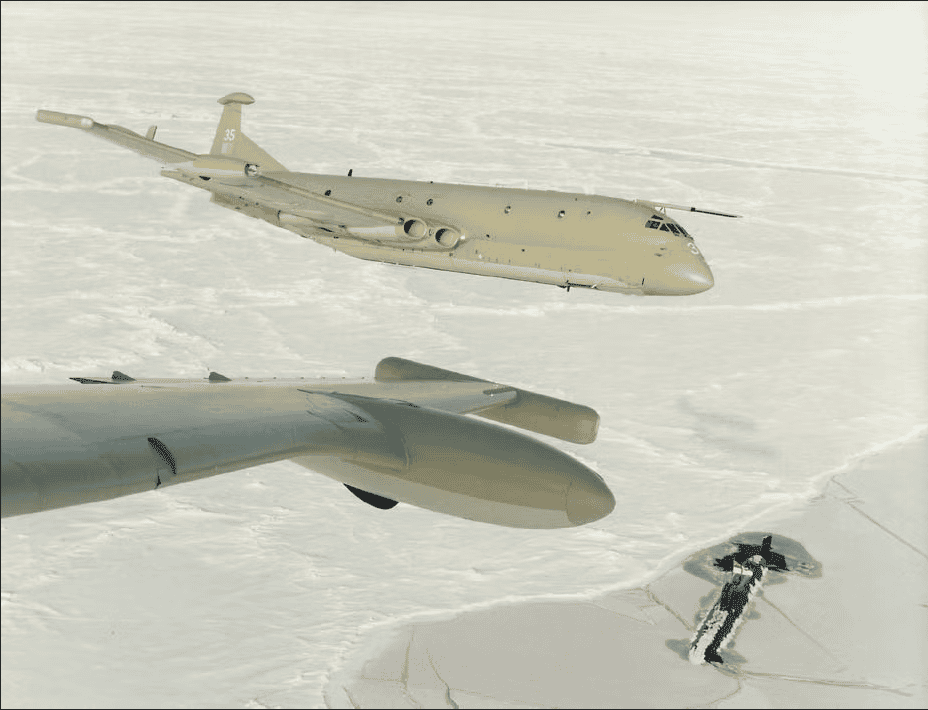
The Nimrod was the first jet-powered maritime patrol aircraft to enter service. Before this, most patrol aircraft used piston or turboprop engines for their long endurance and efficiency. The Nimrod’s turbofans gave it more speed, higher altitude and greater range, so that crews could quickly reach their patrol areas and cover huge stretches of ocean.
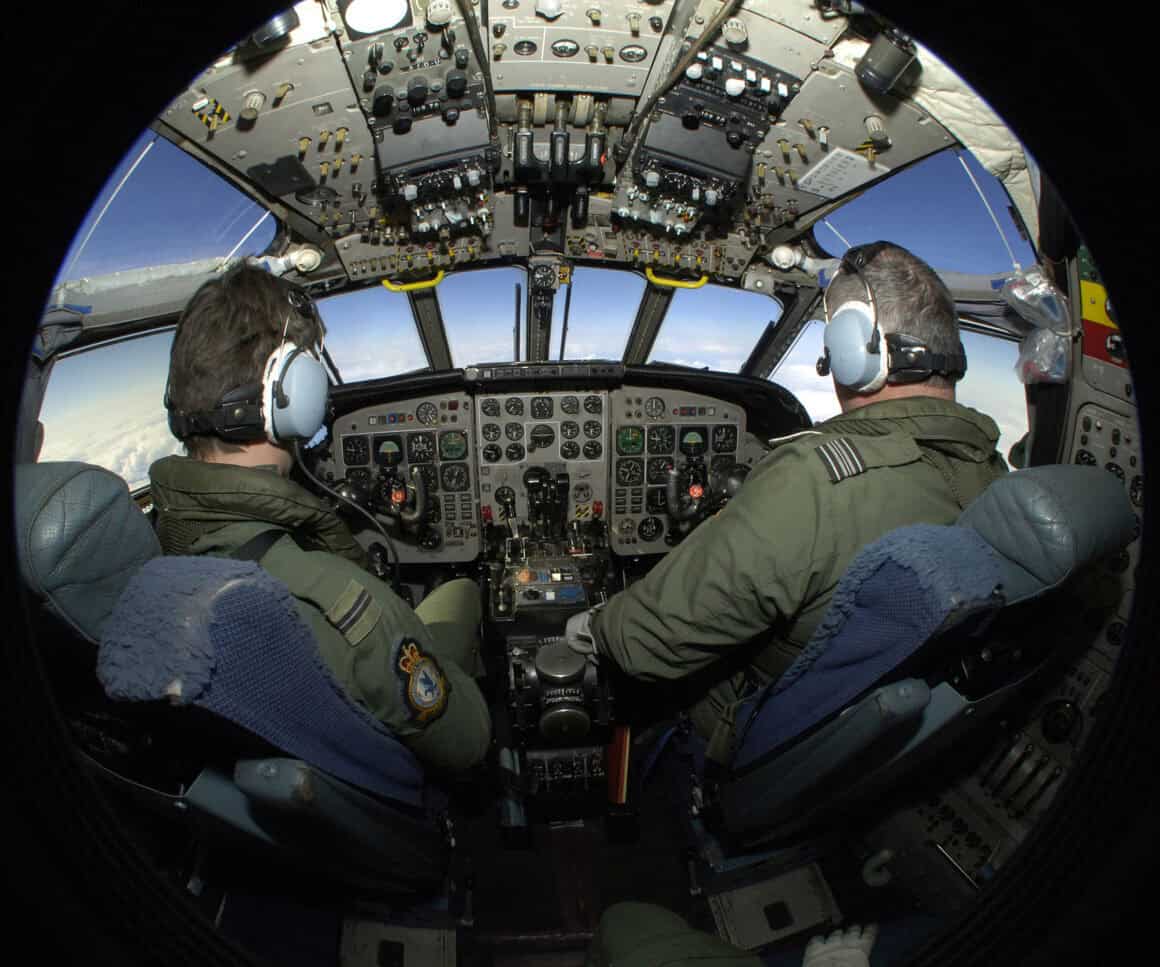
Its main task was anti-submarine warfare, especially during the Cold War, when tracking Soviet submarines in the North Atlantic was a constant and very delicate mission. The Nimrods operated from RAF Kinloss in Scotland and RAF St Mawgan in Cornwall, monitoring the seas north of Iceland and the depths of the western Atlantic. In times of war, information collected by Nimrod crews would have been passed to the Royal Navy and NATO forces to help trace and, if necessary, process submarine contacts.
The MR1 provided the RAF with a modern jet platform, but the MR2 became the definitive maritime reconnaissance variant. Beginning in 1975, 35 aircraft were upgraded to the MR2 standard and redelivered beginning in August 1979. The upgrade included new electronics, such as the EMI Searchwater radar, a new acoustic processor capable of handling more modern sonobuoys, a mission data recorder, and improved electronic support systems.
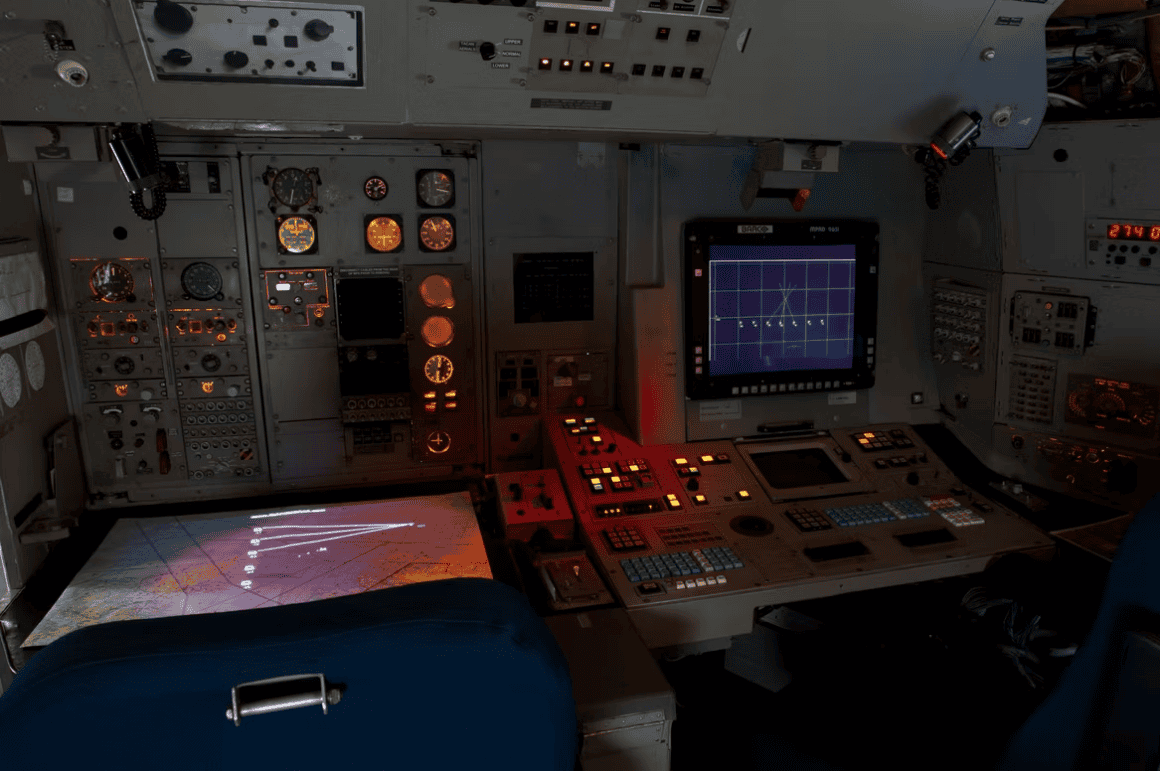
Inside, the Nimrod served as a sensor platform and airborne command post. A typical MR2 crew had about 12 or 13 people, including pilots, a flight engineer, navigators, an air electronics officer, and several weapons systems operators who managed the acoustic and electronic warfare equipment. The aircraft could carry torpedoes, mines, bombs, Harpoon missiles, Sting Ray torpedoes, sonobuoys, and search and rescue equipment in its weapons bay. In some configurations, it could contain up to 150 sonobuoys.
The Nimrod wasn’t as glamorous as a fighter plane, but for those who know maritime aviation, it was serious equipment. It was created for long missions over cold oceans, tracking silent targets and crews who spend hours staring at screens and telescopes.
From the Falklands to the Gulf
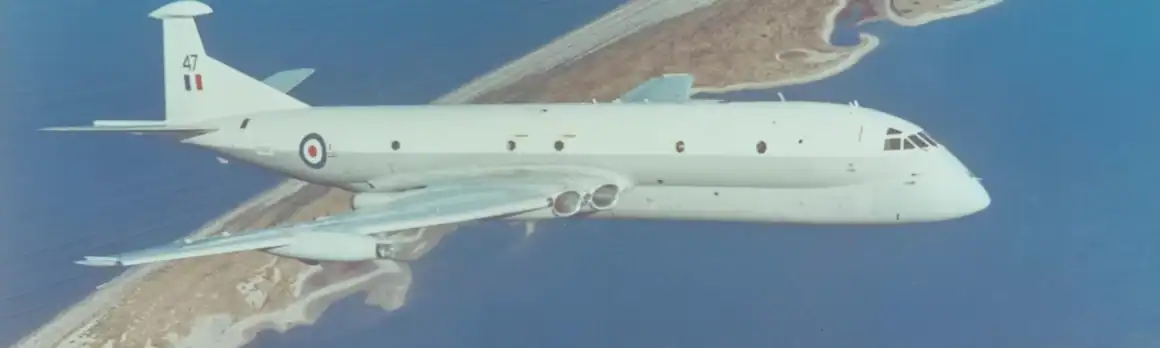
Nimrod’s most dramatic moment came during the Falklands War in 1982. Flying from Wideawake Airfield on Ascension Island, Nimrods carried out 111 missions in support of British forces. Their jobs included maritime patrol, search and rescue, communications relay, escorting other aircraft, and assisting with Vulcan Black Buck raids.
The Falklands War also brought about some unusual changes for Nimrod. The MR2s were equipped with air-to-air refueling probes for further flight and were even armed with AIM-9 Sidewinder missiles for self-defense against Argentine surveillance aircraft. This earned the Nimrod one of its best-known nicknames: the RAF’s largest fighter.
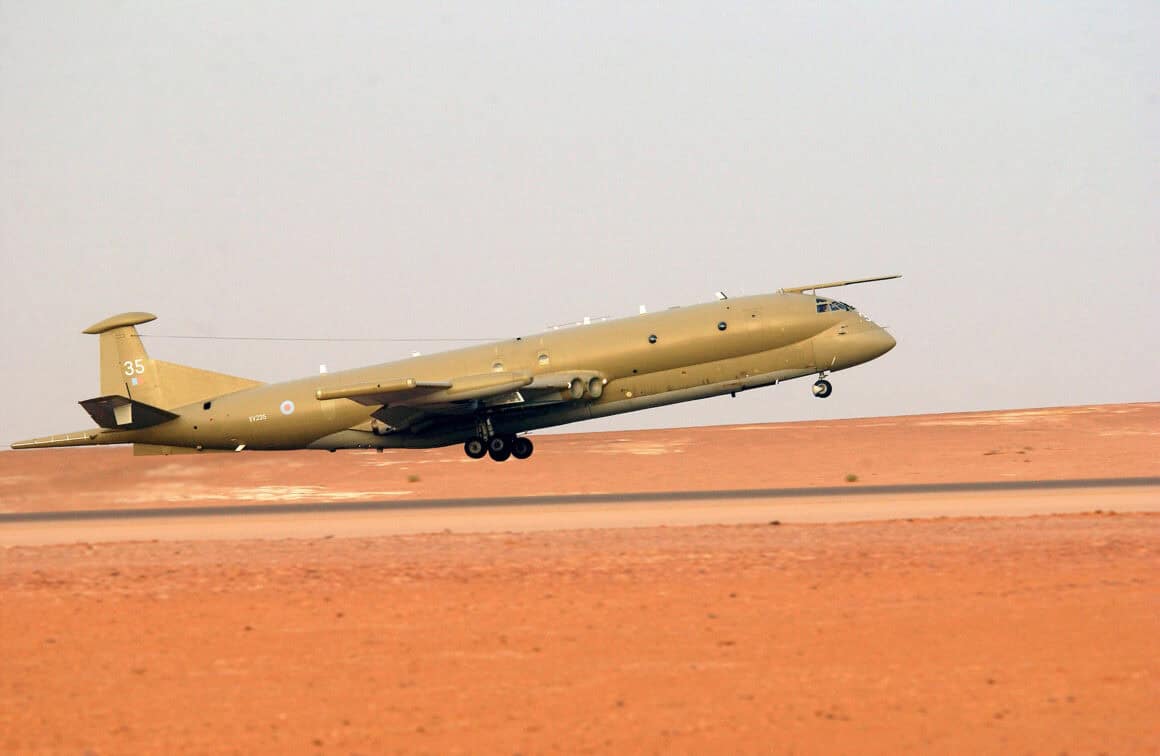
These long-range missions were demanding. One patrol lasted 19 hours and 5 minutes and reached 60 miles off the Argentine coast. Another flight covered approximately 8,453 miles, making it the longest flight of the Falklands War.
The Nimrod continued to evolve after the Cold War. During the 1991 Gulf War, MR2s were sent to Oman and conducted patrols over the Gulf of Oman and the Persian Gulf. Some aircraft gained better communications, electronic countermeasures, and towed decoys. Nimrods were later used on land in places such as the Balkans, Iraq and Afghanistan, where their sensors and long endurance made them valuable for intelligence gathering, far beyond their original maritime mission.
The RAF also operated the Nimrod R1, a variant designed for signals and electronic intelligence, flown by No. 51 Squadron. The R1 was easy to spot because it did not have a MAD arm. It carries special antennas and could have up to 25 SIGINT operators, in addition to the flight crew. The R1 remained in service until June 2011, surpassing the MR2.
A difficult ending
Despite all he could do, the Nimrod story ended with frustration, loss, and a long gap in his ability.
The most tragic moment came on September 2, 2006, when the Nimrod MR2 XV230 was lost over Afghanistan after an in-flight fire. All 14 personnel on board were killed. It was the UK’s biggest loss of military personnel in Afghanistan and cast a long shadow over the guy’s final years.
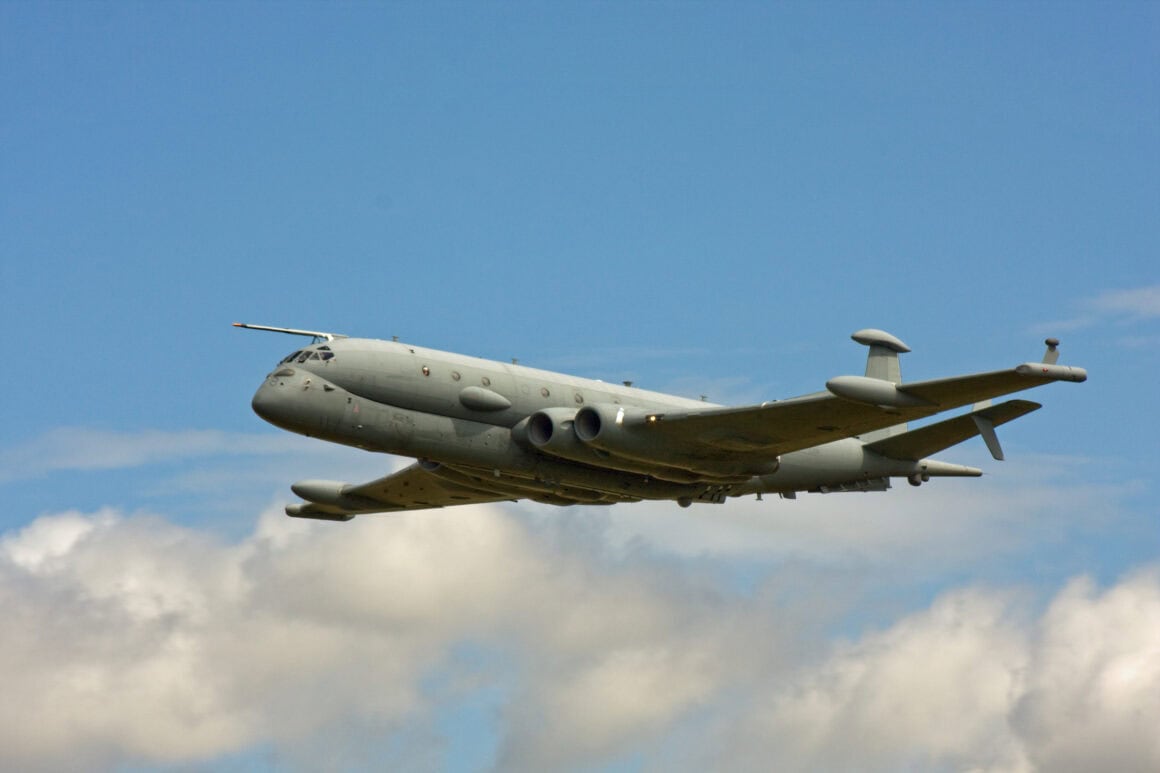
The planned replacement, the Nimrod MRA4, was supposed to usher the aircraft into a new era. In reality, it was more of a complete redesign than a simple update. The MRA4 used rebuilt MR2 fuselages, new Rolls-Royce BR710 engines, a larger wing, modern avionics and a glass cockpit. But the project faced major delays and went over budget.
The MRA4 first flew in 2004, but never entered service. In 2010, the project was canceled during the Strategic Defense and Security Review, leaving the UK without a dedicated long-range maritime patrol aircraft until the Boeing P-8 Poseidon arrived.
The MR2 was retired on March 31, 2010, and its last official flight was in May of that year. The R1 was retired in 2011. By then, an aircraft that began as the world’s first airliner had spent more than forty years as one of Britain’s primary maritime patrol aircraft.
The Nimrod was never elegant in the traditional sense. It looked like a passenger plane that had been asked to do the job of a submarine chaser and somehow made it work. But that was part of his character. It was strange, capable, deeply British and quietly essential.