New information from the NTSB explains how the collision occurred on the LaGuardia runway in March 2026 between an Air Canada CRJ-900 and a fire truck.
On the night of March 22, 2026, something went very wrong at LaGuardia Airport (LGA) in New York.
A routine arrival from Montreal’s Trudeau International Airport (YUL) ended in a deadly collision on the runway between an Air Canada Express regional jet and an airport fire truck. The National Transportation Safety Board’s preliminary report now provides the first detailed account of what happened in those final moments.
Although many questions remain, initial findings are already raising difficult questions.
A landing that never ended
Jazz Aviation Flight 646, operating as Air Canada Flight 8646, was on final approach to LGA Runway 4 just before midnight. CRJ-900 had 76 people on board and was nearing the end of what would otherwise have been a normal flight from YUL.
At 23:35:07 (local time) the aircraft was cleared to land.
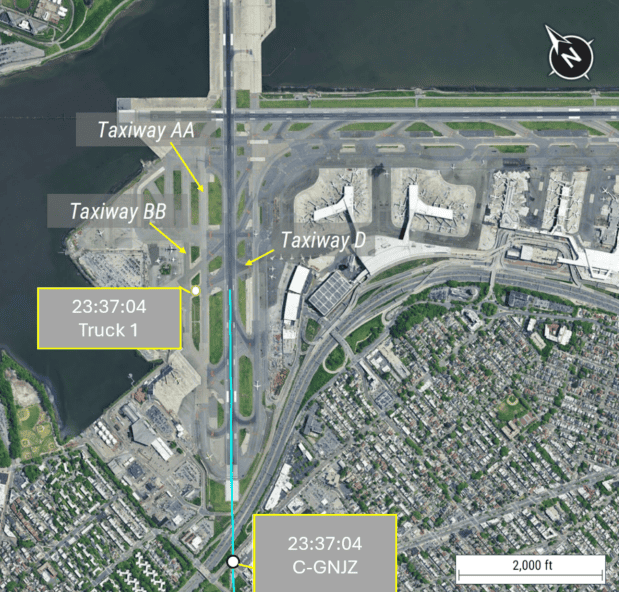
At the same time, several airport rescue vehicles were responding to a separate emergency near Terminal B. Seven ground vehicles began moving across the airfield, planning to cross Runway 4 via Taxiway D.
What happened next happened over the course of just a few seconds.
At 23:37:04, with the aircraft just a quarter mile from landing and about 130 feet above the ground, the lead fire truck, identified as Rescue 35, was cleared to cross the runway.
Three seconds later, the truck began to move.
Four seconds later, the aircraft crossed the runway threshold.
The gap between them was rapidly closing.
“Stop! Stop! Stop!”
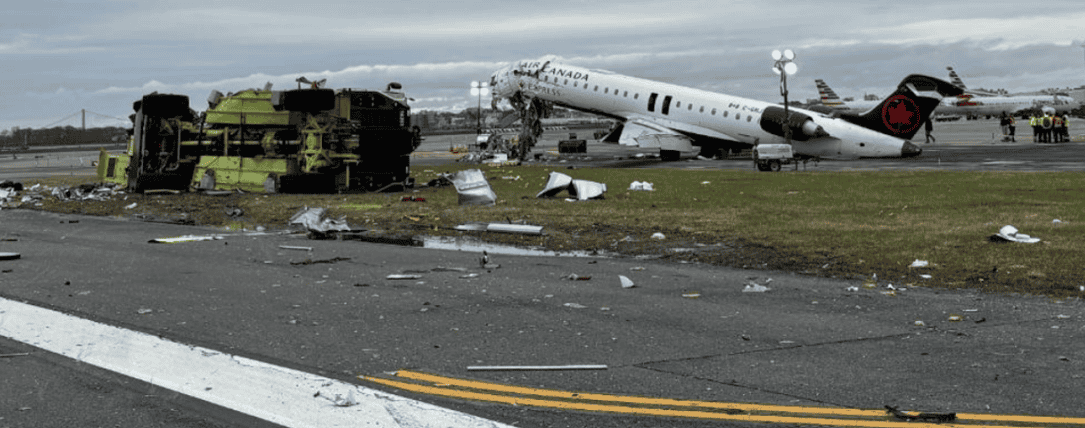
When the plane landed, controllers took immediate action.
At 23:37:12, the tower ordered the fire truck to stop. Then again at 23:37:20.
Inside the truck, the crew sensed the urgency in the radio call, but didn’t immediately understand what it meant.
One crew member later recalled hearing “stop, stop, stop” on the frequency, but without immediately realizing that it was directed at them. Only after listening “Truck 1 stop stop stop” Did you register completely?
By then, the truck had already crossed the short holding line and was entering the runway at approximately 30 mph.
At the same time, the plane was decelerating at about 100 knots, less than 400 feet from the intersection.
Two seconds later, they collided.
A system that remained silent
LaGuardia is equipped with multiple layers of security designed to prevent exactly this type of scenario.
But in this case, several of them did not provide the protection that might be expected.
The airport’s ASDE-X surface detection system, designed to track aircraft and vehicles and warn of potential conflicts, did not generate any alerts on the tower.
Investigators say a key reason is that none of the responding ground vehicles were equipped with transponders. That meant the system couldn’t reliably distinguish or track each vehicle, especially when they were moving close together.
Instead of seven distinct vehicles, controllers saw only intermittent, merged radar targets.
Without a clear lead for the fire truck, the system never recognized the developing conflict.
REL lights were on
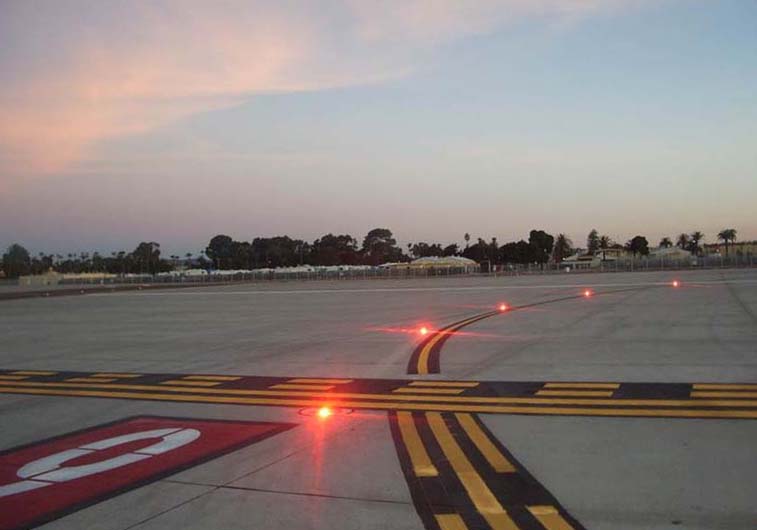
However, another layer of protection was activated.
Runway Entry Lights (REL), designed to warn vehicles not to enter an active runway, illuminate as the aircraft approaches.
Surveillance video shows the red lights were clearly on as the fire trucks stayed short, about 300 feet from the runway.
But those lights are designed to turn off when a plane passes through an intersection.
In this case, they went out about three seconds before the collision, just as the truck reached the edge of the runway.
That timing, by design, may have eliminated a final visual warning at the worst possible time.
The result could have been much worse.
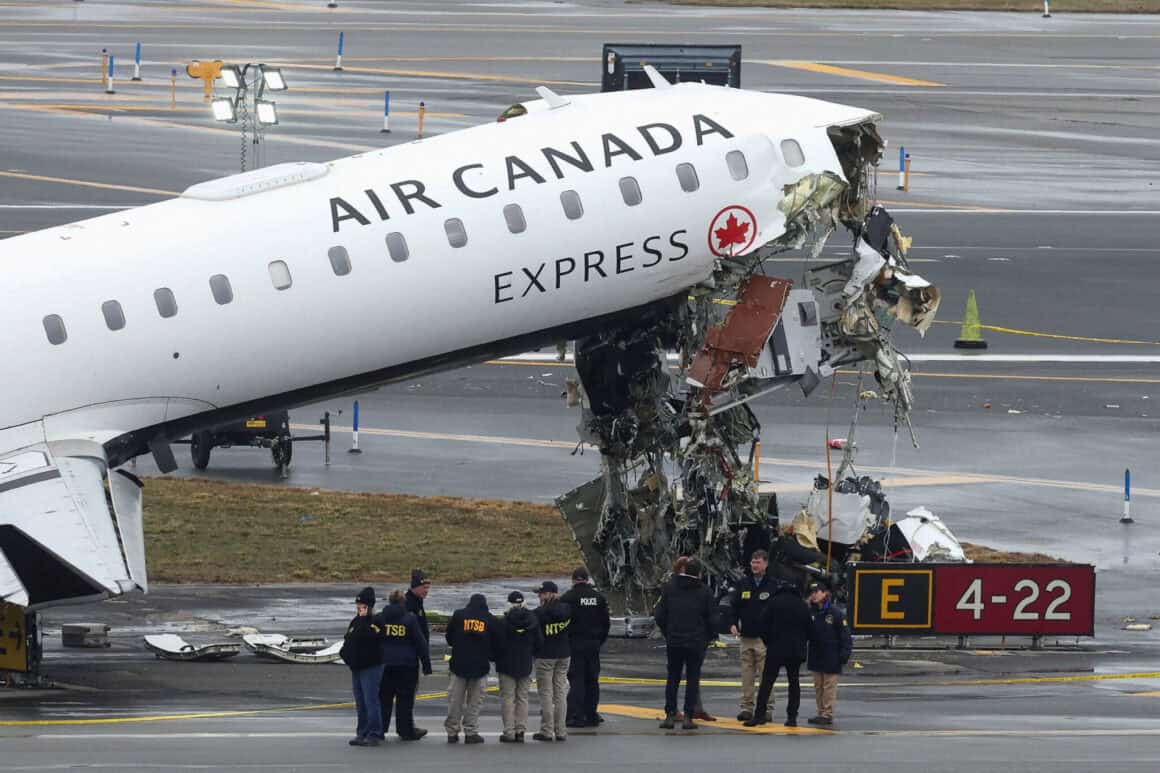
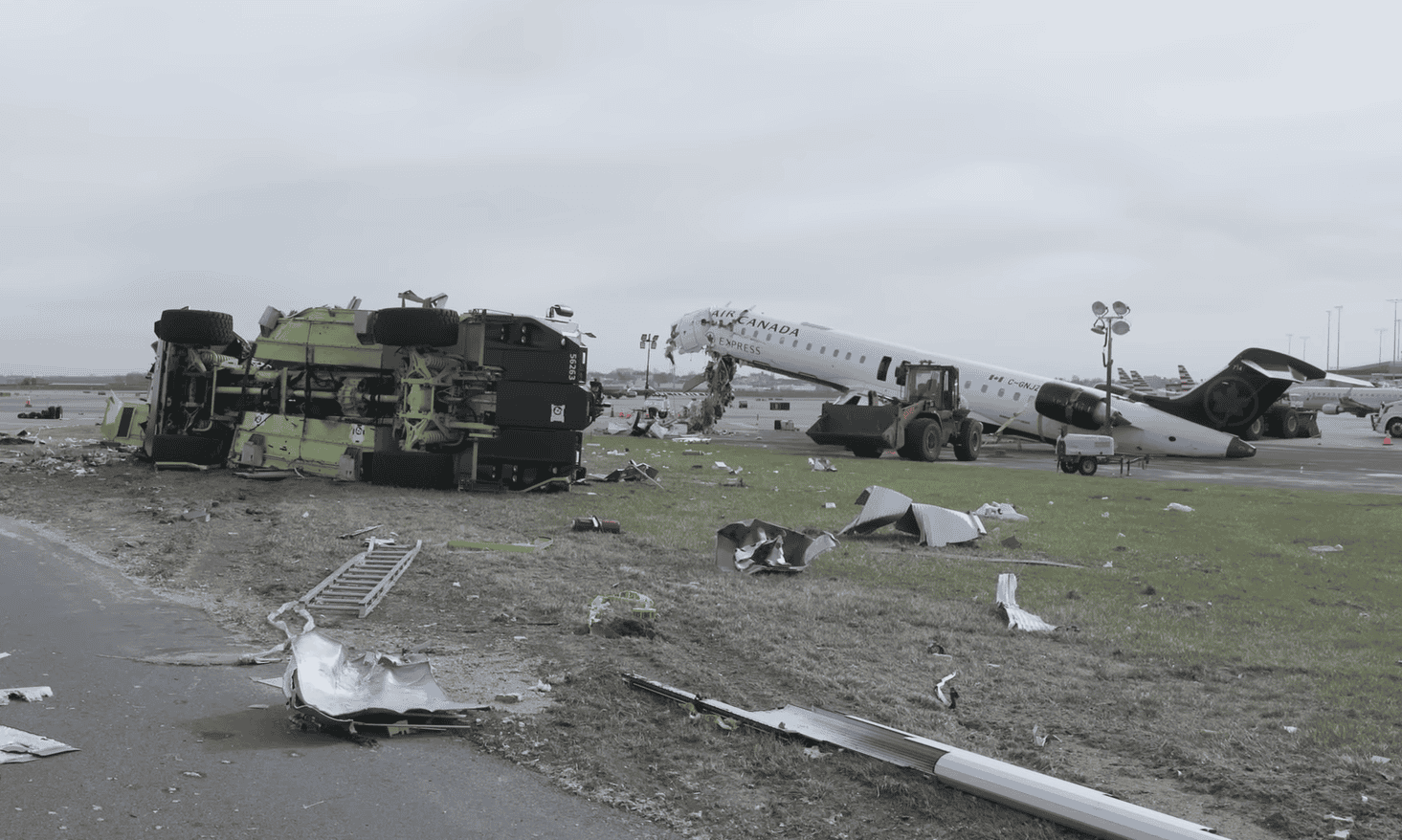
The collision caused catastrophic damage to the forward section of the plane.
The cockpit area was destroyed and both pilots were killed.
However, for passengers seated further back in the cabin, the outcome could have been much worse.
Passenger seats remained virtually intact and many occupants were able to evacuate through the upper exits. In total, 39 people were taken to hospitals, six of them with serious injuries.
The aft stewardess said the landing seemed normal until a sudden impact occurred, followed by confusion and darkness, before passengers began to evacuate.
Even with the confusion, most people evacuated in an orderly manner.
The investigation continues
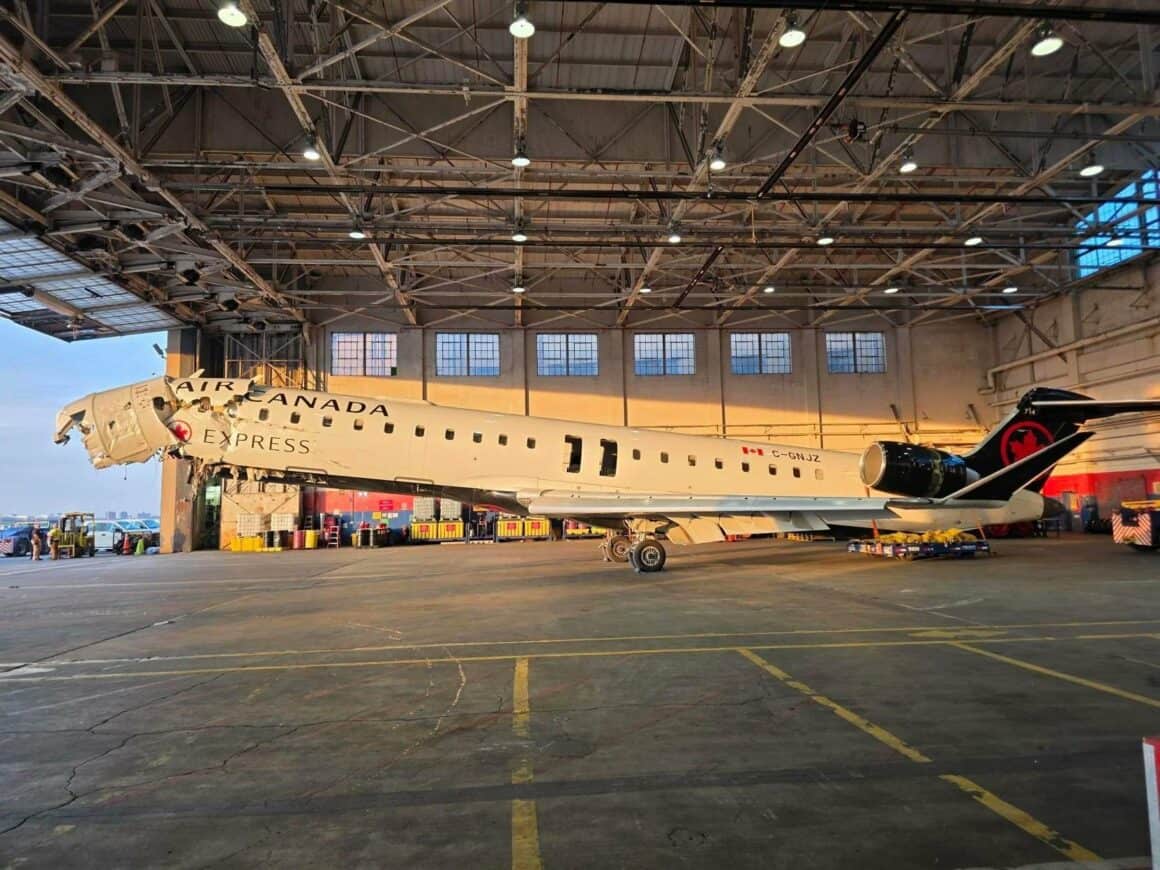
It is important to remember that this is only a preliminary report. The NTSB has not yet determined a probable cause and many details are still being analyzed.
But even at this early stage, some key issues are already becoming clear:
- A high workload environment, with controllers managing both arriving aircraft and an emergency on the ground.
- Communication challenges, including blocked transmissions and delayed instruction recognition
- Limitations on surface detection systems when ground vehicles are not fully equipped
- Security systems that worked as designed, but may not have been sufficient in combination
None of these factors alone tell the whole story.
But together, these factors help explain how a routine landing and a routine runway crossing ended up overlapping with tragic results.
As the investigation into Air Canada Flight 8646 continues, the focus will shift from understanding what happened to understanding why it happened. And perhaps, most importantly, prevent it from happening again.
The complete preliminary NTSB Report is below.