Researchers shrink electrophoresis technology to fit on a chip
Researchers funded by the National Institute of Biomedical Imaging and Bioengineering (NIBIB), part of the National Institutes of Health, have developed a new 3D printed device that will make it faster and easier to identify women at risk of preterm birth. Children born before 37 weeks are considered premature and are more likely to suffer serious health complications in the lungs, heart and brain. Worldwide, approximately 1 million babies die each year due to the consequences of premature birth. Ideally, doctors would like to know which women are at highest risk for preterm birth so they can monitor those patients more carefully. However, current detection technology requires sterile laboratory conditions. This makes it impossible to assess women in low-resource settings where such information might be more useful.
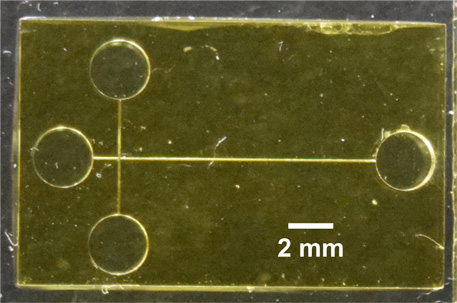
Researchers at Brigham Young University have developed a new way to detect previously identified protein and peptide biomarkers that indicate a risk of preterm birth. Professor Adam Woolley, Ph.D., and his team have been able to create an electrophoresis chip. Electrophoresis is a process that separates biological material, such as proteins and DNA, according to its size, using electrical current. In the laboratory, researchers often use a gel, which acts as a microscopic network through which biological material has to move. Larger materials are left behind, while smaller materials can move more quickly through the gel. The material is labeled with fluorescent molecules, and because researchers know the size of the biomarkers they are looking for, they can identify samples that contain biomarkers that indicate a risk of preterm birth.
Unfortunately, this technique requires a sterile laboratory, a special chamber, and many hours. Woolley and his team have recreated a similar process on a small chip that can be used anywhere, even outside of a laboratory. Instead of a gel, the team 3D printed small channels on the chip, allowing separation to occur without the use of a gel.
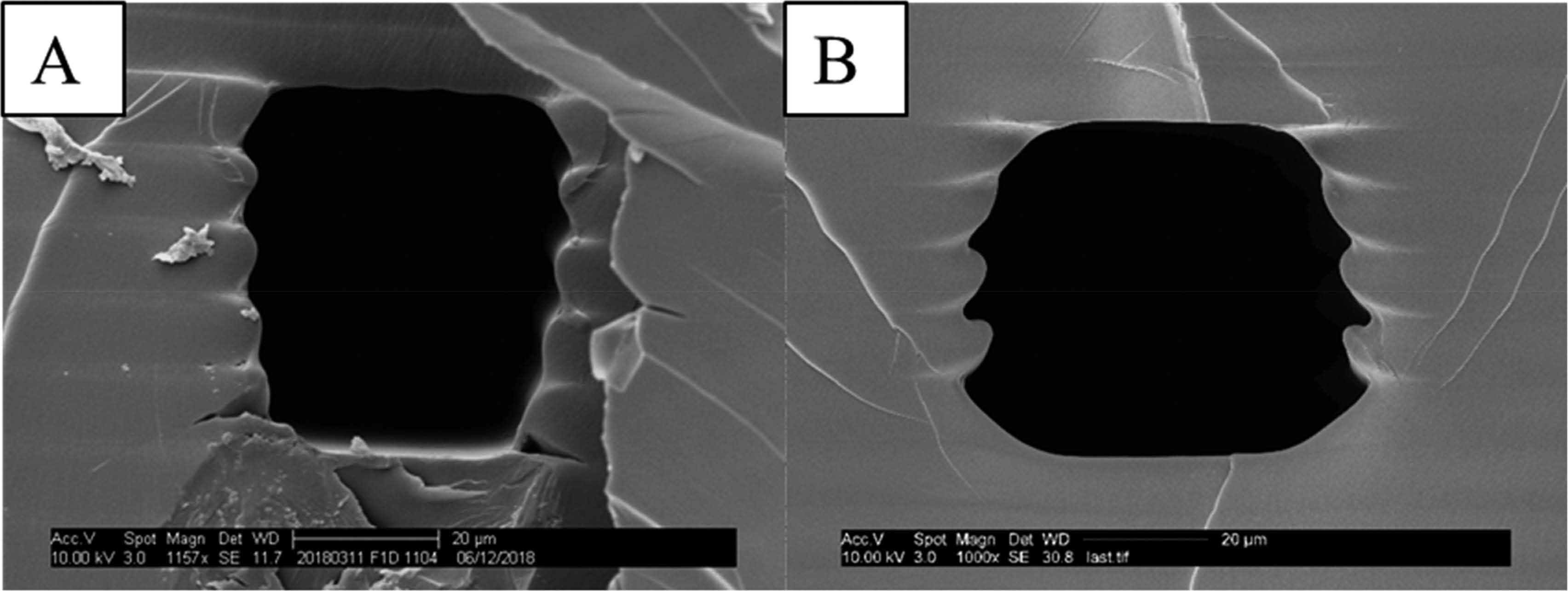
“Our 3D printing technology has the potential to revolutionize the creation and use of miniaturized diagnostic devices,” Woolley said. While 3D printed devices have been used in other diagnostic areas, this is the first time the canals have been printed at such a small scale, 50 micrometers, smaller than the width of a human hair. They achieved this by developing two new techniques. First, they created a unique resin that they used as ink in the 3D printer. Second, they used careful control of light exposure in the voxels at the edge of the printed channels to better control their height and width. This made it possible for the first time to separate biological materials of similar size on a chip.
“This technology is an excellent example of how microfluidics can open the door to taking protein analysis out of the laboratory, making it more accessible in low-resource settings and around the world,” said Seila Selimovic, Ph.D., director of the Engineered Tissues program at NIBIB. “These electrophoresis chips could one day be a point-of-care diagnostic for other small molecular biomarkers of diseases such as Alzheimer’s and Parkinson’s.”
3D printed microfluidic devices for microchip electrophoresis of premature birth biomarkers. Beauchamp, MJ, Nielsen, AV, Gong, H., Nordin, GP, and Woolley, AT (2019). Analytical Chemistry, 91(11), 7418-7425. doi:10.1021/acs.analchem.9b01395