The UK Ministry of Defense has confirmed that its F-35B Lightning stealth fighters attacked and destroyed drones over Jordan, as it announces additional protection measures for RAF Akrotiri.
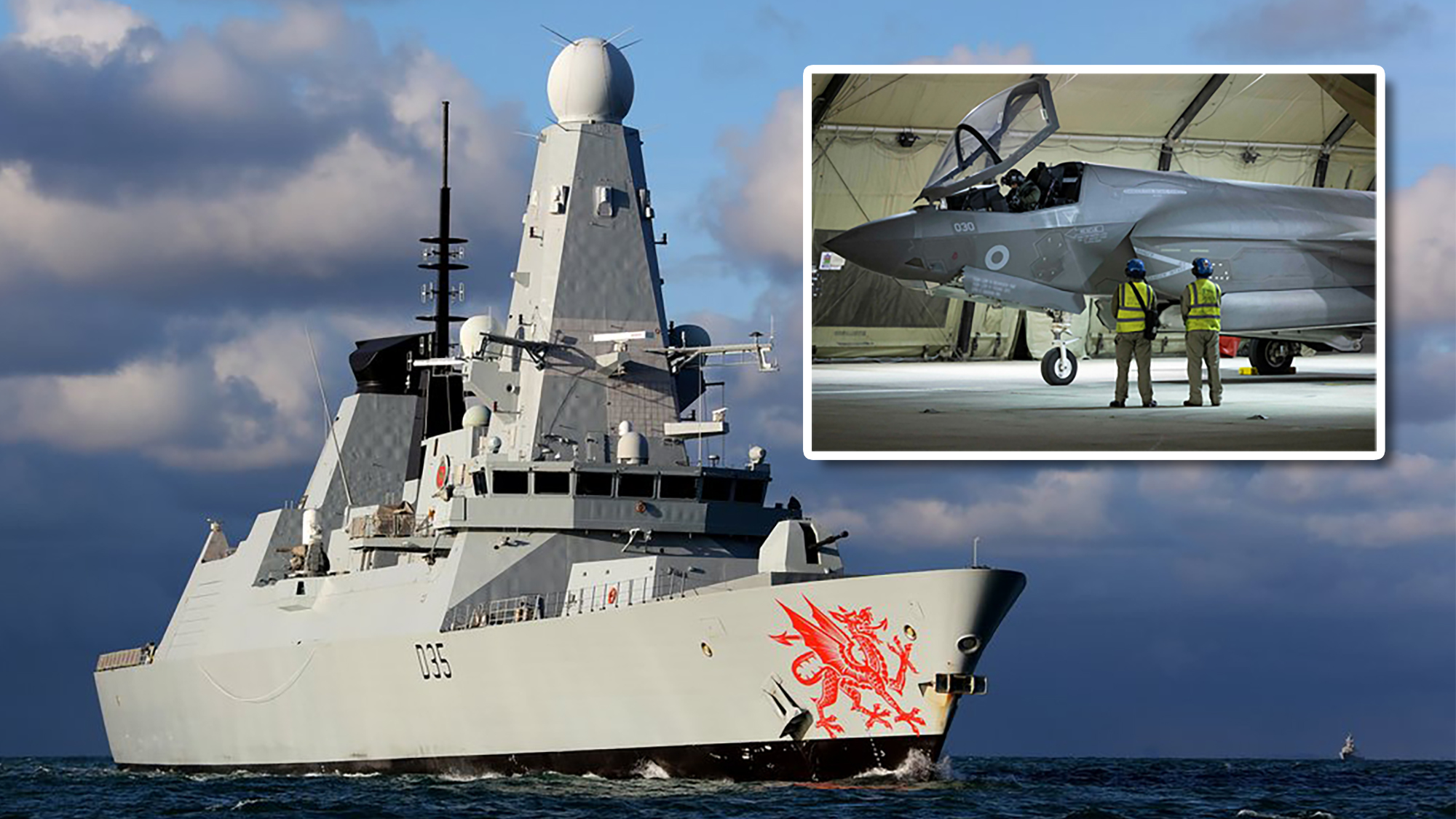
Prime Minister Keir Starmer announced via social media shortly after 1600 UTC on 3 March 2026, after much speculation in the British press, that the Royal Navy had been tasked with deploying the Type 45 air defense destroyer HMS Dragon (D35) and ‘helicopters with counter-drone capabilities’ to protect Cyprus from further drone attacks.
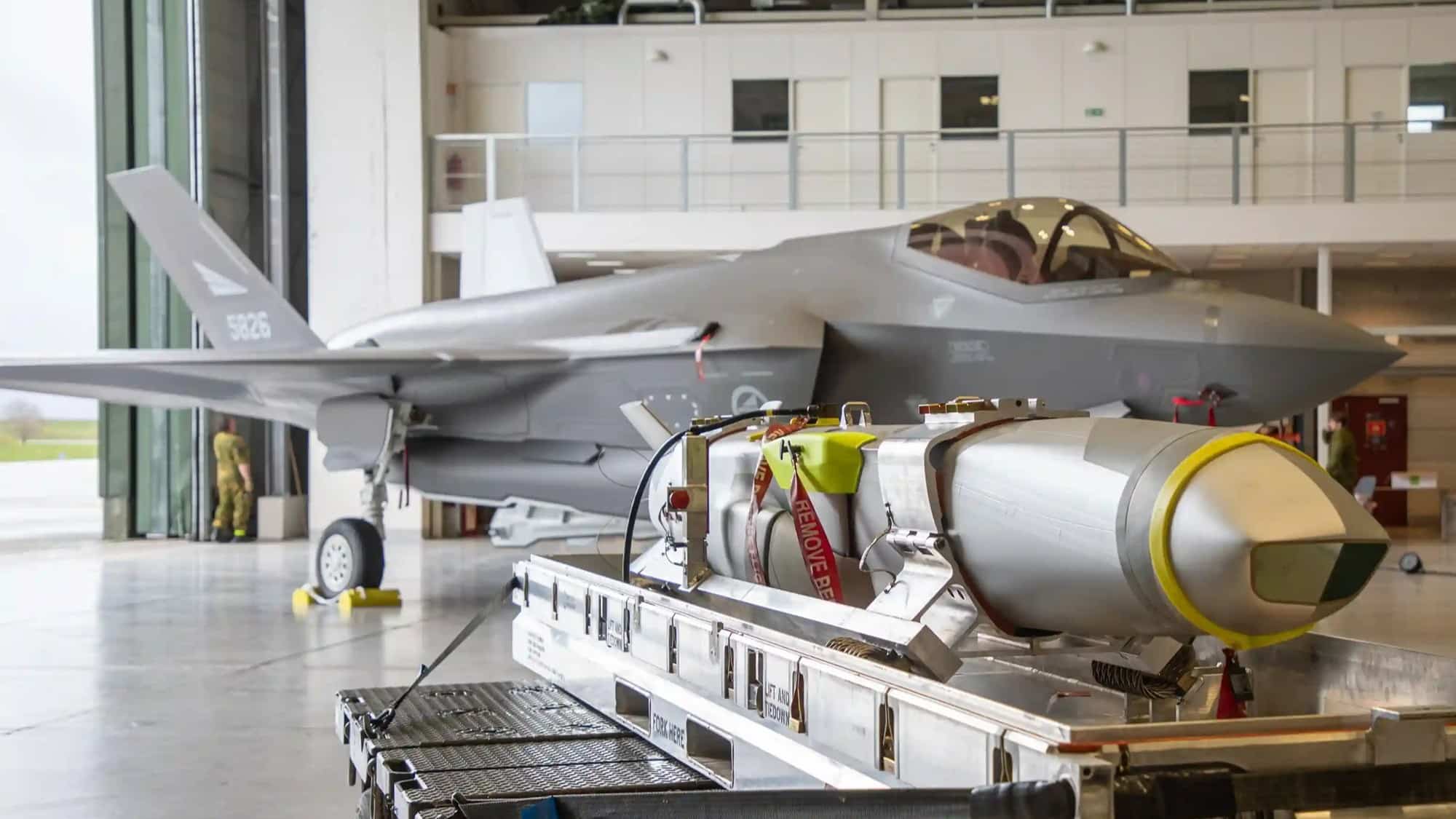
Shortly after, an official press release Further details were published by the Ministry of Defense, where it was also announced that Royal Air Force F-35Bs had shot down drones while operating from RAF Akrotiri over Jordan. Six F-35Bs were sent to RAF Akrotiri last month as the UK responded to rising regional tensions.
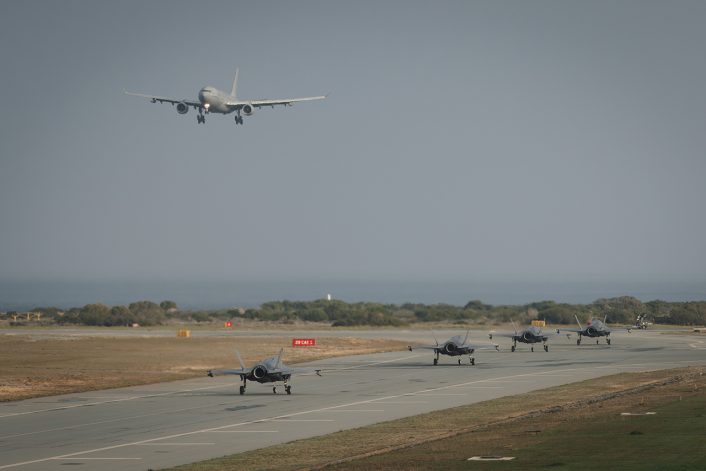
Although the UK’s F-35s, operated jointly by the Royal Air Force and the Fleet Air Arm, have previously undertaken frontline missions during Operation Shader, the MoD claims this is the first time they have actually engaged and destroyed a target in an actual mission. The exact number of drones shot down during the mission was not stated, although a video was released (embedded below).
An update on UK operations in the Middle East. pic.twitter.com/0YSomfmW5U
— Ministry of Defense 🇬🇧 (@DefenceHQ) March 3, 2026
Secretary of State for Defense John Healey said: “We are moving rapidly to further strengthen our defensive presence in the Eastern Mediterranean. HMS Dragon brings a world-class air defense capability, and our Wildcat helicopters are armed with Martlet missiles to counter the growing drone threat. I am deeply proud of the professionalism and bravery of our Armed Forces personnel who, in recent days, have acted successfully across the region to protect our allies and defend British interests.”
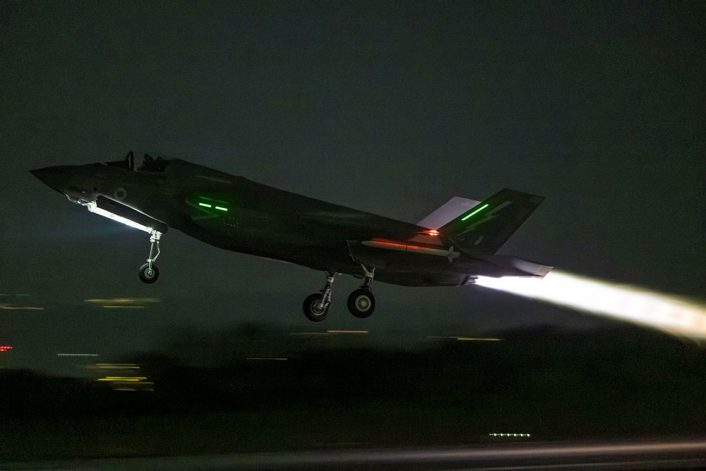
These F-35 clashes are in addition to those already announced by the United Kingdom after the attacks by the United States and Israel against Iran. On Sunday 1 March, a Royal Air Force Typhoon deployed to Qatar and operating with the joint UK-Qatar 12 Squadron, destroyed an Iranian drone heading towards Qatar. A UK anti-drone unit in Iraq also successfully shot down drones in Iraqi airspace that threatened coalition air bases.
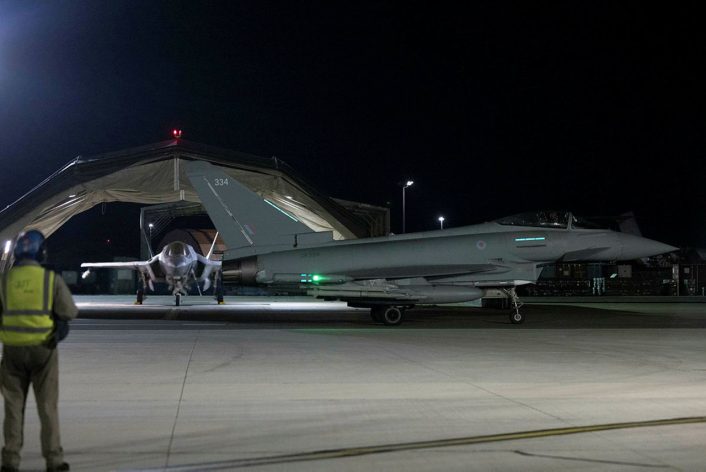
Protecting RAF Akrotiri
RAF Akrotiri, located in Cyprus but within British territory, was attacked by a one-way attack drone on the night of 1 March 2026, believed to have been launched by Iran or a regional force. The attack caused minimal damage and no injuries, and several more drones heading towards the base are believed to have been shot down before they could reach their target.
As we stated in a previous article, although the UK Government received a significant amount of criticism for “allowing” the drone attack to occur, it is worth noting that even some of the best defended locations in the Middle East have not been able to protect themselves against each He sent them only one ammunition.
We know that in addition to the F-35s deployed to the base during February, some additional capabilities were also deployed, including air defense radars and anti-UAS systems (C-UAS), but it is impossible to be definitively sure what has and has not been deployed there in the cargo holds of the Royal Air Force’s strategic transport aircraft.
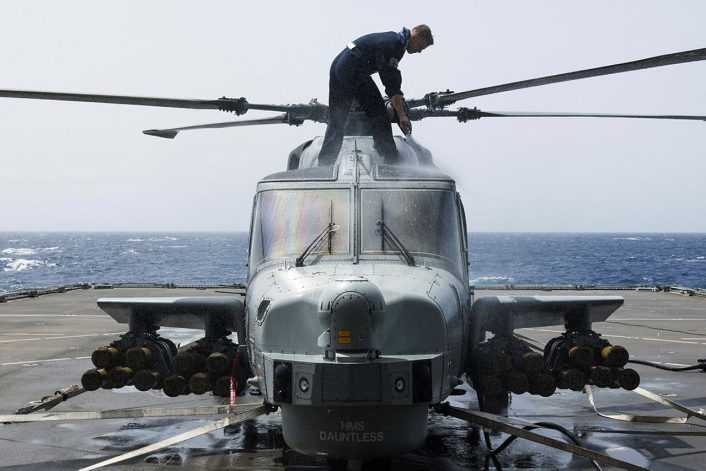
The helicopters to be deployed are the Royal Navy’s Wildcat HMA2s, which have proven themselves in this role during exercises and were tasked with protecting HMS Prince of Wales Carrier Strike Group from precisely these types of threats as it transits the Eastern Mediterranean, Suez Canal and Red Sea in 2025.
Two Wildcat helicopters can be operated from Type 45 destroyers, and it is possible that two of these helicopters will be “picked up” as the deployed ship sails along the south coast of England passing RNAS Yeovilton on its way south. Alternatively, if deployment is to be accelerated, Wildcats can be easily transported by air on a C-17 Globemaster III or Airbus A400M Atlas C1.
Type 45 destroyer
HMS Duncan (D37) was initially speculated to be the most likely candidate for a Type 45 to be deployed to the area, but HMS Dauntless (D33) and Dragon were also mentioned as being under consideration and three days in advance to set sail. Of the three, the Duncan is the ship apparently most ready to deploy, having recently been at sea. complete exercises that address very timely threat types. However, the Prime Minister (PM) specifically mentioned HMS Dragon in his social media statement, as well as in the Ministry of Defence’s follow-up press release.
As the situation in the Middle East remains volatile, we are deploying our Type-45 destroyer, HMS Dragon, to the eastern Mediterranean.
We will also send two Wildcat helicopters to Cyprus to reinforce the drone defense of our Cypriot partners.
Working alongside our allies, our… pic.twitter.com/cWerOOVEsu
— Ministry of Defense 🇬🇧 (@DefenceHQ) March 3, 2026
At the time of writing, HMS Dragon is scheduled to depart her lock at HMNB Portsmouth for the Upper Harbor Ammunition Facility (UHAF) at 2215 GMT on 3 March. UHAF, in the middle of Portsmouth Harbour, is where the Type 45s are loaded with their Aster 15 and Aster 30 surface-to-air missiles. Curiously, however, HMS Duncan is also scheduled to depart the port on 4 March.
In particular, compared to Duncan, Dragon has Completed Power Improvement Project (PIP) Upgrade in which the ship’s two diesel engines were replaced with three more reliable and powerful units. In addition to providing Additional energy overhead for new equipment.The project sought to mitigate the reliability problems that had infamously plagued the class while operating in warmer waters like the Mediterranean or East Suez.
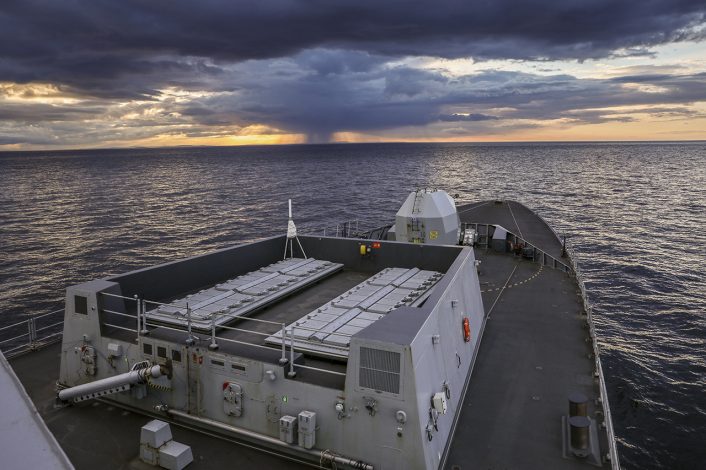
The Type 45 destroyers, also known as the Daring class, are the Royal Navy’s primary air defense ships and are often considered one of the most capable air defense ships currently in service. The ships currently have 48 vertical launch system (VLS) cells, but these will be gradually expanded. upgraded with 24 additional dedicated cells for the Common Anti-Aircraft Modular Missile (CAMM) or the Sea Ceptor missile carried by Royal Navy frigates.
Each ship carries two powerful radar systems: an aft-mounted S1850M long-range search radar and a SAMPSON multifunction radar carried on top of the integrated mainmast. Although at first glance the Type 45 appears to lack the flat-faced phased array radars that equip many modern warships, the nearly spherical SAMPSON is in fact a hybrid system. Instead of a fixed radome, where a mechanically scanned radar dish rotates within the dome, SAMPSON actually carries two active electronically scanned (AESA) radar faces on either side of the dome, which rotates entirely. This, in essence, means that the radar scans both electronically and mechanically.
Last in-depth article:
In focus: the Royal Navy’s Sampson radarhttps://t.co/gyNpxySgTN pic.twitter.com/wt3IXzAJMF
– Navy Lookout (@NavyLookout) May 25, 2020
By using two mechanical rotation-assisted radar faces instead of four radar faces, as seen on ships such as the Arleigh Burke-class destroyer, the Type 45 can mount its radar arrays much higher above the water surface. This gives a considerable advantage against low-flying targets such as surface missiles, drones and surface ships.
European reinforcements
Before the UK announced its additional deployments, Greece sent four F-16 Fighting Falcons to Paphos International Airport in Cyprus and also confirmed that two Hellenic Navy frigates would be stationed in the area. While no attacks have so far directly threatened the Republic of Cyprus itself – only the UK’s sovereign base areas – there is a clear risk of stray munitions reaching Cypriot territory.
France, whose facilities at Al Dhafra air base in the United Arab Emirates (UAE) were attacked by an Iranian drone on March 1, sent additional Dassault Rafale fighters to the region. When asked if the Rafale jets already parked at Al Dhafra had been involved in defending against Iranian attacks, Foreign Minister Jean-Noël Barrot said: “They have carried out operations to secure the airspace above our bases.”
🇫🇷🇦🇪 Nice photo showing three French Air and Space Force Rafale C multi-role fighters from EC 1/7 “Provence”, based at Al Dhafra, each equipped with three RPL 701 330-gallon supersonic external fuel tanks, taxiing towards the runway. https://t.co/UqDDnKmYCn pic.twitter.com/xQfjj67u5H
– Guy Plopsky (@GuyPlopsky) January 30, 2026
Together with Germany, both France and the United Kingdom have declared their willingness to carry out defensive actions against Iranian missile and drone launch sites in case attacks against coalition bases or regional allies continue. Interestingly, Germany and Poland said they had prior knowledge of the US-Israeli operation before its launch, something other countries, including France, said they were not aware of.
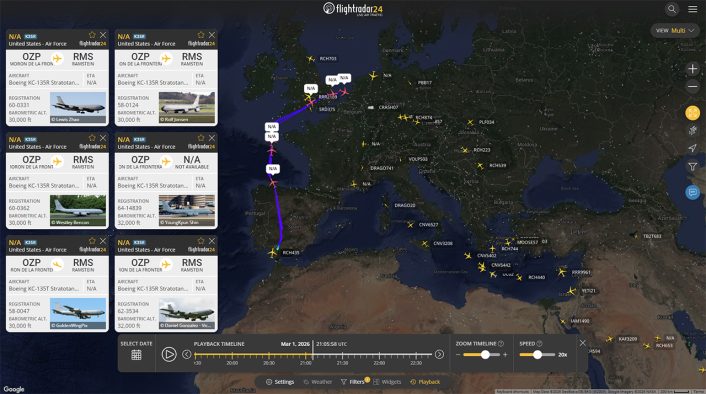
Spain has taken a firm stance against the US actions of directly denying permission that the US involves any of its bases in Spain in operations against Iran. Consequently, a huge train of refueling aircraft headed from their deployed locations at Morón Air Base and Rota Naval Air Station to Ramstein Air Base in Germany and Istres-Le Tubé Air Base in France. France has only occasionally hosted forward deployments of NATO aircraft since President Charles de Gaulle’s decision in 1966 to evacuate all US units based in the country, although Istres was notably used by KC-135s and U-2s during the NATO air campaign in Yugoslavia.
This is an emerging story and may be updated as new details become available.