
Programs that provide cash to mothers without strings attached can strengthen family ties and increase trust in parents.
Photo by Enigma_images, courtesy of iStockphoto
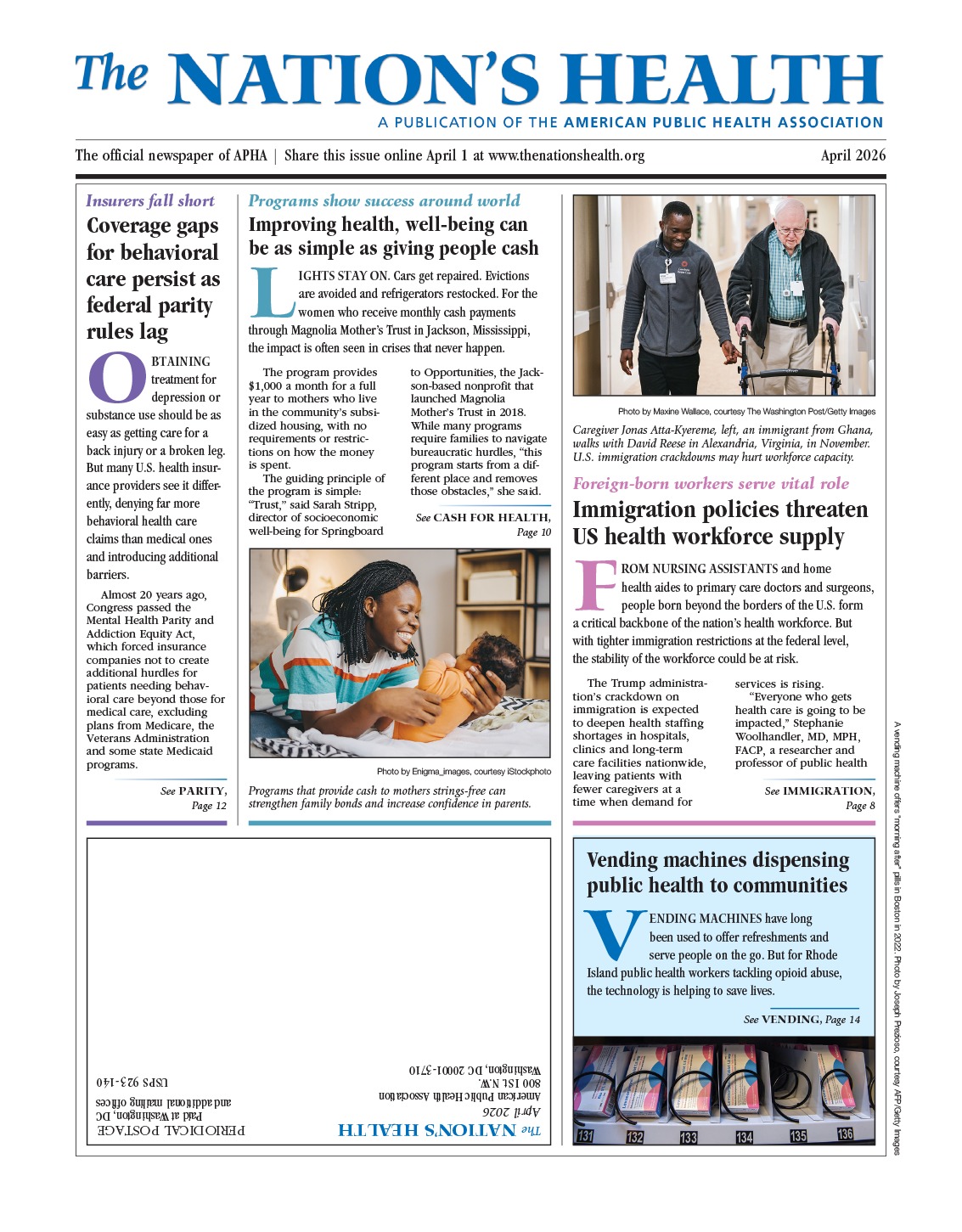
The lights stay on. Cars are repaired. Evictions are avoided and refrigerators are replenished. For women who receive monthly cash payments through Magnolia Mother’s Trust in Jackson, Mississippi, the impact is often seen in crises that never happen.
The program provides $1,000 a month for a full year to mothers living in subsidized housing in the community, with no requirements or restrictions on how the money is spent.
The program’s guiding principle is simple: “Trust,” said Sarah Stripp, director of socioeconomic well-being for Springboard to Opportunities, the Jackson-based nonprofit that launched Magnolia Mother’s Trust in 2018. While many programs require families to overcome bureaucratic obstacles, “this program starts from a different place and removes those obstacles,” she said.
Cash transfer programs have been successful around the world for decades, improving outcomes in education, mental health, breastfeeding, nutrition, and overall health and well-being. In many countries, payments to families are considered routine and studies show that almost 70% of countries include child allowances as a regular part of their social safety nets.
Data from programs of this type carried out in the United States are equally encouraging. Findings from more than 150 pilot programs and federal initiatives demonstrate that cash transfer programs can reduce poverty, improve health, and boost financial stability without reducing labor force participation. Funds are spent on essential needs, including food, clothing, utilities and transportation. Studies show that the largest and longest programs produce the greatest benefits.
Despite mounting evidence showing they work both in the United States and abroad, some critics remain opposed, insisting that recipients must prove they deserve help, or that they should somehow fix their circumstances on their own. This way of thinking is often softened when programs are funded by philanthropy, rather than public funds.
In Jackson, broader debates gave way to something simpler: listening. Springboard to Opportunities dedicated its early years to offering after-school programs, job training, parenting workshops, and education promotion in its largely subsidized housing communities. However, mothers’ repeated comments highlighted a critical need: While the classes were helpful, what families really needed was cash support.
As of 2018, with 20 mothers, Magnolia Mother’s Trust has grown to support cohorts of approximately 100 participants. The program provides not only $1,000 per month for 12 months, but also deposits $1,000 into a college savings account for each child.
To date, more than 550 mothers have completed the program, funded entirely by private philanthropy and administered internally. Early data indicates that families are using the funds to pay rent, buy food, repair vehicles and access medical care. Further research points to more profound results: increased parental confidence, stronger family bonds, reduced financial stress, and a lasting sense of control over their lives.
Magnolia Mother’s Trust, recognized as one of the country’s first and most influential no-strings-attached cash transfer programs, challenges long-held beliefs about who can be trusted with cash.
“When you look at the number of layers, paternalism, bureaucracy and all those different pieces that we put people through in order to simply take care of their families, it certainly seems like America’s social safety net is quite a bit behind other countries,” Stripp said. The Health of the Nation.

Lorrine Paradela received monthly payments through a Stockton, California, program that helped her pay for her car.
Photo by Nick Otto, courtesy of AFP/Getty Images
For a brief period, federal policy moved in that direction with the temporary expansion of the child tax credit during the early part of the COVID-19 pandemic. The program lifted millions of children out of poverty and brought the child poverty rate to historic lows. However, the expansion expired in December 2021 and child poverty rates have since returned to pre-pandemic levels.
To further illustrate the importance of cash support, new research shows declines in food sufficiency as the United States moves to reduce key safety net programs such as the Supplemental Nutrition Assistance Program under the Trump administration.
“Poverty is a fundamental driver of poor health,” said Aaron Richterman, MD, MPH, assistant professor of medicine in the Division of Infectious Diseases at the University of Pennsylvania. “Whatever outcome you look at, from a health standpoint, it’s much worse among low-income populations and people living in poverty.”
In a study in the lancet In December, Richterman and other researchers at the University of Pennsylvania’s Perelman School of Medicine showed that large-scale, government-led cash transfer programs significantly improved health in low- and middle-income countries, increasing rates of early prenatal care, institutional births, and assisted births.
The researchers found that programs that reached a larger proportion of the population generated greater benefits, including higher rates of breastfeeding, infant nutrition and vaccination coverage, and reductions in diarrhea and underweight status.
“Cash transfers have become a very popular type of poverty alleviation programs,” Richterman said. The Health of the Nation. “They are in hundreds of countries (high-income countries, low-income countries) around the world.”
Some programs impose conditions and require beneficiaries to meet certain benchmarks. But imposing barriers increases administrative costs, including costs associated with ensuring compliance. For that reason, unconditional cash transfers are increasingly favored, he said.
“These are types of no-strings-attached interventions and they’re popular because the administrative costs are fairly low, but there’s also a sense that ultimately people know best what they need to spend the money on,” Richterman said.
However, many American anti-poverty initiatives maintain strict eligibility requirements and work mandates.
“In practice, requirements often simply have the effect of kicking people off benefits — people who are, in fact, eligible but struggling to demonstrate compliance or navigate the paperwork,” said Laura Keen, MPP, U.S. program director at GiveDirectly, a nonprofit that delivers donations directly to people living in poverty. The Health of the Nation.

A Mississippi program provides $1,000 a month for a full year to mothers, as well as money for children’s college savings programs.
Photo by Mediaphotos, courtesy of iStockphoto
GiveDirectly launched its US operations in 2017, providing hurricane relief in Puerto Rico and Texas. Since then, the program’s footprint in the United States has grown dramatically. To date, it has provided more than $330 million in cash to more than half a million people. Worldwide, GiveDirectly has provided over $1 billion to over 2 million people.
“We don’t see people making reckless decisions,” Keen said. “We see people stabilizing their lives.”
GiveDirectly has expanded to specific initiatives like Rx Kids in Michigan, a public-private partnership that provides no-strings-attached cash to pregnant women and new mothers during what researchers describe as one of the most economically vulnerable periods in a family’s life.
The program has been linked to an 18% reduction in preterm births, a 27% decrease in low birth weight babies, and a 29% decrease in neonatal intensive care unit admissions, resulting in more than $6 million in healthcare savings. Researchers attribute the improvements to factors such as increased prenatal care and reduced smoking during pregnancy.
In Georgia, another initiative shows that cash can work as health policy. GiveDirectly partners with the Georgia Resiliency and Opportunity Fund, or GRO Fund, to administer “In Her Hands.” The program provides low-income women in urban, suburban, and rural communities with recurring, no-strings-attached monthly payments for several years. Like Magnolia Mother’s Trust in Mississippi, Georgia’s program was co-designed with residents and community leaders and emerged from stark economic disparities. The program initially provided $20,400 over two years to about 650 low-income women across the state.
“We clearly saw that the financial stability and overall well-being of participants improved,” said GRO Fund Executive Director Hope Wollensack, MPA. The health of the nation. “In our economy, health and wealth are interdependent. Cash is not charity. It is a practical tool that turns women’s experience of their own lives into better health, stronger families and more resilient communities.”
Participants reported stronger financial indicators, including greater savings and more consistent on-time bill payments. The ability to pay rent and utilities increased, while evictions decreased.
“The stability led to longer-term planning and notable improvements in health,” Wollensack said, noting that the program is funded primarily by private philanthropy, major foundations and individual donors.
For more, visit www.thegrofund.org/about-in-her-hands, www.springboardto.org and www.givedirectly.org.
- Copyright The Nation’s Health, American Public Health Association