Air Astana Group reported a 13.2% increase in total revenue to $331 million for the first quarter ended March 31, as the airline reallocated capacity to mitigate the impact of the conflict in the Gulf.
Despite revenue growth and a 3.0% increase in revenue passenger kilometers (RPK), the Almaty-based group, which operates in several key Central Asian markets, reported a significant decline in operating profitability during the period.
Specifically, earnings before interest, taxes, depreciation, amortization and rent (EBITDAR), a crucial metric for measuring core operating cash flow, decreased 19.6%. This sharp drop caused total EBITDAR to fall to $48.2 million, below the previous period’s high.
The group, which includes low-cost airline FlyArystan, recorded passenger volume of 1.95 million, a year-on-year decline of 3.3%, while improving its average load factor to 83.3%.
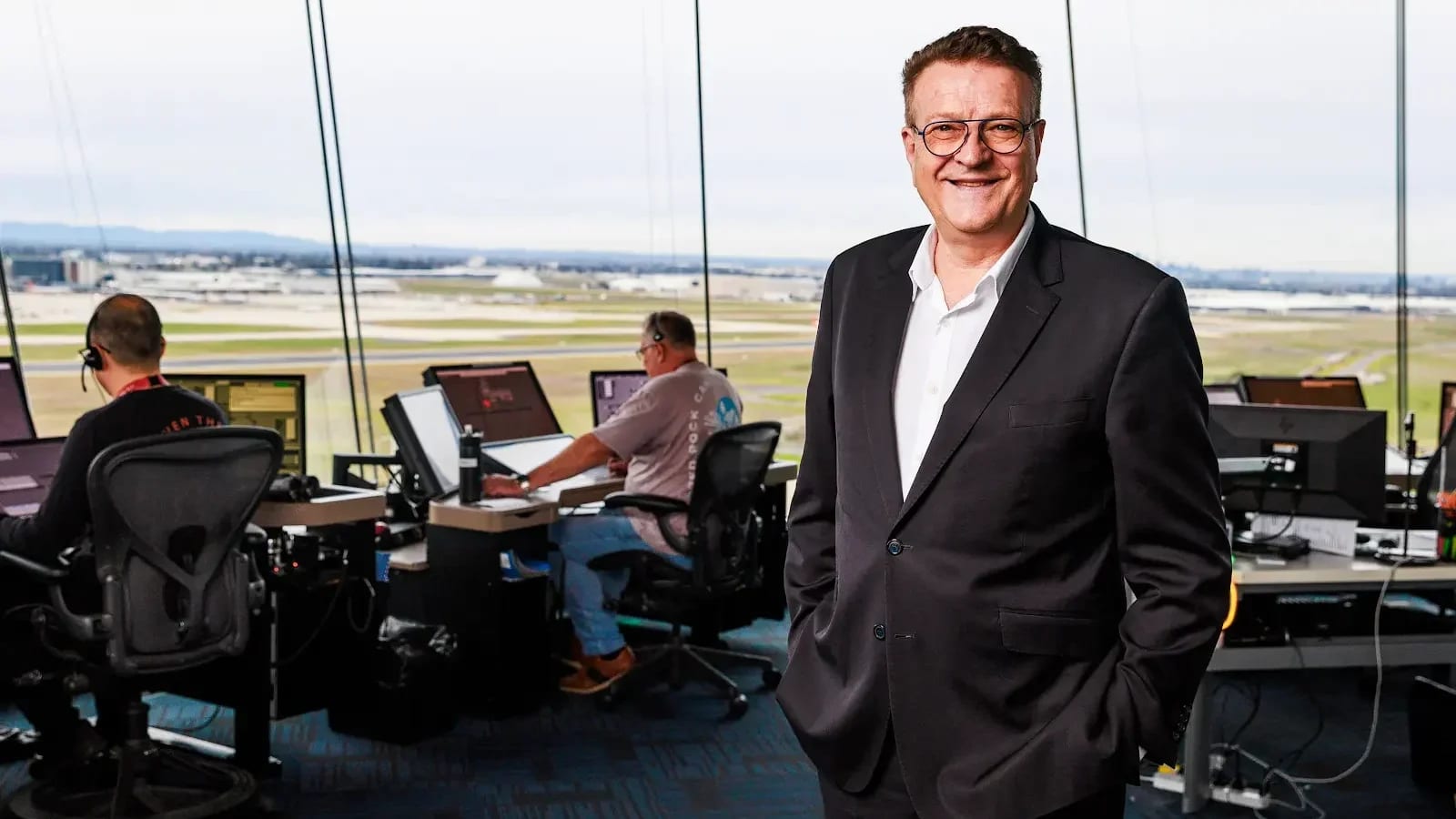
Incoming CEO Ibrahim Canliel highlighted the airline’s rapid operational response to regional instability.
“These are my first quarterly results as CEO of Air Astana and I am pleased to report that we have seen continued growth in revenue and traffic despite the market environment and continued cost challenges. With a modest increase in traffic (RPK +3.0%) we have seen revenue growth of 13.2% for the quarter, and unit revenue (RASK) +12.4%,” said Canliel.
To compensate for the suspension of flights to Doha, Dubai, Jeddah and Medina, the group moved its capacity to routes in India, Central Asia, the Caucasus and Southeast Asia.
“The first quarter of 2026 has posed challenges for the entire aviation industry, but has also provided Air Astana with a new opportunity to demonstrate our agility and resilience in the face of aversion. Within 48 hours of the start of the Gulf conflict, we had already begun to reallocate our aircraft to support the rapidly evolving demand conditions that have become a new norm. I am immensely proud of the response of my colleagues: from flying repatriation flights to providing greater transit opportunities for our business and travel passengers. pleasure,” Canliel said.
Unit revenue (RASK) rose 12.4% to $7.01 cents, supported by a 10% increase in average rates above plan in March and the implementation of a fuel surcharge. However, the cost per available seat kilometer (CASK) increased 19.8% to $7.30.
This increase was driven by higher labor, maintenance and ownership costs spread across a limited capacity base, as available seat kilometers (ASK) grew just 0.7%.
The group posted an after-tax loss of $21.1 million during the period, compared with a loss of $7.3 million in the first quarter of the previous year.
Operational challenges continued with the Pratt & Whitney PW1100G engines, with the group noting that the backlog of workshop repair work is expected to persist into 2028. Air Astana performed 15 engine replacements during the quarter and secured six additional engines through leases and purchases to support its fleet.
The Astana technical center successfully executed five Airbus C-checks, using its in-house MRO capabilities.
Network expansion continued with the launch of a three-times-weekly service to Shanghai in March, increasing total capacity between Kazakhstan and China to 23 weekly flights.
“Along with this operational response, we continue to advance our long-term network strategy. In the first quarter we launched our first flight to Shanghai, a city with a larger population than our home country. This adds additional destinations and frequencies to our existing routes to China and capitalizes on the enormous growth opportunity within our nearby megamarkets. We have also increased capacity to India, Central Asia and the Caucasus, providing a strong substitute for Gulf destinations,” Canliel said.
FlyArystan added Samarkand to its network “codeshared with Air Astana” and plans further expansion in China with routes to Xian and Urumchi.
The group reiterated its long-term strategy to expand its fleet to 86 aircraft by the end of 2030, consisting of 83 Airbus A320 family aircraft and three Boeing 787-9.