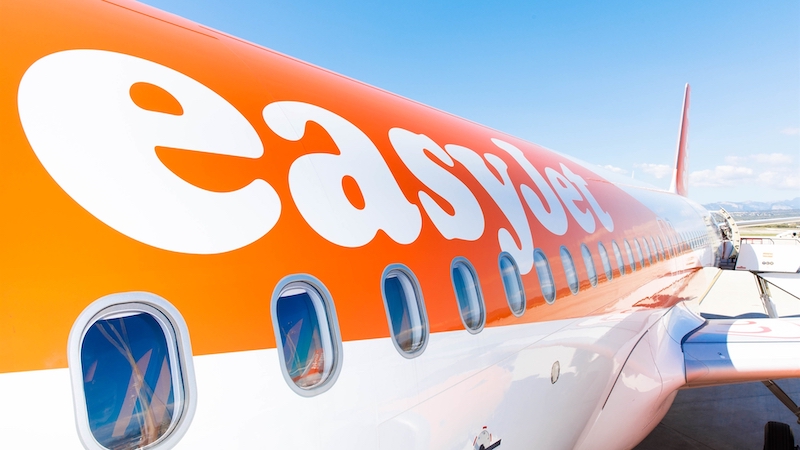
With the Takeover Code deadline on June 26, the clock is ticking for one of the most important deals in European low-cost aviation.
When castlethe $36 billion alternative investment firm, publicly confirmed on May 30 was considering a takeover bid for easyJet, the airline’s board turned to the well-known playbook. The approach was “highly opportunistic,” he said. The company “had not had any conversations” with the Minneapolis-based firm. The board was confident in its own strategy.
All of which may be completely true. And completely out of place.
The fact that an investment firm with deep roots in aviation finance has taken a 2.14% stake in easyJet and has publicly stated that it is considering a bid is, in itself, a sign.
The markets agreed and shares rose more than 11% on the day of the announcement.
The question now is not whether Castlelake’s approach is opportunistic, of course it is, but whether the opportunity is real and what it means for easyJet if it is.
The Asset Dislocation Argument
The core of Castlelake’s thesis, if it has one, is probably based on a simple observation: easyJet’s fleet of 356 aircraft, according to analyst estimates, is worth more than the airline’s entire market capitalization.
The company’s shares have fallen from a high of around 820p in 2021 to 398p at last Friday’s close. The decline is driven by a Overall loss of £552 million in the first half of FY26, investor anxiety over the impact of the Iran conflict on passenger demand and sustained pressure on jet fuel prices.
The market capitalization now stands at approximately £3-3.4 billion, down approximately 40% over the last twelve months.
Castlelake, which has financed deals with Delta Air Lines, Qatar Airways and Virgin Atlantic, and which bought a 32% stake in SAS as part of a consortium in 2023, knows how to read a portfolio of aircraft.
When a fleet is worth more than the airline that operates it, the rational question for an asset-focused investor is whether it is better to unlock value by managing the business or restructuring it.
Three scenarios, one deadline
Three broad paths are in circulation: maintaining easyJet as an independent, privately owned airline; position it for subsequent sale to a commercial buyer; or dissolve the business entirely.
The first option is the least disruptive and possibly the least profitable for Castlelake’s investor base.
The third is the most disruptive for the routes, for the personnel, for the 287 aircraft on order, 90 of which expire within three years. It is also the most consistent with the company’s asset management heritage.
A demerger or large-scale sale and lease program involving easyJet’s narrowbody fleet would represent one of the largest aircraft portfolio transactions in recent European aviation history.
It would also raise immediate questions about what happens to those 287 ordered planes. Would Airbus consider a replacement or reassignment of buyers for part of the order book?
Structural obstacles
Any formal offer faces significant obstacles. EU airline ownership rules require that the majority of European airlines be owned by EU or EEA nationals.
This is a threshold that a US buyer of a British airline that operates widely in continental Europe would struggle to meet in the post-Brexit environment.
It is unclear whether that problem can be resolved through structural engineering, a consortium approach, or a negotiated regulatory path.
Then there is Sir Stelios Haji-Ioannou, whose family owns around 15% of easyJet, making them the airline’s largest individual shareholder.
Sir Stelios left the board in 2010 after a long and bitter dispute over the airline’s fleet strategy. His opinion on any takeover bid could be decisive and is not yet known.
The most extensive reading
Whatever Castlelake’s final decision, cApital is moving up the aviation stack. The most sophisticated money in the sector is no longer primarily interested in routes or time slots. You are interested in assets: how much they are worth, how quickly they can be traded, and whether the airline that operates them is adding value or destroying it.
easyJet, caught between Ryanair and Wizz Air at the bottom and the restructured legacy airlines at the top, finds itself answering that question publicly, under a deadline, and its board insists it is fine.
The market, for now, is not entirely convinced.