Updated ,first published
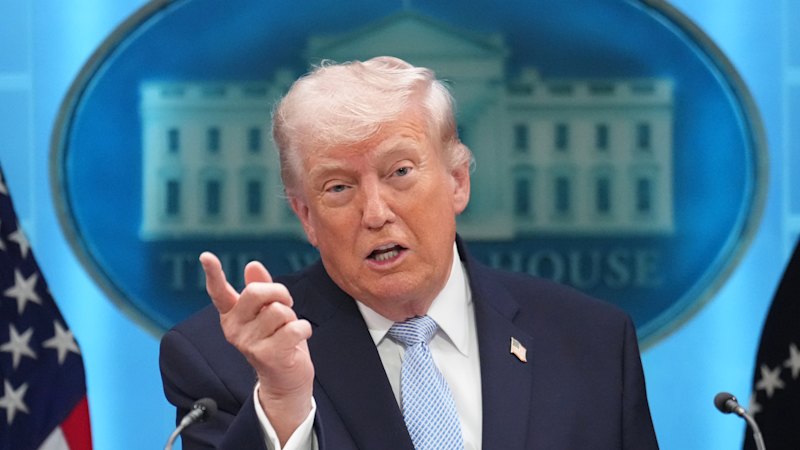
Washington: US President Donald Trump issued a grim warning that “an entire civilization will die tonight” as the hours approached the deadline he had set for Iran to accept a deal that includes reopening the Strait of Hormuz or face punishing attacks.
The social media post, published at 8 a.m. Tuesday (Washington time), is the latest escalation in the president’s rhetoric ahead of what he said would be a destructive four-hour bombardment of Iranian infrastructure such as power plants and bridges.
“An entire civilization will die tonight, never to return. I don’t want that to happen, but it probably will,” Trump wrote in Truth Social.
“However, now that we have a Complete and Total Regime Change, where different, more intelligent and less radicalized minds prevail, perhaps something revolutionary [sic] Something wonderful could happen, WHO KNOWS?
“We will find out tonight, one of the most important moments in the long and complex history of the world. 47 years of extortion, corruption and death will finally end. God bless the great people of Iran.”
Trump’s latest missive came as both sides failed to make discernible progress towards a deal before an 8pm (10am Wednesday AEST) deadline on Tuesday, despite the president saying Iran was negotiating in good faith.
“We have a plan… in which all the bridges in Iran will be decimated tomorrow night at 12 o’clock. [US time]“he said at a press conference on Monday.
“All of Iran’s power plants will be taken out of service, burning, exploding and never to be used again. It will happen in a four-hour period if we want it… The entire country could be trapped in one night, and that night could be tomorrow night.”
However, the Iranian regime has shown no signs of backing down, and officials are urging “all young people, athletes, artists, students and university students and their teachers” to form human chains around power plants to protect them, as the deadline approaches.
“The power plants that are our capital and national heritage, regardless of any taste or political point of view, belong to the future of Iran and the Iranian youth,” said Alireza Rahimi, identified by Iranian state television as secretary of the Supreme Council of Youth and Adolescents, in a video call broadcast on a news program.
Iranian President Masoud Pezeshkian also said in X that 14 million Iranians, including himself, had volunteered to sacrifice their lives in the war.
Iran is home to 90 million people. Many remain angry at the government for its bloody crackdown on nationwide protests, and the 14 million figure is likely intended to try to deter the promised US bombing campaign.
“I too have been, am and will be willing to give my life for Iran,” Pezeshkian wrote.
A growing chorus of international voices has called for restraint. French Foreign Minister Jean-Noël Barrot said on Tuesday (Australian time) that attacks on civilian and energy infrastructure “are prohibited by the rules of war and international law.”
“They would undoubtedly trigger a new phase of escalation, of retaliation, that would drag the region and the world economy into a vicious circle that would be very worrying and, above all, very damaging to our own interests,” he stated. France information television.
New Zealand Prime Minister Christopher Luxon also urged Trump not to comply. “The focus must be on ensuring that this conflict does not expand further,” he told Radio New Zealand.
“Any such actions, including the bombing of bridges, reservoirs and civilian infrastructure, would be unacceptable.”
Trump said he was not bothered by accusations that he would be committing war crimes by deliberately attacking civilian infrastructure. “I hope I don’t have to do it,” he said, while criticizing a journalist from The New York Times for asking the question.
Meanwhile, airstrikes across Iran killed at least 15 people on Tuesday, as Iran fired on Israel and Saudi Arabia, prompting the temporary closure for several hours of the King Fahd Causeway, a bridge linking Saudi Arabia to the island kingdom of Bahrain.
The 25-kilometer bridge is the only road connection between Bahrain, home of the US Navy’s Fifth Fleet, and the Arabian Peninsula.
Iran also fired on Israel, with reports of incoming missiles in Tel Aviv and Eilat. More than 1,900 people have died in Iran since the war began, but the Iranian government has not updated that number for days.
At least one attacker was killed and another seriously injured in a prolonged gunfight between police and assailants directly outside the building housing Israel’s consulate in Istanbul on Tuesday, according to media reports and a Reuters video.
Reuters video showed police officers drawing weapons and taking cover as gunshots could be heard for at least 10 minutes. One person was covered in blood.
Other images obtained by Reuters showed an apparent attacker moving between white police officers and parked white security buses and shooting for several minutes with an automatic rifle and a pistol.
A source with knowledge of the matter said there were no Israeli diplomats stationed in Türkiye at the moment.
Israel escalated its attacks, attacking a key petrochemical plant in Iran’s huge South Pars natural gas field and killing two commanders of the Islamic Revolutionary Guard Corps.
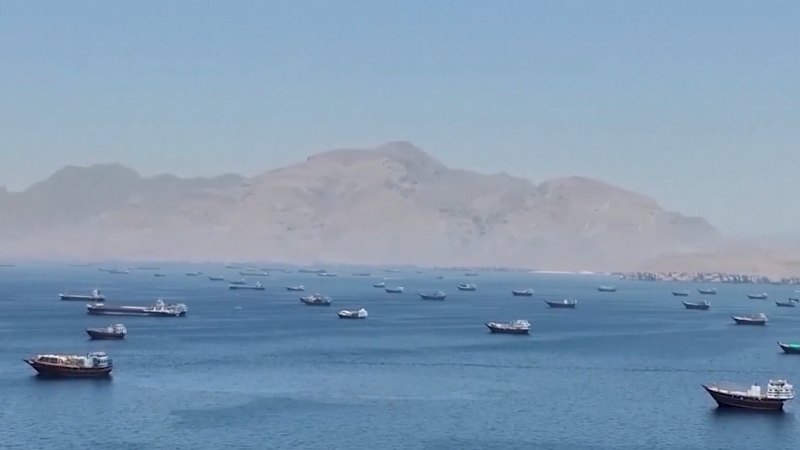
For the first time, Trump suggested that the United States could help Iran rebuild after the war, and even said that the United States could exert some control over the Strait of Hormuz – a crucial corridor for oil and shipping – by collecting tolls.
“I’d rather do that than let them have it. Why shouldn’t we? We’re the winners,” he said. “We won. They are militarily defeated. The only thing they have is the psychology of: ‘We are going to throw mines into the water.'”
Trump said the Iranian people were begging the United States to continue bombing Iran because they wanted to get rid of Tehran’s oppressive theocratic regime, even if it meant attacking civilian infrastructure.
“They would be willing to suffer that to have freedom,” he said. “They’re saying, ‘Please come back, come back, come back.’ They’ve lived in a world you know nothing about. It’s a violent, horrible world… They want us to keep bombing.”
However, there were several mixed messages from the president about whether he trusted the Iranian leaders with whom the United States is negotiating and how far he was willing to go in future military operations in Iran.
Trump called Iran’s leaders “disturbed people” who wanted a nuclear weapon, just a day after describing them as “crazy bastards” in a provocative social media post.
But he also said they were smarter, shrewder and far less radical than previous versions of the Islamic Republic’s leaders, and he believed they were negotiating in good faith.
Earlier, Trump said that while he would like to launch a mission to seize the country’s oil, Americans “unfortunately” wanted their troops to come home.
“If it were up to me, I would like to stick with oil, but I don’t think the American people really understand that,” he told reporters during an Easter function at the White House.
“They support what we are doing, but they would like it to end and [our troops] go back.”
At his press conference, Trump was asked about the apparent contradiction between his threats to bomb Iran “back to the Stone Age” and his message that the war was coming to an end.
“Which is it?” asked a journalist. Trump responded: “I can’t tell you, I don’t know. It depends on what they say.” [the Iranians] do. “This is a critical period.”
The president reiterated that he felt betrayed by American allies who did not help in the war, including Australia, Japan and South Korea, as well as NATO members.
“You know who else didn’t help us? South Korea didn’t help us. You know who else didn’t help us? Australia didn’t help us. You know who else didn’t help us? Japan,” he said.
Trump claimed that America’s European allies stayed out of the war because of simmering tensions over their demand to seize the Danish-controlled territory of Greenland.
“We want Greenland. They don’t want to give it to us, and I said, ‘Bye-bye,'” he said, before walking off stage.
With AP and Reuters
Get a note directly from our foreigner correspondents about what’s making headlines around the world. Subscribe to our weekly What in the World newsletter.
 Michael Koziol is North America correspondent for The Age and Sydney Morning Herald. He is a former Sydney editor, deputy editor of the Sun-Herald and a federal political reporter in Canberra.Connect via unknown either email.