what is
Carbon monoxide (CO) is an odorless, colorless gas that kills without warning. It takes the lives of hundreds of people each year and sickens thousands more.
Many household items, including gas and oil boilers, portable generators, and charcoal grills, produce this poisonous gas.
Symptoms
The most common symptoms of CO poisoning are headache, dizziness, weakness, upset stomach, vomiting, chest pain, and confusion. CO symptoms are often described as “flu-like.”
If you breathe in too much CO, it can make you faint or kill you. People who are sleeping, drunk, or under the influence of other substances can die from CO poisoning before showing symptoms.
Risk factors
Everyone is at risk of CO poisoning. Babies, the elderly, and people with chronic heart disease, anemia, or breathing problems are more likely to get sick from CO.
Each year, more than 400 Americans die from unintentional non-fire-related CO poisoning, more than 100,000 visit an emergency department, and more than 14,000 are hospitalized.
Reduce risk
CO is found in vapors produced whenever fuel is burned in cars or trucks, small engines, stoves, lanterns, grills, fireplaces, gas stoves, or ovens. CO can accumulate indoors and poison people and animals that breathe it. However, you can reduce the risk of CO poisoning with a few small steps.
CO detectors
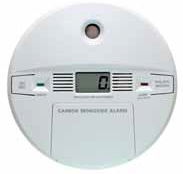
Install battery-operated or battery-backed CO detectors near each sleeping area of your home.
Check your CO detector batteries when you change the time on your clocks each spring and fall to make sure they are working properly.
Consider purchasing a detector with a digital readout. This type of detector can tell you the highest level of CO concentration in your home, as well as sound an alarm.
Replace your CO detector following the manufacturer’s instructions or every 5 years. Set a calendar reminder on your smartphone or other device when you purchase and install the detector.
Oil and gas boilers and other appliances.
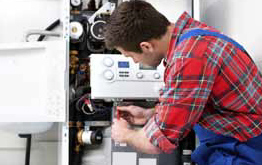
Have a qualified technician check your heating system, water heater, and any other appliance that burns gas, oil, or coal every year.
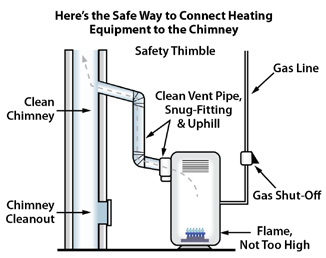
Make sure your gas appliances have proper ventilation. Horizontal vent pipes for appliances, such as a water heater, should rise slightly to the outside, as shown below. This prevents CO leaks from occurring if joints or pipes are not properly tightened.
When purchasing gas equipment, only purchase equipment that bears the seal of a national testing agency, such as Underwriters’ Laboratories.
If you smell an odor in your gas refrigerator, seek expert service. A smell from your gas refrigerator could mean there could be a CO leak.
Never heat your home with a gas oven. Do not cook or burn anything in an unvented stove or fireplace.
Fireplaces, charcoal and portable appliances.
Have your chimney inspected or cleaned every year. Chimneys can become clogged by debris, which can cause CO to build up inside your home or cabin.
Never burn charcoal indoors. Burning coal (red, gray, black or white) emits CO.
Never use a portable gas stove indoors. Do not use portable flameless chemical heaters indoors.
Portable generators
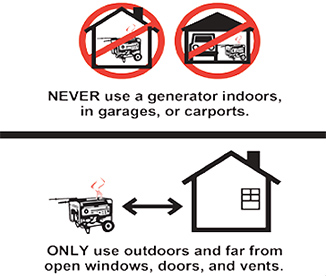
Never use a generator inside your home or garage, even if the doors and windows are open.
Use generators only outdoors, more than 20 feet away from windows, doors and vents.
When using a generator, use a battery-operated or battery-backed CO detector in your home.
Automobile
Have a mechanic check your car or truck’s exhaust system every year. A small leak in the exhaust system can cause a build-up of CO inside the car.
Never run your car or truck inside a garage attached to a home, even with the garage door open. Always open a detached garage door to let in fresh air when driving a car or truck inside.
If you drive a hatchback car or SUV, when you open the tailgate, open the vents or windows to ensure air circulation. If only the rear door is open, CO from the exhaust will enter the car or SUV.