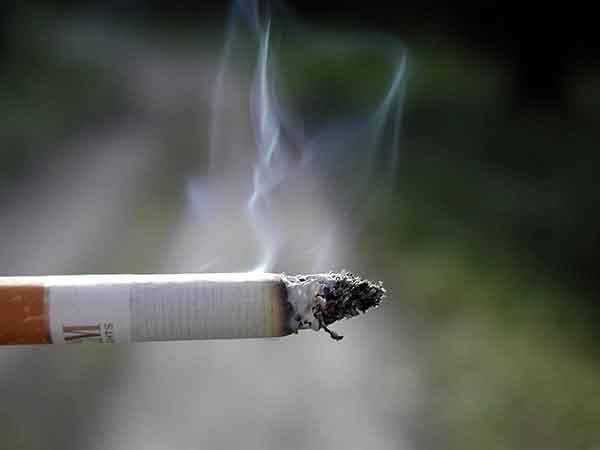
What is passive tobacco smoke?
Passive tobacco smoke is the combination of the smoke released by a tobacco product when it is burned and the smoke exhaled by a smoker. It is also called environmental tobacco smoke, involuntary smoke and passive smoke.
More than 7,000 chemicals have been identified in secondhand tobacco smoke. At least 69 of these chemicals are known to cause cancer, including arsenic, benzene, beryllium, chromium, and formaldehyde.
How are people exposed to secondhand smoke?
People can be exposed to secondhand smoke in homes, cars, workplaces, and public places. In the United States, the source of most secondhand smoke is cigarettes, followed by pipes, cigars, and other tobacco products.
What cancers are associated with secondhand smoke?
Inhaling secondhand smoke causes lung cancer in non-smokers. Some research also suggests that secondhand smoke may increase the risk of breast cancer, sinus cavity cancer, and nasopharyngeal cancer in adults and leukemia, lymphoma, and brain tumors in children, although more research is needed on this topic.
How can non-smokers’ exposure be reduced?
There is no safe level of exposure to secondhand smoke; Even low levels of secondhand smoke can be harmful. In the United States, legislation has helped reduce nonsmokers’ exposure to secondhand smoke. Federal law prohibits smoking on all domestic airline flights, on almost all flights between the United States and foreign destinations, on interstate buses, and on most trains. Smoking is also prohibited in most federally owned buildings. Many state and local governments have also passed laws banning smoking in public facilities, such as schools, hospitals, and airports, as well as private workplaces, including restaurants and bars.
Internationally, a growing number of countries require all workplaces, including bars and restaurants, to be smoke-free.
Selected references:
- National Toxicology Program. Tobacco-Related Exposures, Carcinogen Report, Fifteenth Edition. Triangle Park, North Carolina: National Institute for Environmental Health and Safety, 2021. Also available online. Last accessed December 8, 2022.
- Office of Smoking and Health. About secondhand smoke. Atlanta, GA: US Centers for Disease Control and Prevention, 2024. Available online. Last accessed June 13, 2024.
- US Department of Health and Human Services The health consequences of involuntary exposure to tobacco smoke: report of the Surgeon General. Rockville, MD: US Department of Health and Human Services, Centers for Disease Control and Prevention, Coordinating Center for Health Promotion, National Center for Chronic Disease Prevention and Health Promotion, Office on Smoking and Health, 2006.
- US Department of Health and Human Services The Health Consequences of Smoking: 50 Years of Progress: Report of the Surgeon General. Atlanta: US Department of Health and Human Services, Centers for Disease Control and Prevention, National Center for Chronic Disease Prevention and Health Promotion, Office on Smoking and Health, 2014.