Updated ,first published
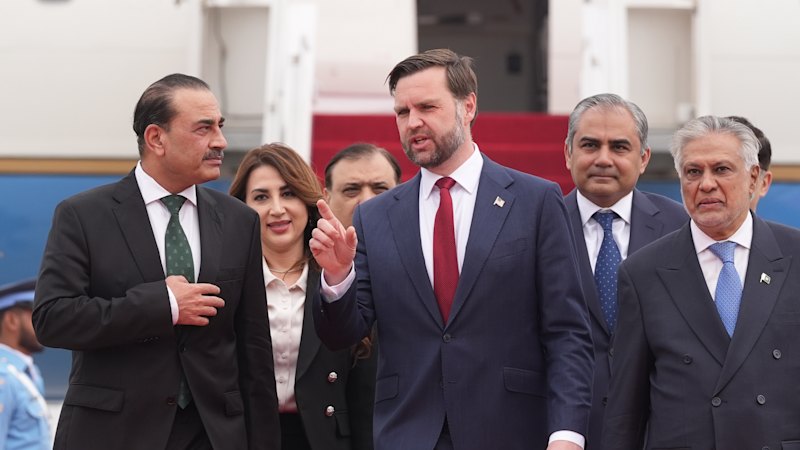
US Vice President JD Vance flew to Pakistan’s capital Islamabad on Saturday for high-stakes talks aimed at ending the six-week war with Iran, despite Tehran’s insistence that negotiations could not begin without commitments on a ceasefire in Lebanon.
As talks began, Reuters reported that the United States had agreed to release Iranian assets frozen in banks in Qatar and elsewhere. An anonymous Iranian source said the United States would release $6 billion in frozen funds.
The American delegation, led by Vance and made up of President Donald Trump’s special envoy, Steve Witkoff, and his son-in-law, Jared Kushner, arrived in Islamabad after a refueling stop in Paris. The Iranian delegation, led by Parliament Speaker Mohammad Baqer Ghalibaf and Foreign Minister Abbas Araghchi, arrived on Friday.
Ghalibaf said on He said talks would not begin until those promises were fulfilled.
The Reuters source, who did not want to be identified due to the sensitivity of the matter, said unfreezing the assets was “directly related to ensuring safe passage through the Strait of Hormuz”, which is expected to be a key issue in the talks.
The source welcomed the move as a sign of “seriousness” in reaching a deal with the United States at talks in Islamabad.
The $6 billion was originally frozen in 2018. It was scheduled for release in 2023 as part of a prisoner exchange between the United States and Iran, but the release was blocked by then-U.S. President Joe Biden following the Palestinian militant group Hamas’ October 7, 2023, attacks on Israel.
The United States has not made any public comment on the matter.
Israel and the United States have said the Lebanon conflict is not part of the ceasefire, while Tehran insists it is.
Ghalibaf separately said Iran was willing to reach a deal if Washington offered what he described as a genuine deal and granted Iran its rights, Iranian state media reported.
The White House had no immediate comment on the Iranian demands, but Trump posted on social media that the only reason the Iranians were alive was to negotiate a deal.
“The Iranians don’t seem to realize that they have no cards other than short-term extortion of the world through the use of international waterways. The only reason they are alive today is to negotiate!” said.
Vance, speaking while en route to Pakistan, said he hoped for a positive outcome. “If they’re going to try to play us, then they’re going to find that the negotiating team is not that receptive,” he said, adding that Trump had given the team “some pretty clear guidelines.”
Pakistani officials have held separate preliminary talks with advance teams from both sides, sources in Islamabad said.
Iran’s semi-official Tasnim news agency said they included 70 members from Tehran, including technical specialists in the economic, political and security fields, as well as media personnel and support staff. About 100 members of an American advance team were in the city, a Pakistani government source said.
“We are very positive,” said another Pakistani source close to the discussions. Asked if talks would end on Saturday, the source said: “Too early to say. They have instructions to either close a deal or walk away. Therefore, they are in no hurry. These talks are not scheduled.”
Islamabad was under an unprecedented lockdown before the talks, with thousands of paramilitary and army troops on the streets.
“We have deployed multi-layer security for this event, which relies on coordination, intelligence and constant monitoring to achieve zero disruption and complete control,” Pakistan’s junior interior minister Talal Chaudhry told Reuters.
In another development, China is preparing to transfer shoulder-mounted anti-aircraft missiles known as MANPAD to Iran, CNN reported, citing US intelligence sources it did not name.
The network said there were indications that Beijing was working to route shipments through third countries to mask their origin. The US State Department, the White House and the Chinese embassy in Washington did not immediately respond to Reuters requests for comment.
Trump on Tuesday announced a two-week ceasefire in the war, halting US and Israeli airstrikes on Iran.
But it has neither ended the Iranian blockade of the Strait of Hormuz, which has caused the biggest ever disruption to global energy supplies, nor calmed the parallel war between Israel and Iran-backed Hezbollah in Lebanon.
Fighting continues in Lebanon
Israel’s ambassador to the United States, Yechiel Leiter, and his Lebanese counterpart, Nada Hamadeh Moawad, will hold talks in Washington on Tuesday, Israeli and Lebanese officials said, amid conflicting accounts of what those talks would cover.
Lebanon’s presidency said the two had held a phone call on Friday and agreed to discuss announcing a ceasefire and setting a start date for bilateral talks mediated by the United States. But Israel’s embassy in Washington said the talks would constitute the start of “formal peace negotiations” and that Israel had refused to discuss a ceasefire with Hezbollah.
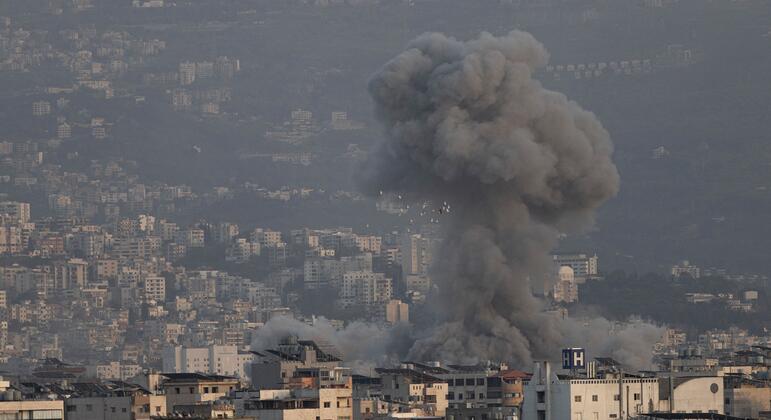
Israeli attacks continued on Friday throughout southern Lebanon. An attack on a government building in the city of Nabatieh killed 13 members of Lebanon’s state security forces, President Joseph Aoun said in a statement.
Hezbollah said in a statement on its Telegram channel that it fired volleys of rockets at cities in northern Israel in response. Hours after the ceasefire was announced, Israel launched the largest attack of the war, killing more than 350 people in surprise attacks in densely populated areas, Lebanese authorities said.
Tehran’s agenda in the talks also includes demands for major new concessions, including an end to sanctions that crippled its economy for years, and recognition of its authority over the Strait of Hormuz, where it intends to charge transit fees and control access, in what would amount to a huge shift in regional power.
The hotspot of Hormuz
Iran’s ships were sailing through the Strait unimpeded on Friday, while those from other countries remained locked inside.
Traffic through the strategic waterway has shown few signs of a significant rebound since the truce began, as shipowners await clarification of their status. A Russian-flagged supertanker passed through the strait on Thursday night, ship tracking data shows, but that was a rare example.
Disruptions to energy supplies have fueled inflation and slowed the global economy, and the impact is expected to last for months even if negotiators succeed in reopening the Strait.
The current blockade has kept pressure on oil prices. US crude oil swung between gains and losses throughout the session as traders unwound positions over the weekend to remain neutral ahead of Saturday’s talks. Prices were below $97 per barrel.
The hard line taken by Iran’s leaders ahead of negotiations came after a defiant message from its new Supreme Leader, Ayatollah Mojtaba Khamenei, on Thursday.
Khamenei, who has yet to be seen in public since taking power from his father, who died on the first day of the war, said Iran would demand compensation for all damage caused by the war.
“We will certainly not leave the criminal aggressors who attacked our country unpunished,” he said.
Although Trump has declared victory and downgraded Iran’s military capabilities, the war has failed to achieve many of the goals he set out to begin with: depriving Iran of the ability to attack its neighbors, dismantling its nuclear program, and making it easier for its people to overthrow its government.
Iran still possesses missiles and drones capable of attacking its neighbors and a stockpile of more than 400 kilograms of uranium enriched close to the level needed to make a bomb. Its clerical rulers, who faced a popular uprising just a few months ago, resisted the attack with no signs of organized opposition.
Reuters, Bloomberg
Get a note directly from our foreigner correspondents about what’s making headlines around the world. Subscribe to our weekly What in the World newsletter.