Starknet, the Ethereum Layer-2 network, has reportedly suffered a new mainnet downtime, adding another outage to a growing list of reliability issues in 2025. While price data for Starknet tokens remained limited at the time of this publication, the network still secures around $548 million in value, so every hour offline traps real money and freezes real transactions.
This comes as Ethereum scaling solutions compete to attract users and developers, even as outages remind everyone that faster and cheaper doesn’t always mean safer.
DISCOVER: The best Ethereum meme coins to buy in 2026
What just happened to Starknet and why should everyday users care?
Starknet is the so-called Layer-2 network for Ethereum. Think of it as a fast lane built on the Ethereum highway that bundles many transactions and then sends the result to Ethereum for security. It uses a technology called ZK-rollup, which relies on advanced cryptography to prove that batch transactions are valid without showing each step on Ethereum itself.
In 2025, that express lane remained stagnant. The Starknet incident itself reportPrevious outages related to their Grinta update (v0.14.0) caused sequencer crashes and issues with the old Cairo0 code. The sequencer is the piece of software that orders transactions on Starknet, similar to a traffic cop deciding who goes first at a busy intersection.
When that traffic cop fails, everything goes backwards. In September 2025, Starknet downtime lasted up to nine hours and even forced two transaction reorganizations that wiped about an hour of network history.
During a rebase, the chain “rewinds” to a previous state and creates a new version, which can cancel trades and transfers that users thought were final. That means a trade you made or a loan you repaid on Starknet could disappear and need a second try.
STARKNET OUTAGE UPDATE
Starknet has been down for over 2 hours and the network is currently experiencing downtime.
• The team has recognized the problem.
• Investigation is ongoing
• Restoration efforts are in progress
• Price holds well so farTrack updates.… pic.twitter.com/pJAu2uahen
– Wise Advice (@wiseadvicesumit) January 5, 2026
Starknet is now among the largest layers 2 on Ethereum with around $548 million locked. That money is in DeFi applications, NFT marketplaces, and wallets that depend on the network staying active.
So when Starknet goes down, users can’t move funds, close positions, or react to price swings, while markets elsewhere on Ethereum continue to move without them.
If you want to brush up on how Ethereum scaling works more generally, 99Bitcoins covered it in detail when Ethereum stablecoin transfers reached $8 billion in volume on the Ethereum network. That overview helps you see why these layers are so important.
How does this disruption change the layer 2 race on Ethereum?
Starknet competes with other Ethereum Layer-2 such as Arbitrum, Optimism, zkSync, and Coinbase’s Base. Each offers lower fees and faster confirmations than the Ethereum mainnet, but each remains an independent network with its own risks.
Users choose them like they choose banks or brokers: whoever feels safer and more fluid over time gains deposits and volume.
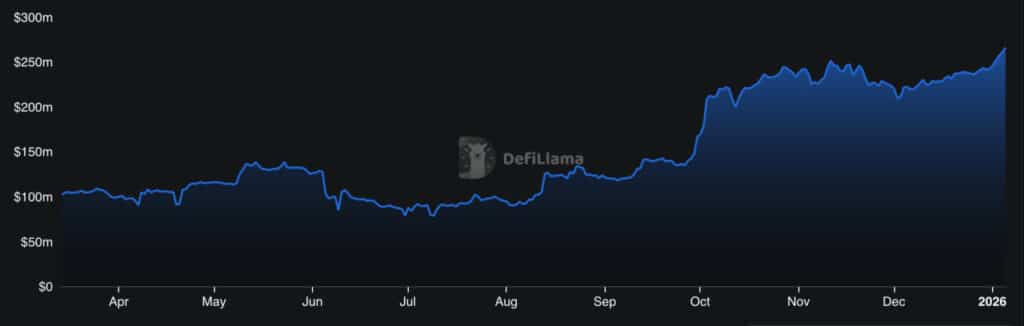
(Source: Starknet Total Locked Value Increase Before Incident / DefiLlama)
Repeated outages undermine Starknet’s history of reliability. While it markets advanced cryptography and strong Ethereum security, users experience something simpler: “Can I send my money when I need it?” Networks like Arbitrum and Optimism have their own problems, but they didn’t suffer from the same pattern of long downtimes in 2025. That difference determines where developers launch new apps and where users deposit their funds.
Meanwhile, ZK’s accumulation sector continues to change. ZKsync Lite will be retired in 2026 as teams migrate to newer versions. When the base infrastructure changes so quickly, disruptions remind everyone that this technology is still young.
Even if Ethereum upgrades themselves, like the ones we cover in our guide to upcoming Ethereum upgrades, aim to make the main chain more efficient, the upper Layer 2s still need to prove they can stay online.
Starknet is also pushing to decentralize its sequencer so that one entity no longer controls the order of transactions. The recent incidents have raised questions about whether the network can safely make that leap. Hasty or flawed decentralization could spread instability rather than reduce it, especially when billions of dollars depend on that infrastructure.
For Ethereum itself, these setbacks go both ways. On the one hand, they highlight the risks of building on new infrastructure. On the other hand, they show the demand for scaling and the pressure on teams to improve quickly, which aligns with the long-term goals Vitalik Buterin set for network growth that we discussed in our article on Ethereum.
DISCOVER: The best Ethereum meme coins to buy in 2026
What should Starknet and Ethereum users really do now?
Before transferring funds to Starknet, ask three simple questions. One: Do I understand the risk of my money being temporarily stuck? Two: Do I really need lower fees for this trading or performance strategy? Three: Can I leave that money alone if something breaks for a few hours or even a day?
DeFi traders and users should also look at incident reports like the one Starknet posted on your blog. If I were an investor, I would closely monitor how the team handles this incident over the next few days.
Teams that publish clear timelines, fixes, and follow-up plans generally handle issues better over time than teams that remain silent. But transparency does not eliminate risk. It only helps you judge how seriously a project treats its deposits.
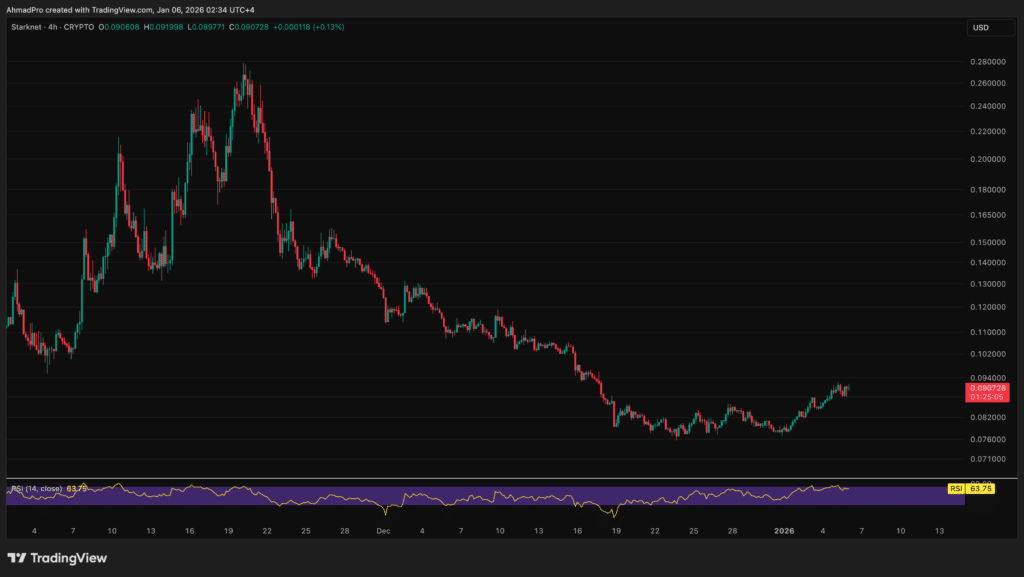
(Source: STRKUSD / TradingView)
For beginners choosing where to start with Ethereum DeFi, a simple rule helps: favor stability first and speed second. Learn how the Ethereum mainnet, major Layer 2s, and DeFi applications work before striving for additional performance on less tested networks.
Starknet’s next moves – how quickly it stabilizes the sequencer, how openly it reports corrections, and how it handles decentralization – will decide whether users trust it with more of their ETH. As Layer 2 competition intensifies, these reliability stories will matter as much as APY and rates.
DISCOVER: The best Solana Meme coins to buy in 2026
Continue 99Bitcoins in X For the latest market updates and Subscribe on YouTube For expert daily market analysis
The post Starknet Hit by Another Outage: What This Means for ETH Users appeared first on 99Bitcoins.