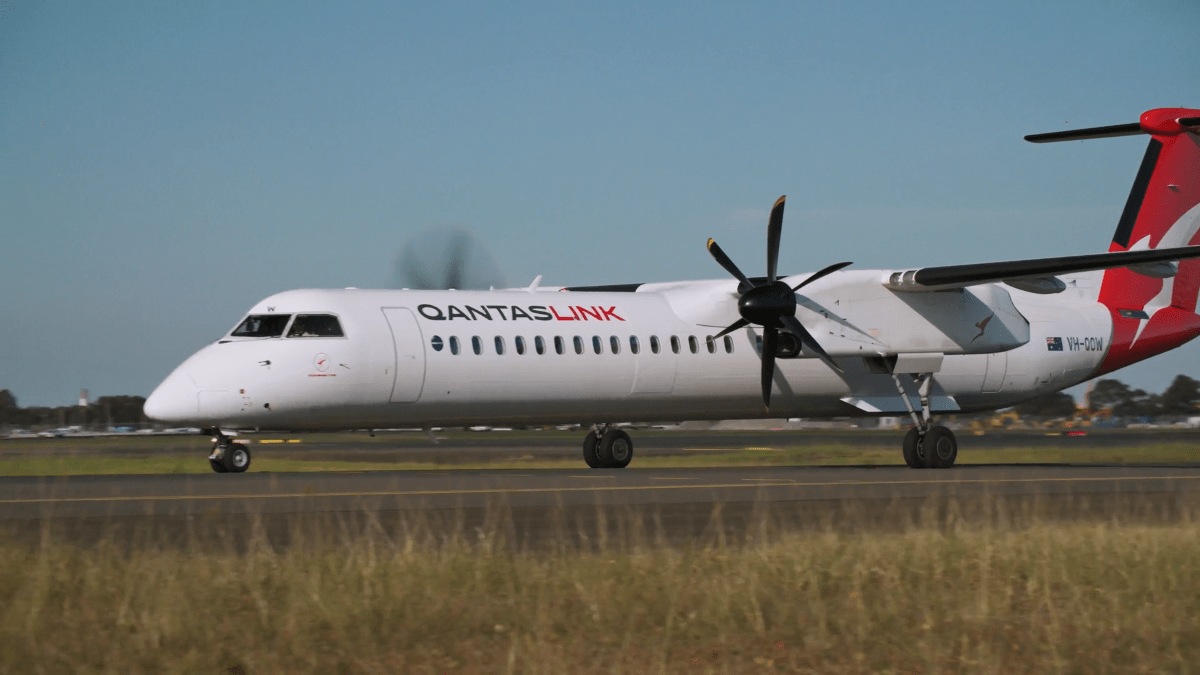
Qantas says it is making only a five per cent profit margin on its regional QantasLink Q400 turboprop services due to high costs.
In its submission to the Productivity Commission’s inquiry into regional airfares, Flying Kangaroo said regional aviation is “commercially challenging”, with airport charges, distance, fuel costs and maintenance affecting its bottom line.
This content is available exclusively to Australian Aviation members.
To continue reading the rest of this article, please log in.
To unlock all Australian Aviation magazine content and again unlimited access to our daily news and features, Become a member today!
A monthly membership is just $5.99 or save with our annual plans.
See benefits
-
Australian aviation quarterly print and digital magazines -
Access to In Focus reports every month on our website
MOST POPULAR
PRINTING + DIGITAL
See benefits
-
Unlimited access to all Australian Aviation digital content -
Access to the Australian Aviation app -
Australian aviation quarterly print and digital magazines -
Access to In Focus reports every month on our website -
Access to our behind-the-lens photo galleries and other exclusive content -
Daily news updates via our email newsletter.
DIGITAL
See benefits
-
Unlimited access to all Australian Aviation digital content -
Access to the Australian Aviation app -
Australian Aviation Quarterly Print and Digital Magazines -
Access to In Focus reports every month on our website -
Access to our behind-the-lens photo galleries and other exclusive content -
Daily news updates via our email newsletter.
“While Qantas’ Q400 turboprop fleet is the aircraft best suited to serve remote or smaller, long and narrow regional routes, on average these services are more than twice as expensive to operate as the Qantas 737 and approximately three times more expensive than Jetstar and Qantas international services per passenger,” the airline said.
“With 800 Q400s in service worldwide and production currently suspended, the cost of spare parts continues to increase significantly. The increase in engineering costs cannot be solely attributed to pre- or post-pandemic factors.
“For example, in 2023 a landing gear proximity sensor cost $6,700, while today Qantas pays more than $10,000 for the same component. Furthermore, year-on-year increases over that time have increased exponentially from nine per cent in 2023, 15 per cent in 2024 and 19 per cent in 2025.”

On a per-seat basis, Qantas says the cost of its regional operations is “significantly higher than that of major domestic and international operations”.
“[This is] “This is due to a number of factors including higher airport and security charges, more expensive fuel and higher maintenance expenses, and the costs must be spread over a smaller number of passengers compared to larger aircraft and higher density markets,” he said.
The higher costs of regional aviation have long been a feature of the industry; However, in recent years, some of the largest regional costs (particularly engineering and airport costs) have been increasing significantly above inflation, while airfare revenues have not.
“The Group has seen a sharp increase in some costs, including airport charges and government fees, which have risen at twice the rate of inflation over the last 12 months.”
According to Qantas’ presentation, this has led to “difficult decisions” to “ensure both the operational strength and commercial viability of the regional network”.
“For example, earlier this year, Qantas announced the suspension of services on the Albury to Melbourne and Wagga Wagga to Melbourne routes,” the filing said.
“Despite attempts to stimulate demand through sales, tactical marketing, adjusting schedules and working with councils to raise awareness, both services had insufficient income to cover the increasing cost of operations.”
QantasLink currently operates a fleet of 43 Q400s, having retired its smaller Dash 8 aircraft from mid-2024.