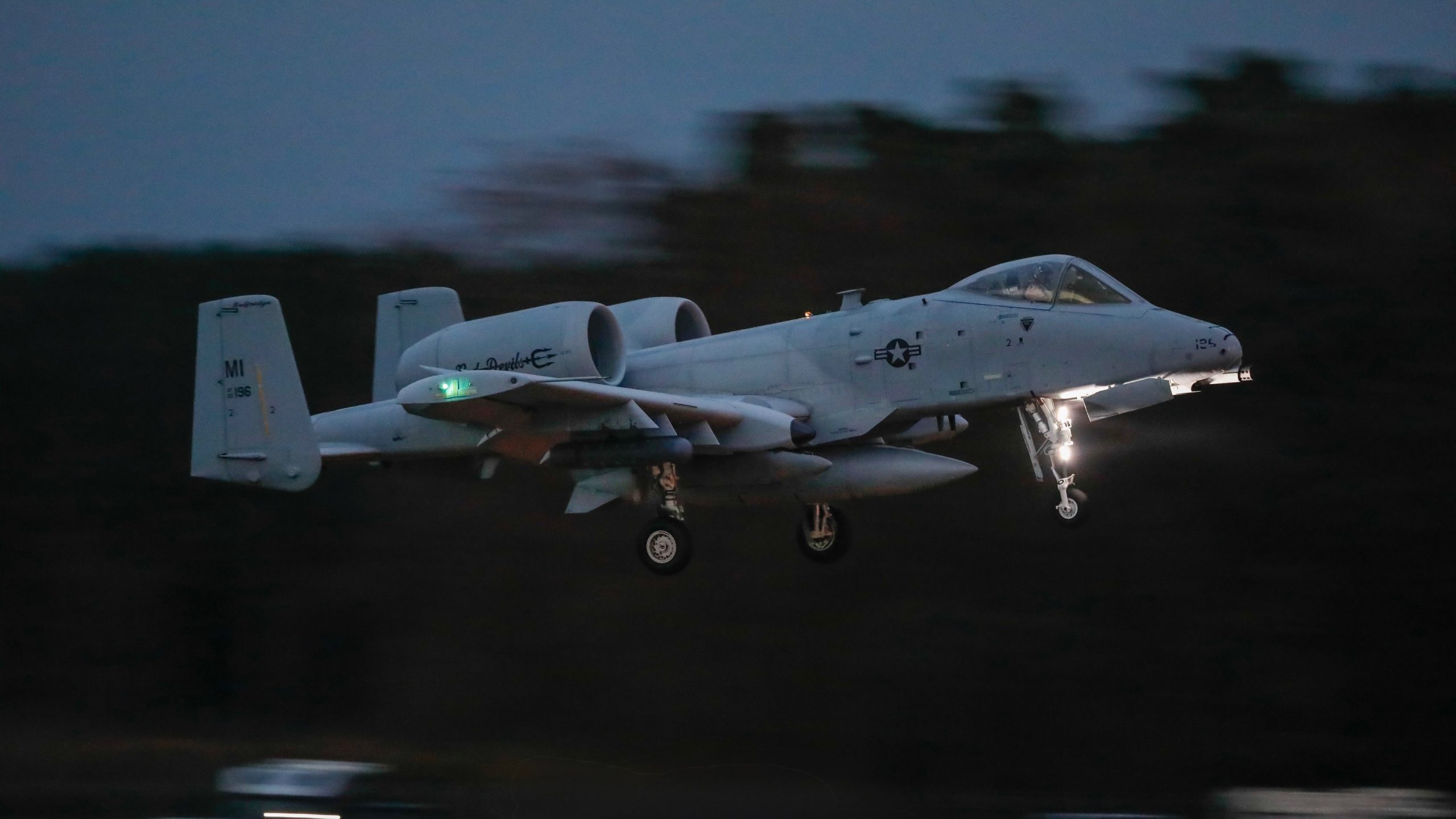
The deployment of additional A-10Cs to the Middle East, the first of which arrived at RAF Lakenheath, demonstrates the continued reliance on close air support aircraft for operations in Iran.
The US Air Force’s A-10C Thunderbolt II aircraft have been actively supporting Operation Epic Fury in Iran since the early days, and the attack aircraft also targeted fast attack vessels in the Strait of Hormuz. Now, the A-10’s presence in theater will increase further with at least 188 additional aircraft transiting Europe on their way to the Middle East.
New Coronet flights
Twelve A-10s arrived at RAF Lakenheath on the afternoon of 30 March, divided into two cells of six aircraft each. Flying under the callsigns TABOR 71-76 and TABOR 81-86, the Warthogs (as the planes are nicknamed within the fighter pilot community) departed Pease Air National Guard Base, New Hampshire, where they arrived last week.
MY A-10C #TABOR71-76 and #TABOR81-86 arrive at RAF Lakenheath from Pease ANGB. They were supported by KC-135. #BORA21-24 and #BORA31-34 in Corona Este 032. pic.twitter.com/9sy3biYJHe
-EISNspotter (@EISNspotter) March 30, 2026
The flight over the Atlantic Ocean was supported by eight KC-135 Stratotanker aerial refueling aircraft. Four of them departed from RAF Mildenhall, met the A-10s midway over the ocean, and took over from the other four KC-135s that departed Bangor Air National Guard Base, Maine.
Michigan Air National Guard A-10 Thunderbolt IIs arrive at RAF Lakenheath in Suffolk, United Kingdom, as Operation Epic Fury continues.
Full VLOG to come: https://t.co/3f1AHpm0Pn https://t.co/gyVbEGodlb pic.twitter.com/noxFrvGXoq
– CobraEmergencia (@CobraEmergencia) March 30, 2026
These first 12 A-10s are assigned to the 107th Fighter Squadron out of Selfridge ANGB, Michigan. Two more A-10s from the same unit were also flown to Pease as spares and then returned to their home base.
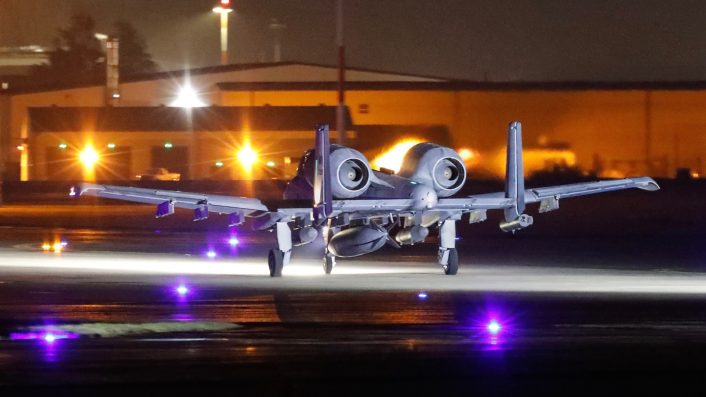
Additionally, six more Warthogs are still on the ground at Pease, waiting to cross the ocean, but it is currently unclear if they will be joined by six more aircraft. These A-10s are from the 190th FS based at Gowen Field ANGB, Idaho.
Six 190FS A-10s arrived at Pease ANGB from Boise, ID as TABOR Flight 91. They are en route to the Gulf on #ALTRV Crown East 062 #CoronetaEste #CE062 #TABOR91 pic.twitter.com/qyJnPXwsmM
— Coronet_deployments 🇳🇱 🇺🇸 (@CoronetEast) March 27, 2026
The role of the A-10 in Iran
It has long been said that close air support aircraft have no place in a modern conflict with highly contested environments. However, the A-10, thanks to its versatility, quickly began to work in Iran performing multiple functions.
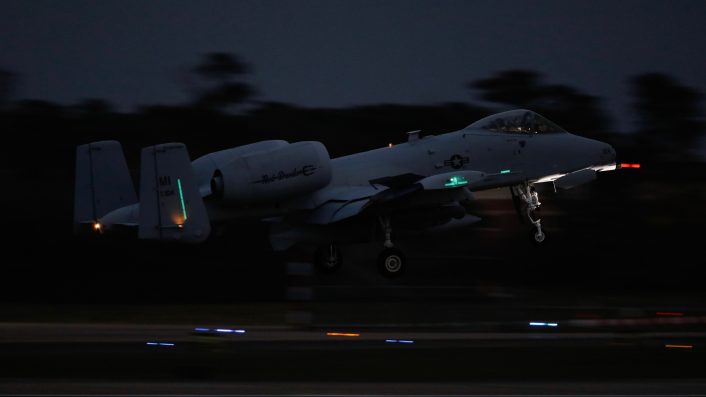
Zero Dark thirty and bright halogens don’t mix. 🙈 Having to wait for the IFR release helped make it a little brighter when they took the RW.
Stay safe everyone 🐗🇺🇸 pic.twitter.com/ORpip64fwI
– Dave O’Brien (@DaveOTGphotog) March 31, 2026
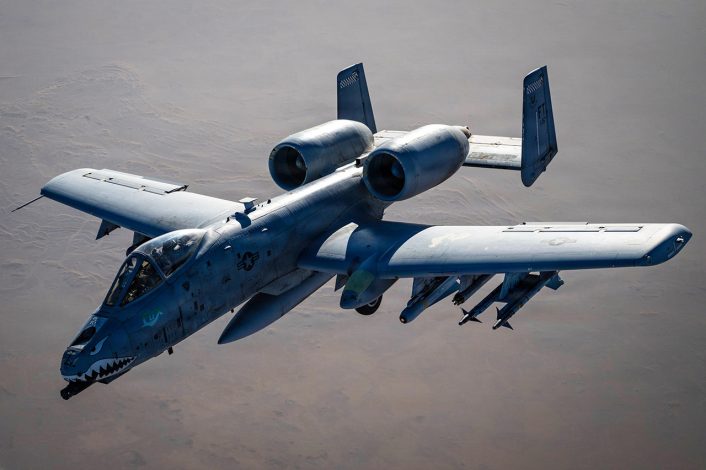
The first official images of the aircraft in action as part of Operation Epic Fury emerged on March 15, showing the A-10 with a mixed payload that can be employed against multiple types of targets. The aircraft were loaded with two AGM-65 Maverick air-to-ground guided missiles, two LAU-131 A/A pods with seven AGR-20 laser-guided rockets each, and two AIM-9M Sidewinder air-to-air missiles, plus an AN/AAQ-28 Litening targeting pod and a 600-gallon external fuel tank.
U.S. Air Force A-10 Thunderbolt IIs receive fuel in flight while supporting Operation Epic Fury. The A-10 Thunderbolt II can idle for hours, waiting and ready to execute a mission when needed. pic.twitter.com/VjESHLR32Y
— US Central Command (@CENTCOM) March 15, 2026
This payload allows the A-10 good flexibility during combat missions, being able to attack both air and surface targets. Sidewinders and rockets have already been used by the Warthog while conducting unmanned aerial systems (C-UAS) missions against small drones, the Shahed 136.
This is not news, as A-10s were also seen returning from deployment in 2025 with Shahed-type UAS kill marks on their noses. While no confirmation from the US Air Force was released at the time, the photos were the first indication that the A-10 shot down hostile One Way Attack (OWA) drones in combat.
This function is especially possible thanks to the AGR-20 rocket, a Hydra 70 rocket modified with the Advanced Precision Kill Weapon System II (APKWS II) guidance kit to transform it into a low-cost guided weapon. It was initially developed for air-to-ground use only, but later evolved into a new role.
US military supporters are at the top of their game. pic.twitter.com/EK9eqF4fc8
— US Central Command (@CENTCOM) March 20, 2026
The weapon not only allows for a larger payload (in the aforementioned images, bringing air-to-air weapons from two to 16 total), but also has a smaller economic impact. In fact, the AGR-20 is estimated to cost less than $30,000, which is more comparable to the cost of the Iranian OWA drones compared to the more expensive AIM-9.
On March 19, 2026, the Pentagon also announced that the A-10 is being used to hunt Iranian fast attack vessels in the Strait of Hormuz. Its use in the maritime domain is unprecedented, as this type has regularly participated in US live-fire and submarine escort exercises in recent years.
Initially, the Warthog has rarely been used in the maritime domain, one of the few cases being the 2011 Operation Unified Protector, which saw A-10s, along with a P-3C Orion, a patrol vessel, and several small attack craft engage in the port of Misrata, Libya. Later in the 2020s, the aircraft participated in multiple Maritime Surface Warfare exercises and conducted unit defense training.
This follows renewed attention towards asymmetric threats caused by attacks in the Red Sea or skirmishes between Ukrainian USVs (unmanned surface vehicles) and the Russian Navy in the Black Sea. High-value targets, such as U.S. warships and civilian vessels and oil tankers, could be attacked and overwhelmed by coordinated swarms of U.S. vehicles, challenging traditional naval defense strategies.
US Air Force A-10 Thunderbolt II attack aircraft have been used to attack Iranian warships during Operation Epic Fury. pic.twitter.com/VasnOrehax
— US Central Command (@CENTCOM) March 25, 2026
The A-10’s maneuverability at low speeds and altitudes, its flexible armament, its high-precision weapons delivery capabilities, and its long loitering time are key attributes that make it highly effective against fast-moving naval targets in the Persian Gulf and beyond.
However, the A-10’s role in Operation Epic Fury does not end there, as the aircraft is also used over Iraq against Iranian-aligned militias. Several videos show the Warthog in action in Iraq, carrying out attacks with the 30mm GAU-8 cannon.
Footage of a USAF A-10 Warthog attacking a militia base in Al Anbar province, Iraq, today. pic.twitter.com/4bLBH1JDjq
— OSINTtécnico (@Osinttechnical) March 25, 2026

![[Updated] Iranian attack on Prince Sultan Air Base reportedly hit US KC-135 and E-3 Sentry](https://theaviationist.com/wp-content/uploads/2026/03/6274097-scaled.jpg "[Updated] Iranian attack on Prince Sultan Air Base reportedly hit US KC-135 and E-3 Sentry")
