
Photo by SDI Productions, courtesy of iStockphoto
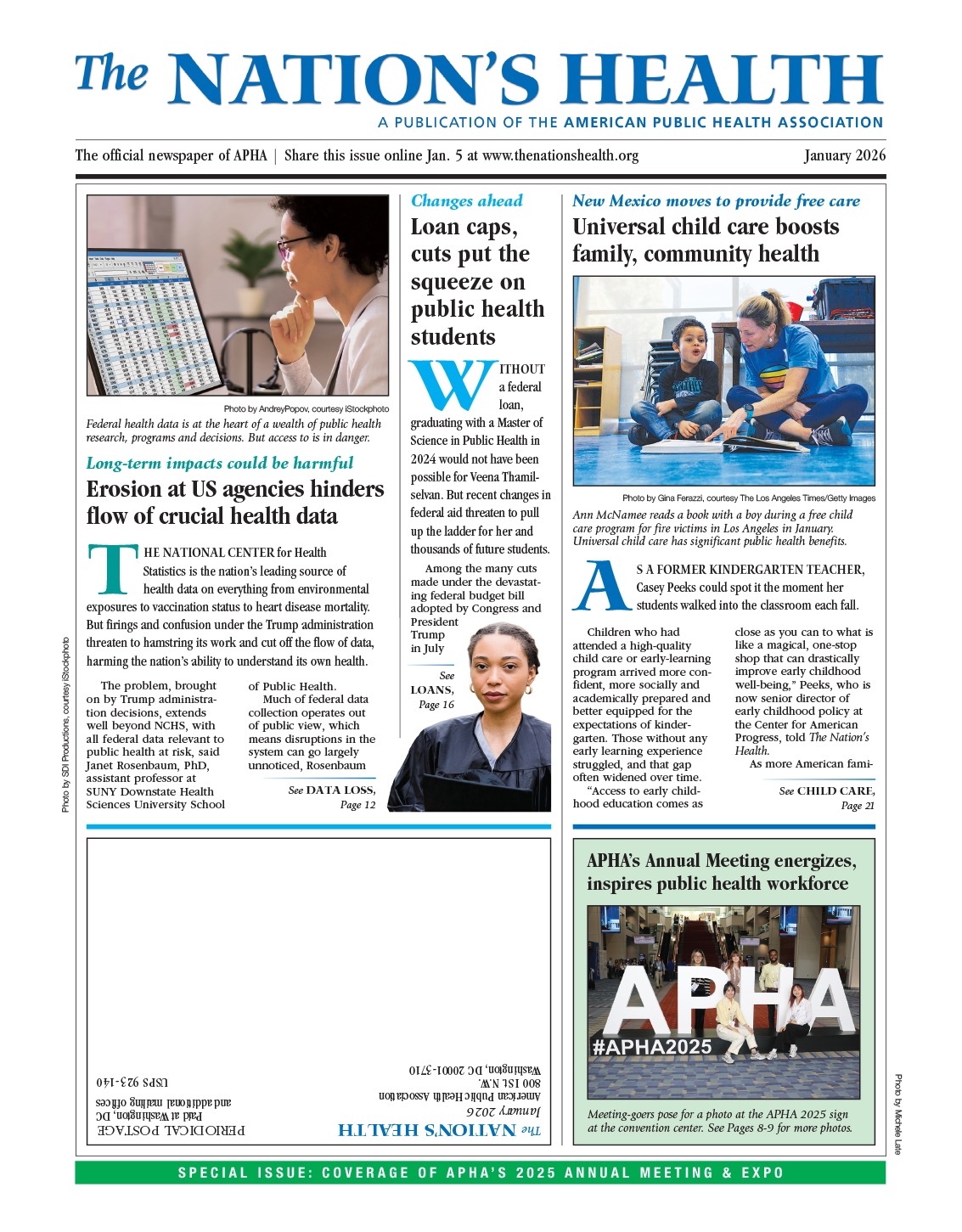
Without a federal loan, Veena Thamilselvan would not have been able to graduate with a Master of Science in Public Health in 2024. But recent changes to federal aid threaten to lift the ladder for her and thousands of future students.
Among the many cuts made under the devastating federal budget bill adopted by Congress and President Trump in July was the end of the Grad PLUS loan, which allowed students to cover the full cost of their studies at favorable interest rates. That change could hamper Thamilselvan’s financial planning for medical school, as she now cannot access the loan that helped her finish her master’s degree in Public Health.
“My vision for earning my MSPH with my medical degree was to be able to care for patients and then turn around and advocate for policies that protect all patients and community members across the city, the healthcare system, and the nation,” said Thamilselvan, a graduate of the Johns Hopkins Bloomberg School of Public Health and former president of the APHA Student Assembly. The Health of the Nation.
For students and recent graduates like Thamilselvan, the new rules are another blow to professionals starting their careers during a year in which public health funding was depleted, such as through clawbacks at the National Institutes of Health and the Centers for Disease Control and Prevention. The actions are ringing alarm bells throughout the pipeline of public health professionals.
“It seems like anyone who passes a bill and says ‘this makes sense’ has never worked in a low-resource clinic like me, or has worked in a long-term care facility and seen how nursing shortages and poor patient-to-healthcare worker ratios lead to poor health outcomes,” Thamilselvan said. “If you’ve seen what any public health student has seen and learned, you couldn’t in your right mind approve something like this.”
With the elimination of the Grad PLUS loan also comes new limits on borrowing. Starting July 1, instead of taking out loans to cover the full cost of school, full-time students pursuing a master’s or doctoral degree will only be able to borrow $20,500 per year and $100,000 in total. For professional degrees in areas such as medicine, students can borrow $50,000 a year and no more than $200,000 in total. Students may receive even less money overall depending on the length of their program and whether they attend school part-time.
While the limits don’t take effect until summer, many students are already borrowing above the new limits, especially in professional fields like dentistry, where 56% of full-time students exceed the $50,000 annual limit, along with 41% of medical and osteopathic medicine students, according to an Urban Institute analysis.

Federal student loans have helped millions of students. But new federal rules may make it harder for them to earn some degrees.
Photo by FG Trade, courtesy of iStockphoto
In November, the U.S. Department of Education decided that master’s and doctoral degrees in public health, among many others, are no longer considered professional degrees. Other fields affected at Allied Health include advanced nursing, physical therapy, social work, occupational therapy and physician assistants.
The reclassification not only restricts the amount of money students in those fields can borrow, but also threatens the public health workforce at a time when there is already a critical shortage of workers in state and local health departments, according to Beeta Rasouli, MPH, director of advocacy and federal affairs for the Association of Schools and Programs of Public Health.
At least 80,000 full-time positions are needed in U.S. state and local health departments, according to a 2021 research report from the de Beaumont Foundation and the National Center for Public Health Innovations.
“If you look at public health, it’s a multifaceted profession, where you have epidemiologists, biostatisticians and policy professionals; they are all important components of the public health workforce,” Rasouli said. The health of the nation. “We are all linked. If you are attacking one part of the workforce, you are attacking the entire public health workforce.”
It remains to be seen whether colleges and universities will reduce tuition for certain programs or if there is a scenario in which students who need to borrow beyond the new limits can replace that federal loan funding with private loans on favorable terms, said Jason Cohn, a research associate at the Urban Institute.
“There is also the possibility that many students, especially those from more marginalized backgrounds, may not be able to obtain favorable loan terms or any loans in the private market,” Cohn told T.The health of the nation. “And I know there are also concerns about whether the private market will be prepared to handle a large influx of borrowers for these programs and how they are going to go about underwriting those loans.”
As health care systems shift their focus toward the underlying social determinants of health and well-being at the population level, the new rules make it more difficult for nurses, physicians, social workers and other allied health workers to earn complementary degrees in public health, said Adam Arechiga, PsyD, DrPH, MA, dean of the School of Public Health at Loma Linda University. The university offers a joint MD and MPH program.
“There is a significant sense of concern that fewer and fewer health care providers of different types understand this concept of population health as needed,” Arechiga said. The Health of the Nation. “Unlike other health professions that focus primarily on the care of individual patients, public health experts are at the forefront of population health, disease prevention, health promotion, and crisis response. This work is critical to safeguarding communities, managing health emergencies, and addressing health inequities.”
Graduate public health programs typically don’t receive the same endowments as other programs, which means there is less financial aid to go around, according to Gregg Gonsalves, PhD, assistant professor of epidemiology at the Yale School of Public Health and a member of Defend Public Health. The all-volunteer coalition of thousands of public health workers, doctors, nurses, lawyers and more aims to advance science and health in the face of the Trump administration’s actions.

New limits on loans from the U.S. Department of Education could hurt public health students.
Photo courtesy of JustinRWard, iStockphoto
“We will have fewer doctors, fewer nurses, fewer public health professionals,” he said. The health of the nationh. “We are going to see how individual health care becomes more precarious, but we will also see population-level effects across the board.”
As public health programs become financially strained and experience increasing staffing shortages, patients will have longer wait times for care. Some people already wait months for primary care visits in the Northeast and rural areas, he said.
“This is going to make people sick and die,” Gonsalves said. “Let’s be clear. The longer you wait in an emergency room to see a person, the longer you have to delay a primary care visit, the more likely you are to receive a late diagnosis of breast cancer, colon cancer or diabetes. All of these things are going to snowball.”
ASPPH encourages all schools and programs to contact Congress and the Department of Education to share their concerns about the loss of professional designations for public health degrees, said Tim Leshan, MPA, director of external relations and advocacy for ASPPH.
The organization is also following the DOE’s negotiated rulemaking process and will ask members and broader networks to submit comments.
Arechiga said it is time for academia to join medical and political organizations in a unified voice fighting for the professional status of the health professions, whether through meetings with legislators or submitting public comments.
“After COVID, I think the population had a somewhat confused understanding and does not realize the integral nature of public health professionals,” Aréchiga said. “We also need to provide evidence-based testimonials to policy makers.”
Thamilselvan said it’s up to her and her fellow health professionals to reach out to people in their communities and make sure they understand the value of public health.
“One thing you can do today is call that aunt, uncle, cousin or neighbor who disagrees with you or doesn’t understand what the problem is and have an honest dialogue with them about what you do,” Thamilselvan said. “Those are the little things we can do to make a big change.”
For more information, visit www.aspph.org.
- Copyright The Nation’s Health, American Public Health Association