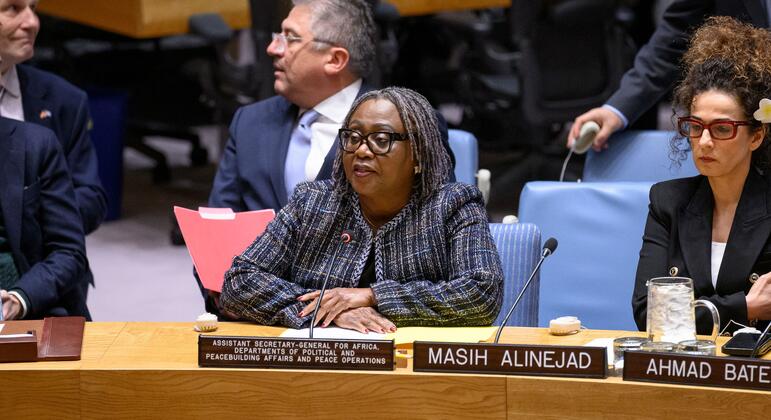
Deputy Secretary General Martha Pobee reported at an emergency meeting of the Security Council in New York convened by the United States to address the crisis.
Ms. Pobee described the situation in Iran as “fluid and deeply worrying” and noted that “protests continue, although reportedly on a smaller scale than last week.”
Against military attacks
However, he expressed alarm at public statements suggesting possible military attacks on the country.
“This external dimension adds volatility to an already explosive situation. Every effort should be made to prevent further deterioration“, said.
Furthermore, UN Secretary-General António Guterres “remains convinced that all concerns regarding Iran, including those related to the nuclear issue and the ongoing protests, are The best way to address them is through diplomacy and dialogue..”
It also “urges maximum restraint at this delicate time and calls on all actors to refrain from any action that could lead to further loss of life or trigger broader regional escalation.”
The biggest protests in recent years
Protests broke out on December 28 after merchants in the Iranian capital, Tehran, took to the streets to protest against the collapse of the national currency, soaring inflation and worsening living conditions.
The demonstrations quickly spread across the country and turned into massive anti-government protests, the largest since the movement sparked by the September 2022 death in custody of Kurdish woman Jina Amini, arrested for allegedly violating hijab laws.
Authorities imposed a near-total communications blackout that is still largely ongoing. Hundreds, and even possibly thousands, of protesters and bystanders have been killed, and it is estimated that more than 18,000 people have been detained, although the UN has not been able to verify these figures.
They blame ‘terrorists’ and ‘troublemakers’
“The Government of Iran has stated that it was forced to act after what it considered ‘organized terrorists’ and ‘rioters’ infiltrated the protests and opened fire on security forces and protesters, with the aim of provoking foreign military intervention,” Ms Pobee said.
“He has also blamed these elements for the killing of hundreds of civilians and members of the security forces.”
In a recent statement, the UN Secretary-General expressed deep concern about the alleged excessive use of force by authorities and defended the rights to freedom of expression, association and peaceful assembly.
Voices of civil society
Iranian journalist and political dissident Masih Alinejad was one of two civil society representatives invited to brief the Council.
“What is needed now to bring justice to those who order massacres in Iran is real and concrete action,” he said.
Iranian-American journalist and human rights activist Ahmad Batebi spoke about how he was arrested for protesting as a student and sentenced to death.
Batebi said he was kept in solitary confinement for two years, tortured and forced to admit he was a paid American spy.
US warns of wider repercussions
US Ambassador Mike Waltz stated that “the level of violence, the level of repression that the Iranian regime has unleashed against its own citizens… has implications for international peace and security.”
The Iranian people “demand their freedom like never before in the brutal history of the Islamic Republic,” he said, stressing that President Donald Trump and the United States “stand with the brave people of Iran.”
He stressed that “the regime is solely responsible for the economic misery of the Iranian people and the repression of their freedom” and must be held accountable.
US “directs unrest” in Iran, says ambassador
Iran’s Deputy Permanent Representative Gholamhossein Darzi began his remarks by denouncing the two civil society informants, saying that they “represent the political agenda of the US and Israeli regimes.”
Regarding the situation in Iran, the ambassador said he was speaking on behalf of a “nation in mourning.”
“It is deeply regrettable that the representative of the US regime, which requested this meeting, today resorted to lies, distortions of facts and deliberate disinformation to conceal his country’s direct involvement in driving unrest in Iran toward violence,” he said.