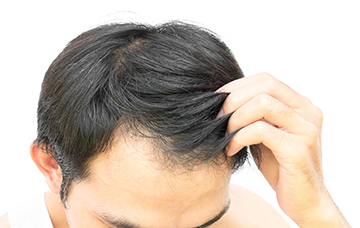
Low-frequency electrical stimulation shows promise as a possible alternative to medications to restore hair growth in people whose hair has begun to thin. Engineers at the University of Wisconsin-Madison, with support from the National Institute of Biomedical Imaging and Bioengineering (NIBIB), have designed a portable and discreet electrical stimulator that can regenerate hair growth. They demonstrated its effectiveness with laboratory rats and nude mice, a species that has a genetic defect that affects hair growth. The result of the study is encouraging enough that the team plans to test the technology in people soon.
In their paper recently published in ACS Nano, a team led by Xudong Wang, Ph.D., professor of Materials Sciences and Engineering in the College of Engineering at the University of Wisconsin-Madison, found that rats fitted with electrical stimulation devices produced longer, thicker hair than those treated with topical medication. The devices also promoted hair regeneration on the skin surface of nude mice, including an increase in hair follicles. The researchers observed that the secretion of two hair growth factors was activated in the nude mice.
Wang leads a NIBIB-funded research project exploring technologies to harvest energy from body dynamics (from limb movement to chest expansion) to power devices such as pacemakers, without the need for batteries. Other devices it has recently developed include an implant that stimulates the stomach for weight loss and an electric bandage for wound healing. Each device is composed of ultra-thin, lightweight, stretchable and biocompatible polymeric membranes that convert the body’s energy. The hair regrowth device is placed against the surface of the skin and collects energy from the user’s random body movements. It sends gentle electrical impulses of up to four millimeters to the skin for a therapeutic effect.
People have two types of hair follicles. One type covers the skin of the body and generates fine, pigment-free hairs. Another type produces long, thick hair; Around 100,000 follicles of this type of hair are found on our scalp. They are subject to phases of growth and rest, losing some hairs and forming other stems every day. These follicles are influenced throughout life by hormones called androgens, which play a role in regulating hair growth and deactivating the follicles. Although not all mechanisms are fully understood, researchers have shown that electrical stimulation can induce hair growth by stimulating fading follicles to revitalize themselves, possibly by regulating multiple hair growth factors on the scalp. Similarly, researchers have used electrical stimulation to improve bone and soft tissue repair.
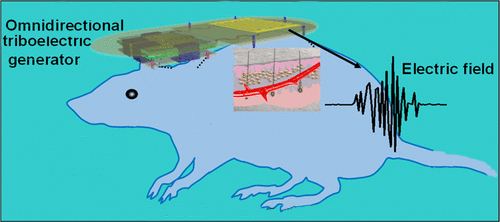
The team’s wearable electrical stimulation device was able to stretch and move freely with the animals’ activities and was durable enough to operate for a long time. A postage-stamp-sized portion of the device remained in contact with the skin during the two-week experiment. It collected a constant voltage of electricity, generated from the animals’ regular daily body movements. That source of electricity supplied the electrical potential for stimulation. The technology was at least as effective in rats as two anti-baldness drugs. The researchers found that the rats had a higher density of hair follicles and longer hair length than those treated with drugs.
The researchers say their device could quickly evolve into “a practical and simple solution” to address the problem of hair loss suffered by billions of people around the world. When moved to human use, the low-profile device is redesigned to be worn under a baseball cap. They note that the device does not generate new hair follicles from soft skin, but rather reactivates follicles that have been dormant. The researchers have patented the device and plan to test it on people soon.
The study was funded in part by the National Institutes of Health, including NIBIB (EB021336) and the National Cancer Institute (CA014520).
Self-activated electrical stimulation for effective hair regeneration using a portable omnidirectional pulse generator. G Yao, D Jiang, J Li, L Kang, S Chen, Y Long, YWang, PHuang, Y Lin, W Cai, X Wang. ACS Nano. September 10, 2019.