Boeing reported a new $565 million loss on the KC-46 program as it searched for a new price due to supply chain costs, production support and ongoing RVS 2.0 upgrades.
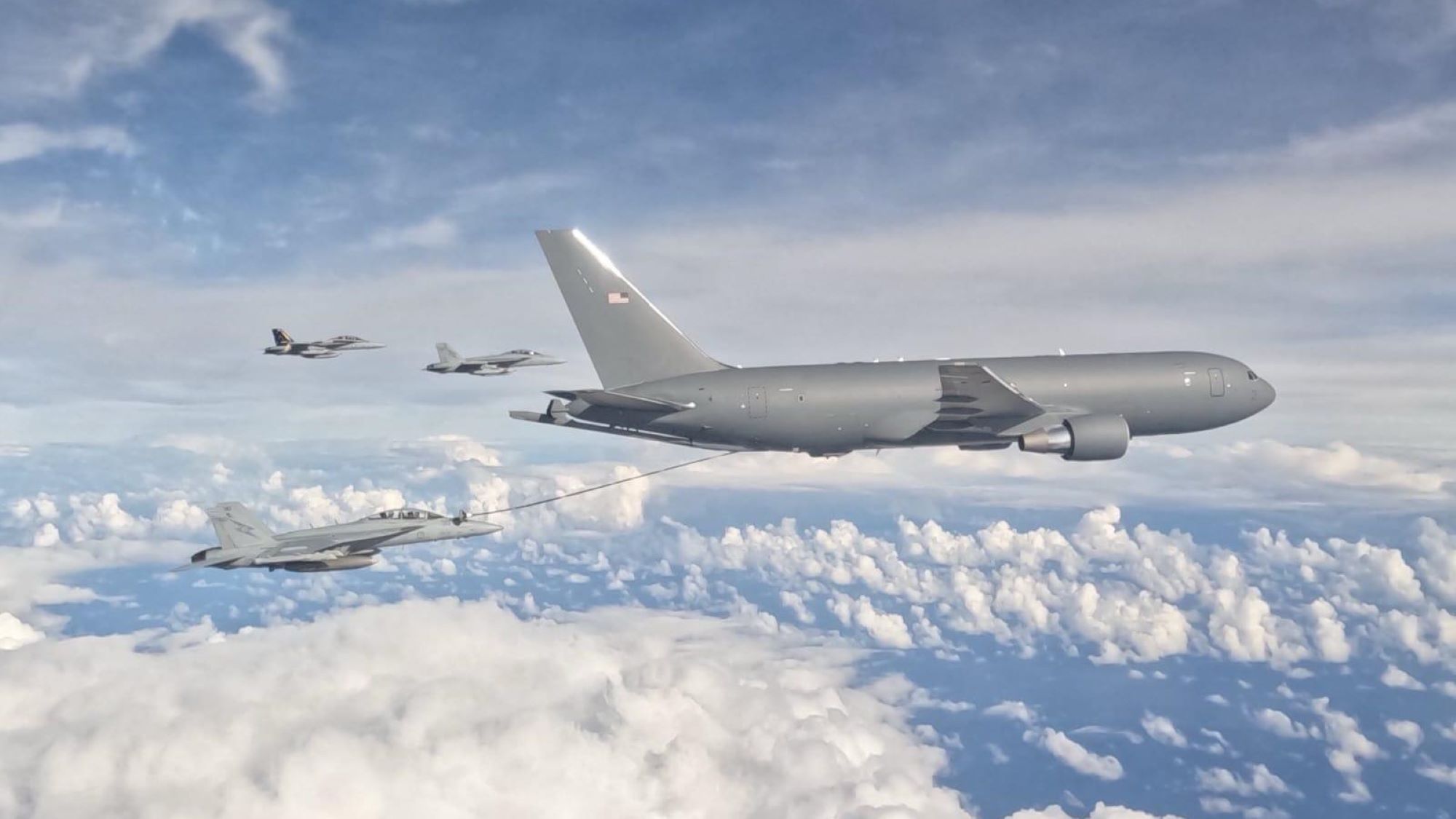
Boeing has once again reported a significant financial charge on its KC-46A Pegasus tanker program, following long-running challenges associated with what has become one of the US Air Force’s most troubled major acquisition efforts. fourth quarter 2025 results releaseBoeing revealed a $565 million loss related to the KC-46.
According to company statements, the loss is primarily due to higher supply chain costs and higher production support expenses at the Everett, Washington, facility where the aircraft is assembled. The company acknowledged that the charge reflects persistent cost pressures related to the 767 airframe, on which the tanker is based.
The loss was further detailed during an investor call, where Boeing CEO Kelly Ortberg described the result as “disappointing” but emphasized that recent trends in operational performance point toward improving stability in the program. Ortberg further said that Boeing’s increased investment in quality and engineering support is aimed at ensuring the company can meet delivery commitments and prepare for the next phase of tanker procurement.
“This has been a bad contract for the last decade,” Ortberg said. “As we enter into a new opportunity where we can adjust the price, we want to make sure that… we enter into that contract, to make sure that it’s a fair contract and that we can make money off of it.”
Billions in losses
Boeing has already racked up more than $7 billion in losses due to the new tanker since the contract was awarded. This makes the KC-46 Pegasus one of the most expensive fixed-price programs in the company’s defense portfolio.
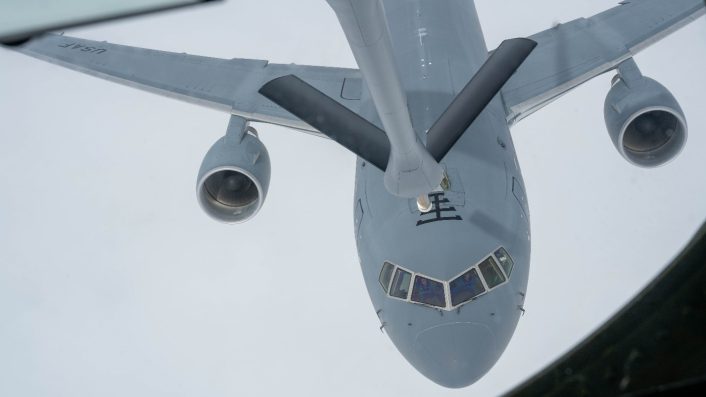
Under the terms of the original fixed-price contract, Boeing is responsible for covering all costs above the agreed-upon ceiling, thus absorbing all financial risk instead of the Air Force. Boeing’s annual results show that its Defense, Space and Security business closed 2025 with negative operating margins of -0.5%, but it represented a notable improvement compared to the -22.6% margin recorded in 2024.
Company executives emphasized that the loss of the KC-46 does not indicate systemic problems across the defense business, but instead reflects concentrated problems fueled by base airframe production and support costs. “The predominant charge is the increased cost of the current production of the 767 airliner,” Ortberg explained.
Chief Financial Officer Jay Malave added that Boeing intentionally maintained high staffing levels for quality control and engineering in Everett in an effort to reduce rework and ensure delivery schedules could be met. Malavé explained that these measures are costly but appear to be helping.
“For example, compared to the first half of the year, we saw average factory rework levels decrease by 20 percent in the fourth quarter,” Malavé said. “While these investments are beginning to show progress, we must sustain them longer than previously planned to promote stability.”
Boeing stated that it delivered 14 KC-46s in 2025 and now aims to increase to 19 deliveries in 2026. The company currently has a contract to provide 183 tankers for US and international customers, but the number could soon increase as the Air Force plans to acquire an additional 75 aircraft to recapitalize the aging KC-135 Stratotanker fleet.
Technical deficiencies
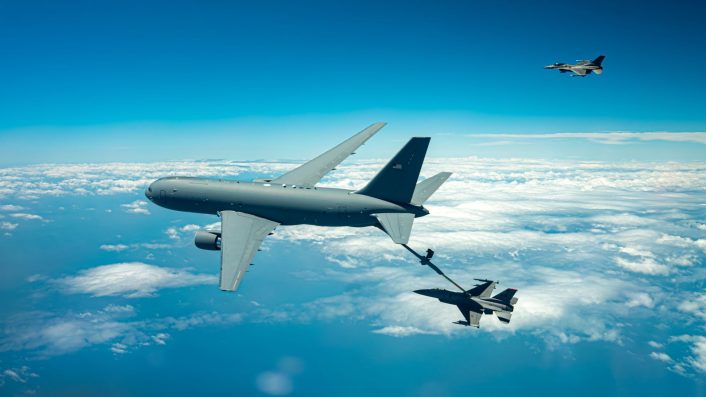
The KC-46’s cost overruns also stem from its long history of technical challenges, which included problems with the aircraft itself and refueling equipment. These problems led, in particular, to a temporary interruption of deliveries in 2024.
Among the most serious and long-lasting problems is the Remote Viewing System (RVS), which replaces the classic rear-facing operator window and controls with a new console equipped with a camera system. However, the system has suffered many problems, leading the Air Force to classify it as a Category 1 deficiency, representing problems that could result in loss of life or damage to aircraft.
The tanker has also experienced problems with its refueling arm actuator, which affected the rigidity and controllability of the arm during refueling operations. These problems limited the KC-46’s ability to refuel certain receiver aircraft, a notable example being the A-10 Thunderbolt II, and required further modifications to meet Air Force requirements.
The product quality issues involved three separate parts of the aircraft: drain masts for its auxiliary power unit (APU), a seal for its fuel manifold, and a drain line that runs near the cockpit. Specifically, the APU drainage masts showed a tendency to crack, which was solved with additional reinforcements.
The fuel manifold, which runs 555 feet the length of the aircraft, is equipped with flexible couplings so it can be folded in flight. However, incorrect placement of the coupling seals allowed fuel to leak from the inner tube to the outside, so Boeing implemented a new flexible seal.
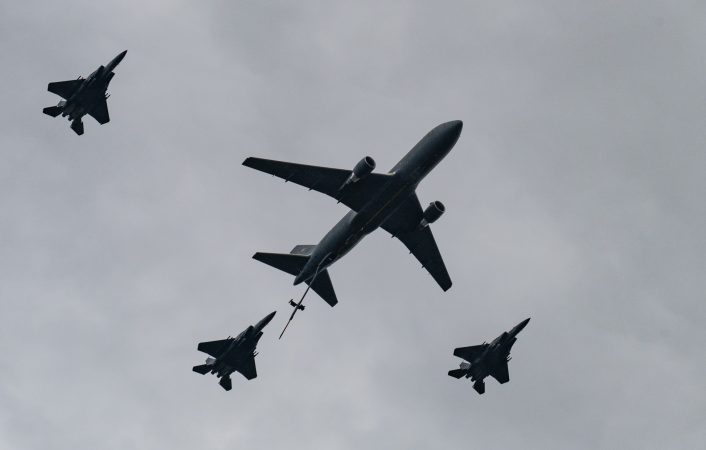
The last one was related to the AAR canister on top of the cabin, specifically the canister drain line, which empties fluid but is at risk of cracking and could cause a fuel leak into the cabin. A solution has been found and is being implemented.
Structural concerns have also disrupted production. In 2024, Boeing was forced to temporarily suspend deliveries of the KC-46 for approximately three months after cracks were discovered in the plane’s wing structure, requiring inspections and repairs on several aircraft. The pause highlighted ongoing manufacturing challenges, once again complicating delivery schedules.
Progress in testing the remote vision system 2.0
Boeing continues to work to address the Remote Viewing System (RVS). As we previously reported here at The aviationistBoeing achieved a key milestone in November 2025 following the first flight of a KC-46 equipped with the Enhanced Remote Vision System 2.0 (RVS 2.0).
Boeing Defense, Space & Security CEO Steve Parker described the event as “a major milestone for the program,” noting that the flight took place in the Seattle area in challenging weather conditions and would be followed by an extended test campaign through 2026. The Air Force also recently posted a short video on social media saying the 418th Flight Test Squadron (FLTS) supported Boeing for RVS testing during the rapidly changing lighting conditions over the field. trials of the Mugu sea.
A flight test #Engineer mantra.. come get him #data…stay for the views. #USAF Crews with our recently supported 418th FLTS. @BoeingDefense teams with tests of the KC-46 remote viewing system during rapidly changing lighting conditions throughout the Mugu Sea Test Range. @HQ_AFMC pic.twitter.com/M3kkZi1Jv9
– Edwards Air Force Base (@EdwardsAFB) January 24, 2026
RVS 2.0 is intended to resolve persistent issues plaguing the current system, including image distortion, depth perception errors, and degraded performance under varying lighting conditions. These issues have been particularly problematic during night operations and in scenarios where sunlight and shadows interfere with the cameras’ ability to provide reliable visual cues to barrier operators.
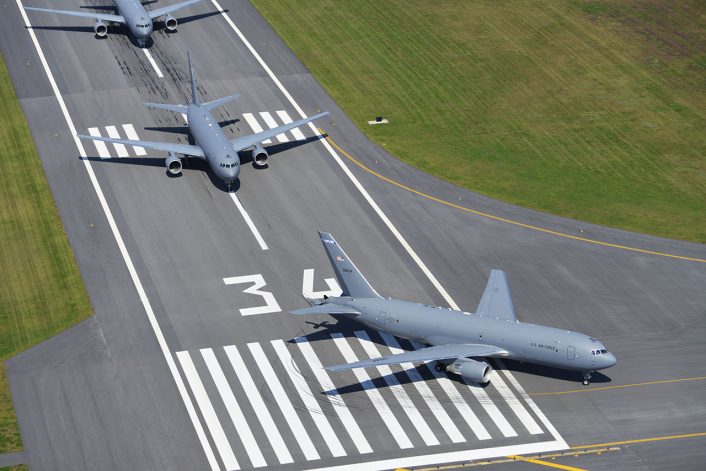
RVS 2.0 aims to solve the problems with the addition of improved longwave infrared and visible spectrum cameras, increasing the total number of sensors from four to six. The update, however, was plagued by delays.
While testing is underway, Boeing has continued to deliver aircraft with the interim RVS 1.5 configuration, and RVS 2.0 is not expected to be fully operational until 2027. Parker described RVS 1.5 as “exceptional” without adding details.
Balance risk and prepare for repricing
Boeing executives argued that the latest charge reflects a deliberate decision to prioritize reliability of execution and delivery over short-term financial performance. Indeed, as the Pentagon has increasingly scrutinized contractor delivery schedules in recent weeks as it seeks to shift military procurement, the company said the investment was essential to the long-term recovery of the KC-46 program.
“We made the decision, although it was a big decision, to have to take over the tanker program here,” Ortberg said. “I think it will pay dividends for us as it will allow us to make sure we deliver on all 19 deliveries next year.”
Boeing is now focused on not repeating the same “mistakes” of the original fixed-price development agreement, especially as negotiations for the new Air Force acquisition approach. The company appears determined to avoid absorbing further losses.