
Key findings:
- 41% of young adults prefer complete financial independence to any parental support, even when they are struggling.
- 43% invest in both traditional products and cryptocurrencies, and social networks influence 31% of investment decisions.
- Only 25% claim to pay everything themselves, revealing a gap between ideals and reality.
Generation Z is often framed as the “struggling generation”: financially pressured, burdened by housing costs, and dependent on parental support. A new CEX.IO survey of 1,200 young adults ages 18 to 27 explores how parental support shapes the financial lives of Generation Z and reveals a deep tension between dependency and the desire for autonomy.
If they could, 41% would choose not to receive financial help from their parents.preferring to fend for themselves despite economic obstacles.
However, this preference for autonomy contrasts sharply with current reality. Only 25% say they pay everything themselves today, while 34% receive occasional help with major expenses and 23% have most major expenses covered by their parents.
The disconnect between aspiration and circumstances reveals a generation trapped between idealism and economic pressure.
The paradox of independence
When asked to choose between financial comfort with family support or a more difficult path with complete freedom, 39% selected the most difficult path.. Another 26% want a gradual approach, suggesting that even those who accept help see it as temporary. Overall, 65% of respondents believe that parental financial involvement is something that should be minimized or eliminated entirely.
Among those whose parents cover major expenses, 43% say parents’ opinions have little impact on their life decisions and they ultimately go their own way. Another 20% admit that their parents’ opinions have significant weight in these decisions. Vocational education and training remains the most acceptable form of support for parents, followed by emergency aid.
Cryptocurrencies have a significant share in the investment mix
This generation’s approach to building wealth reflects their status as digital natives. 43% invest in both traditional financial products and cryptocurrencies.while another 21% focus primarily on higher risk assets such as cryptocurrencies and speculative stocks. Only 15% are dedicated exclusively to traditional investments and only 9% do not invest at all.
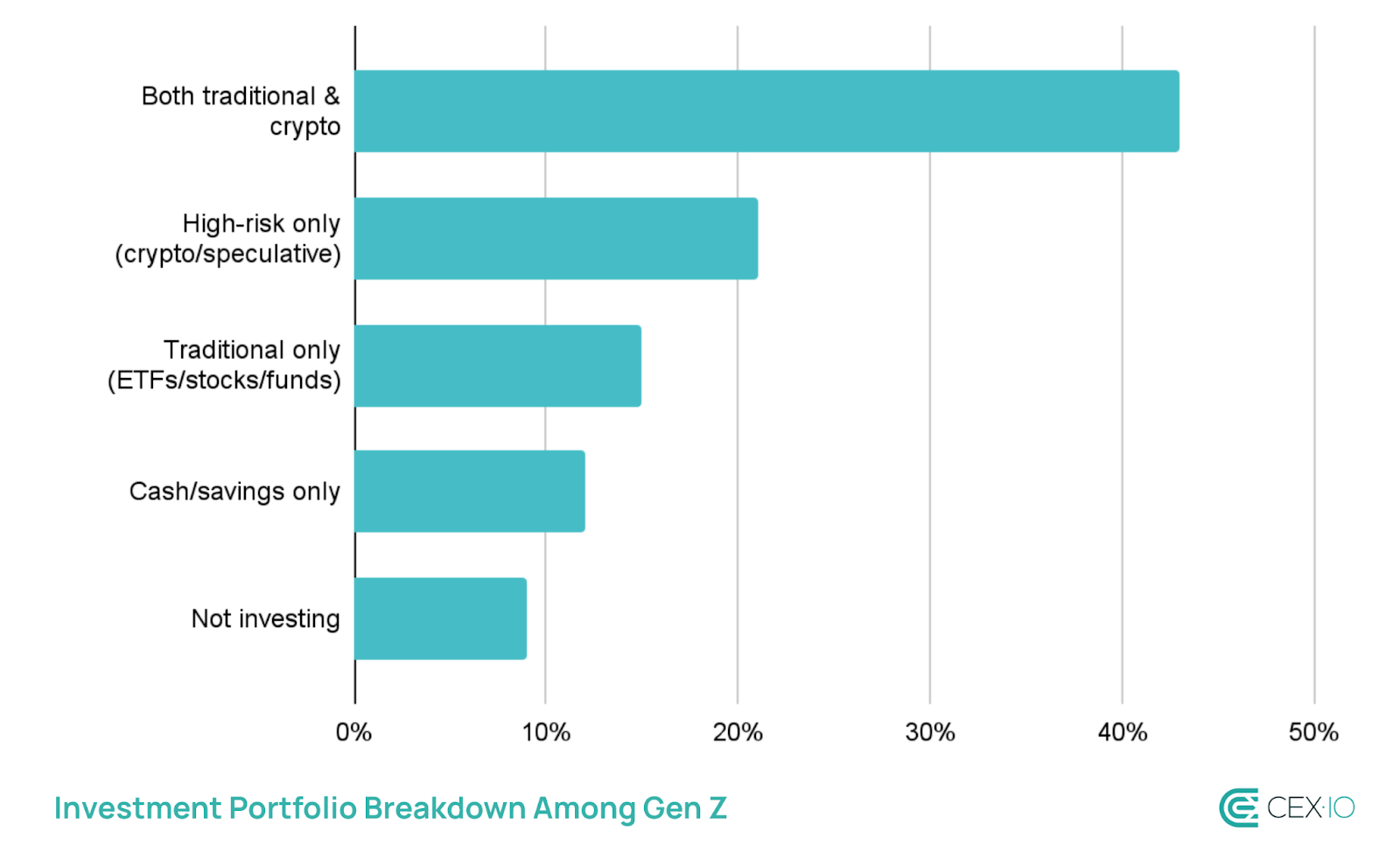
Social media plays a huge role in shaping these decisions. 31% say creators or online communities most influence their investment decisions.while 23% turn to friends and colleagues.
If they had $1,000 to invest tomorrow, nearly half (49%) would split it between safer and higher-risk options, demonstrating a balanced approach despite their greater appetite for cryptocurrencies. However, 21% would stop investing altogether and use the money for immediate needs or experiences, highlighting how financial pressure influences decisions.
Where does “free” money go?
When Generation Z has “free” money to spend, 51% prioritize experiences such as trips, dinners and events. about everything else. Only 23% focus primarily on investing for the future, while 13% focus on building security through savings and emergency funds. The emphasis on present-moment experiences over long-term planning could reflect economic anxiety.
Barriers to investment reveal deeper struggles. 37% cite fear of losing money or making bad decisions. as their biggest obstacle, while 29% simply do not have extra money to invest. Another 17% have other priorities such as studies, career or health concerns that take priority.
The long term vision
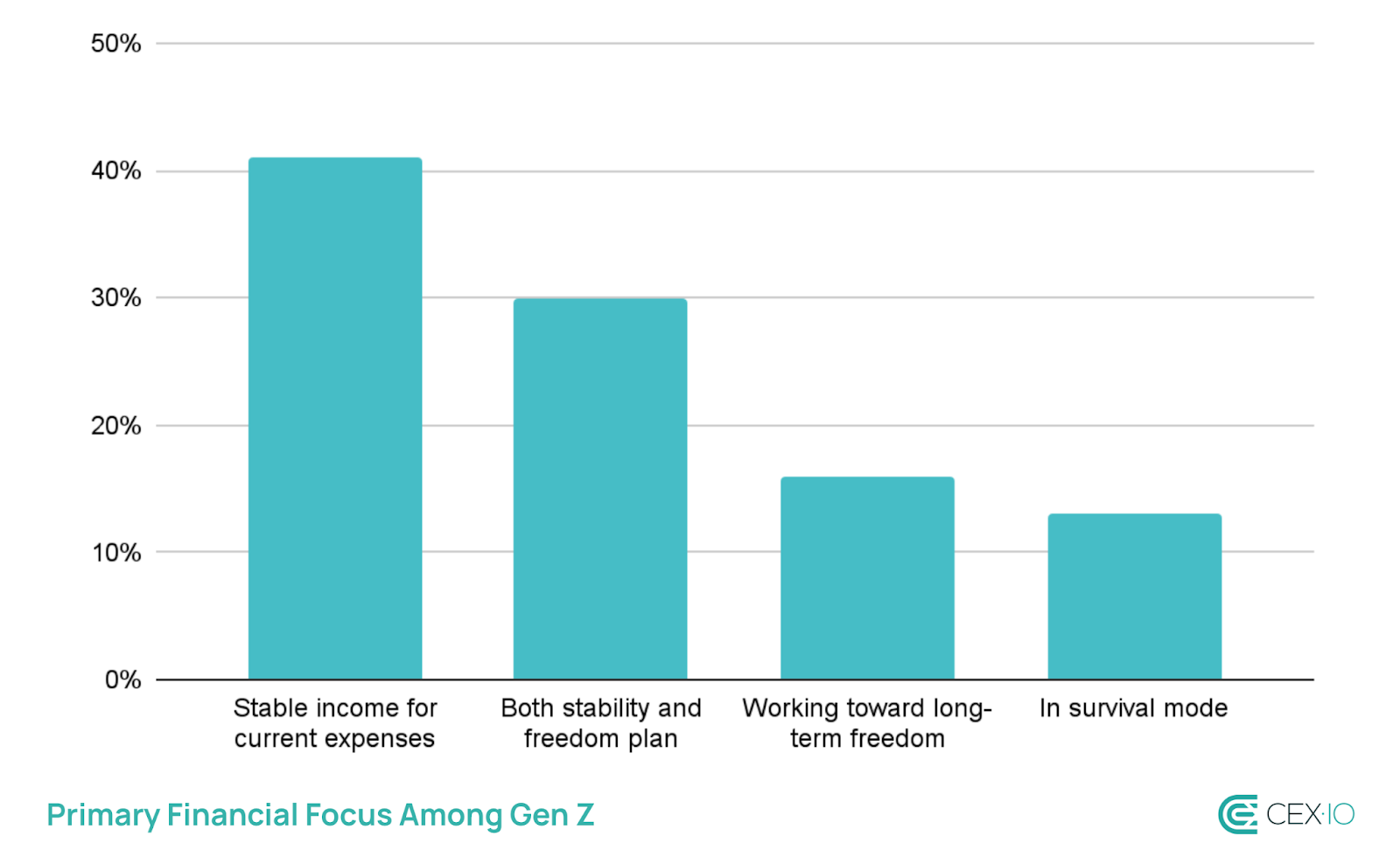
Looking ahead, young adults divided into three camps. 41% mainly focus on stable monthly income to cover current expenses.treating financial freedom as a distant goal. Another 30% want stability now and a clear path to freedom, while only 16% are actively working toward long-term financial independence through investments and passive income streams. In particular, 13% feel too financially pressured to think beyond survival mode.
What it means
The 16-point gap between those who want complete independence (41%) and those who have achieved it (25%) indicates that Generation Z wants independence but can’t always afford it yet. They inherited an economy where entry-level jobs barely cover the basics and the timeline to financial stability has stretched years longer than previous generations experienced.
As a result, their fierce resistance to continued parental support makes sense when you consider the trade-offs. Among those who receive significant help, some admit that their parents’ opinions can greatly influence important decisions. So financial dependence is not free. That’s why many young adults would rather struggle and remain in the gig economy than accept help with invisible conditions.
In that sense, experimenting with cryptocurrencies alongside traditional investments (43% do both) is starting to seem reasonable. Generation Z watched millennials follow traditional advice, earn college degrees, invest conservatively, and still struggle to buy homes or pay off debt. That’s why a safe path may no longer seem as attractive, so taking greater risks may be perceived as a more justified approach just to keep up or achieve financial independence.
When buying a home requires saving for decades and retirement is more than 40 years away, prioritizing travel and relationships in your twenties may not seem so irresponsible. For those spending on experiences rather than savings (51%), this could be perceived as tangible value now rather than distant goals that may never materialize.
For Generation Z, autonomy matters more than comfort, and that is not idealism but a survival strategy.
The web content provided by CEX.IO is for educational purposes only. The information and tools provided are not and should not be construed as an offer, a solicitation of an offer or a recommendation to buy, sell or hold any digital asset or to open a particular account or engage in a specific investment strategy. Digital asset markets are very volatile and can lead to loss of funds.
The availability of products, features and services on the CEX.IO platform is subject to jurisdictional limitations. To understand what products and services are available in your region, please see our list of supported countries and territories. This page includes additional links to information about individual products and their accessibility.