The U.S. Air Force and Northrop Grumman are working to accelerate production and delivery of the B-21 Raider, with the first bomber arriving in Ellsworth next year.
The Department of the Air Force and Northrop Grumman have announced an agreement to expand production of the new B-21 Raider stealth bomber and accelerate delivery. Notably, the service confirmed that the program is on track to deliver the first B-21 to Ellsworth Air Force Base, South Dakota, in 2027.
The agreement
According to the service, the agreement applies $4.5 billion in funds already authorized and allocated under the fiscal year 2025 reconciliation legislation, which has been dubbed by the US administration as the “One Big Beautiful Bill.” He Press release It now specifies that the agreement includes increasing annual production capacity by 25%, which allows “compressing delivery times while preserving cost and performance discipline.”
“This is what disciplined procurement delivers,” said Gen. Dale R. White, director of Critical Major Weapons Systems and portfolio manager reporting directly to the Under Secretary of War. “This decision reflects our confidence in program performance and the stability of the industrial base. By increasing production capacity now, we are responsibly accelerating the delivery of a critical and combat-effective capability to the warfighter.”
The bill, passed last summer, already mentioned that the $4.5 billion was intended to accelerate B-21 production, although negotiations were still ongoing. In fact, Northrop Grumman It has repeatedly mentioned in the past that it was ready to expand its production to help the Air Force meet its deployment schedules, confirming that discussions were in progress.
“The strong performance of the B-21 program has our Northrop Grumman and Air Force team ready to accelerate production of this game-changing capability for our nation,” said Kathy Warden, president, CEO and president of Northrop Grumman. “Northrop Grumman has invested more than $5 billion in digital engineering and manufacturing infrastructure, and we are ready to produce B-21s faster.”
An unspecified number of aircraft are currently in production, with final assembly taking place at Northrop Grumman’s facility in Palmdale, California, the same facility where the B-2 Spirit was also built. The service mentioned that one B-21 was delivered on schedule in 2025, referring to the second bomber delivered to Edwards Air Force Base, California, in September 2025.
“The B-21 is critical to our long-range strike capability and credible deterrence,” said Secretary of the Air Force Troy Meink. “Accelerating production capacity now ensures we deliver operational capability to combatant commanders faster, strengthening our ability to preempt, deter and, if necessary, defeat emerging threats. This is disciplined execution at the speed the security environment demands.”
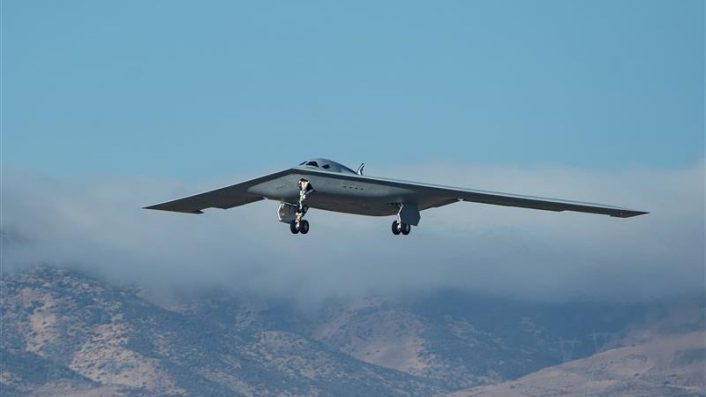
Previously, Air Force officials said the B-21 was expected to be ready for service around 2026 or 2027. With the latest press release, the service confirmed that the first B-21 is on track to be delivered to Ellsworth AFB, the type’s first operational base, in 2027.
Work is already underway at Ellsworth to prepare it for the arrival of the new platform, with multiple construction projects in progress to prepare the required infrastructure. Also among the projects was runway expansion work that required the base’s B-1B Lancer bombers to be temporarily moved to Grand Forks AFB, North Dakota.
The B-21 Raider
The B-21 Raider is the centerpiece of the U.S. Air Force’s long-range attack bomber program, developed by Northrop Grumman to provide a survivable, flexible and affordable platform capable of penetrating advanced defenses. It is the first new American bomber introduced in more than three decades, marking a generational leap aimed at ensuring America’s global strike capability well into the future.
The aircraft is dual-capable, designed to carry conventional and nuclear weapons, and will eventually replace the B-1B Lancer and B-2 Spirit fleets and complement the upgraded B-52J Stratofortress. The Raider is expected to form the backbone of the Air Force’s bomber force for decades to come.
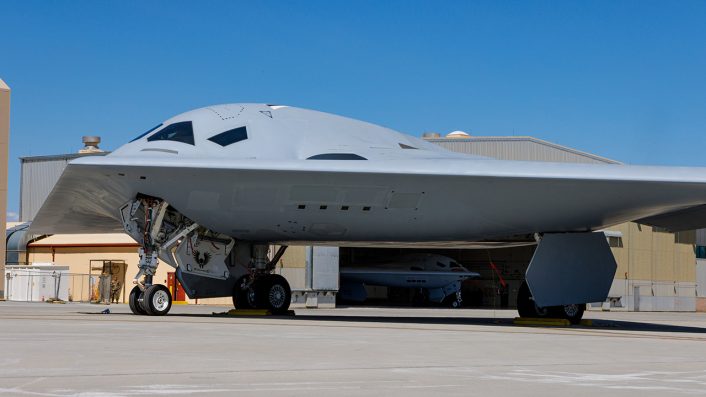
The US Air Force currently has orders for 100 B-21s. Northrop Grumman received the second low-cost initial production contract for the Raider in late 2024 and is now scaling up production to meet the service’s schedule, although recent reports have suggested production is ramping up. under budget and ahead of schedule.
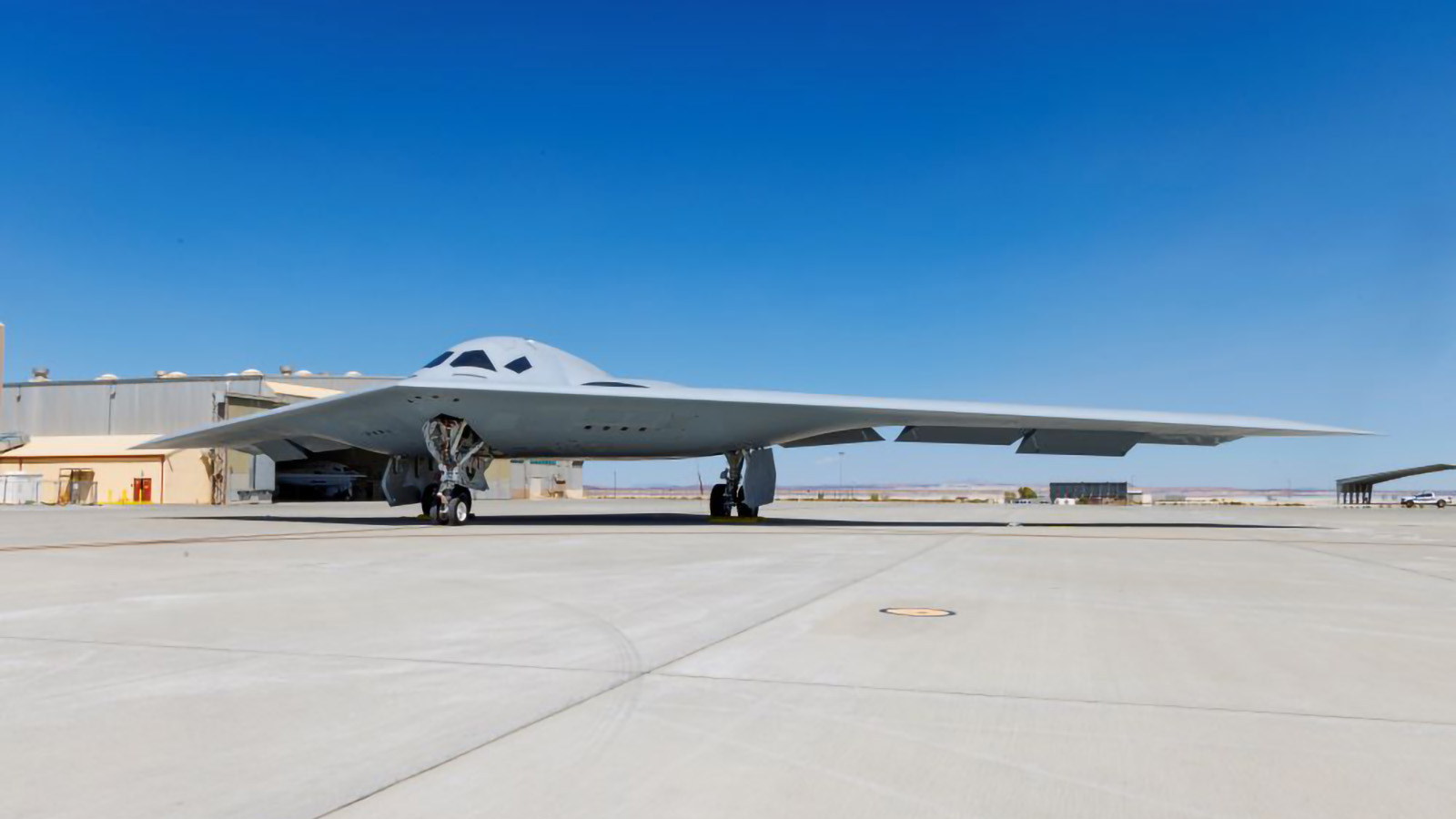
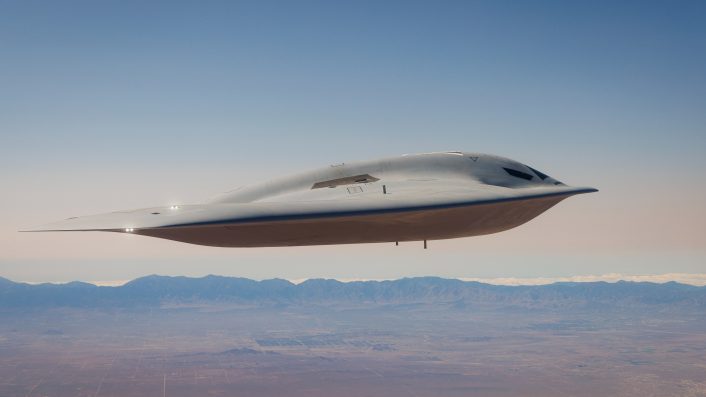
Visually, the B-21 shares the iconic flying wing configuration of the B-2, but closer examination reveals a number of improvements that reflect both advances in stealth technology and lessons learned from previous programs. Among the most notable features are recessed, combined engine inlets designed to reduce the radar cross section, narrower and more arched cockpit side windows, and main landing gear that adopts a simpler two-wheel configuration.
Northrop Grumman and the Air Force have emphasized that the most significant innovations are integrated into aircraft systems and materials rather than radical aerodynamic changes. The Raider incorporates a new generation of low-observable coatings and composite materials intended to improve durability and reduce the extensive maintenance historically associated with stealth aircraft.
Its avionics are based on an open systems architecture, allowing new sensors, weapons and mission systems to be integrated more quickly and cost-effectively than previous platforms. The aircraft is also designed from the beginning to operate as part of a larger networked force, capable of sharing data with other platforms and potentially controlling unmanned systems in future concepts of operations.