
The big picture
The Caribbean nation is mired in an increasingly deepening security, humanitarian and governance crisis.
Armed gangs control large areas of the capital, Port-au-Prince, and beyond, displacing families and restricting access to schools, healthcare and basic services.
Poverty is worsening for the most vulnerable families and children are increasingly susceptible to gang recruitment to make money.
A roadblock is set up in a Port-au-Prince neighborhood in an attempt to prevent kidnappings by gangs.
Services to protect children are overstretched or nonexistent, leaving children at risk in neighborhoods where gangs exert control.
What’s happening: Extortion and control
At least 26 gangs, with names such as 103 Zombies, Village de Dieu, Tokyo and Kraze Barye, operate in and around Port-au-Prince.
They control territory, violently extort communities, and fight beleaguered Haitian security forces for dominance.
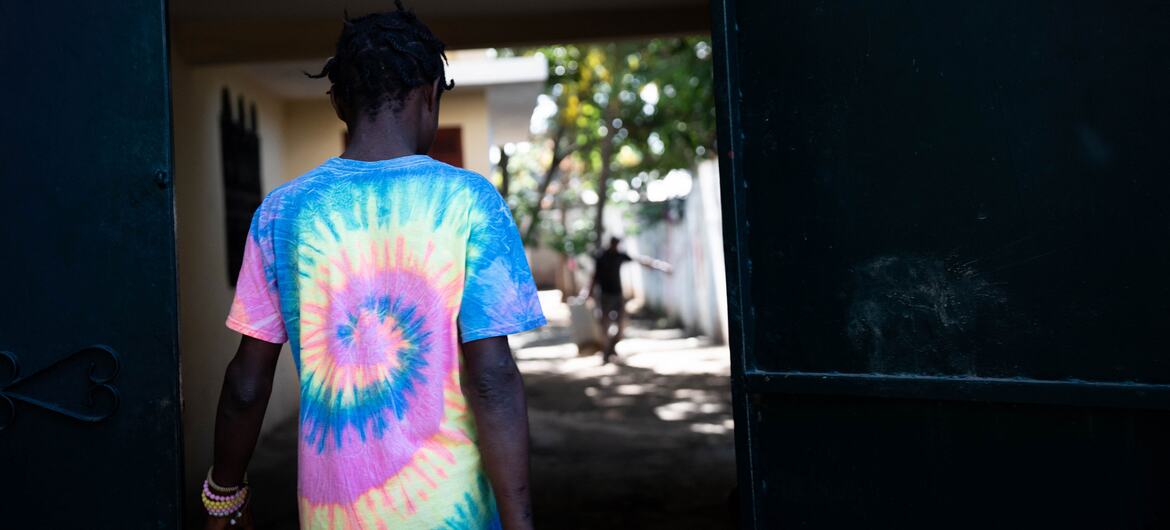
The UN says there has been an “alarming increase” in the recruitment of children into gangs in Haiti.
As fighting intensifies, gangs rely on a constant flow of recruits, including children, to maintain control.
Children are considered easier to manipulate and less likely to arouse suspicion.
Recruitment is no longer sporadic. In many areas, it is systematic.
The drivers: Poverty, coercion and survival.
Many children are driven by hunger, lack of schooling, and economic desperation to join gangs. Others are recruited by force or threatened.
In gang-controlled neighborhoods, the mostly armed members can appear to offer protection, belonging, or income where the state offers nothing.
Displacement and family separation increase the likelihood that children will join gangs.
Within the gangs: Children fulfill multiple functions.
They act as lookouts, messengers and informants, roles that exploit their age and ability to go unnoticed. Many are also directly involved in armed confrontations, checkpoints and kidnappings for ransom. One boy reported earning $1,000 a week in a country where many live below the poverty line.
Girls face increased risks, including sexual exploitation, rape, and forced relationships with gang members.
The price: severe and long-lasting
Recruited children face violence, trauma and abuse. Their education is disrupted and the long-term psychological damage can be profound.
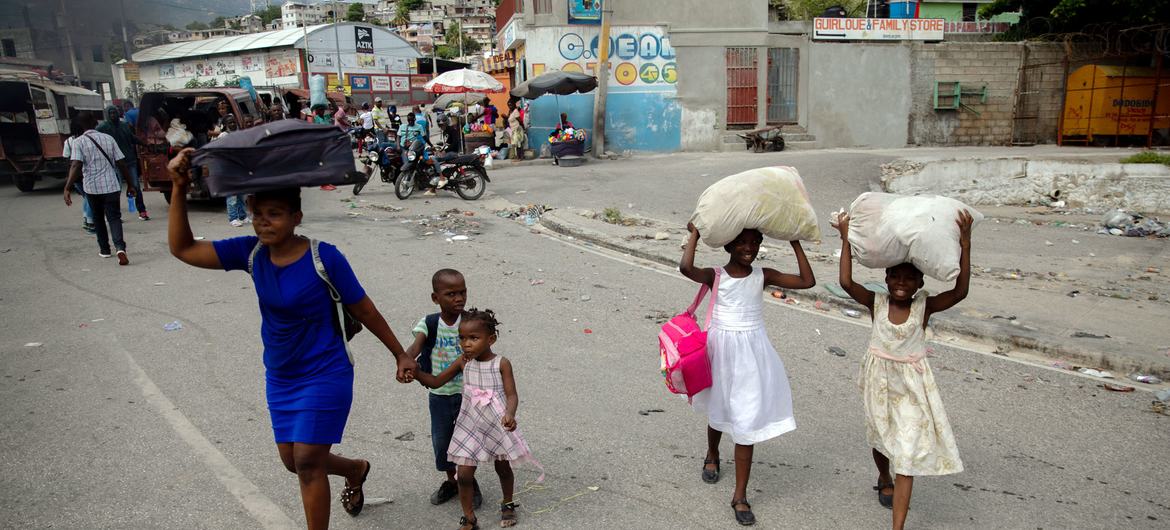
Thousands of families continue to flee their homes in Port-au-Prince due to gang-related violence.
Stigma and fear of retaliation complicate their reintegration into normal life. Especially for girls, sexual violence deepens their trauma and exclusion from society.
The cycle of violence can be self-perpetuating.
The Answer: Security Alone Is Not Enough
A new report released by the UN in Haiti calls for stronger child protection systems, restoring access to education and initiatives to prevent recruitment in gang-affected communities.
It highlights that families are key to preventing recruitment and suggests increasing resources for households, especially those headed by women, to protect children.
It is highlighted that schools play a crucial deterrent role by offering learning opportunities and protection from gang influence. The UN continues to support children’s attendance at school by establishing canteens, rehabilitating buildings, creating temporary learning spaces and cash transfers to families.
Support from local NGOs
Local organizations receive support from the UN to run vocational training programs that provide youth with employment opportunities and an alternative to gang life.
Combating gangs is also identified as a priority to stop their territorial expansion and their influence on local communities, especially young people.
The UN-backed Gang Suppression Force, established in 2025 and mandated to be 5,000 strong, is expected to play a key role.
The UN is also working to strengthen the Haitian justice system to combat child trafficking.