Courtney Subramanian, Courtney McBride and Jen Judson
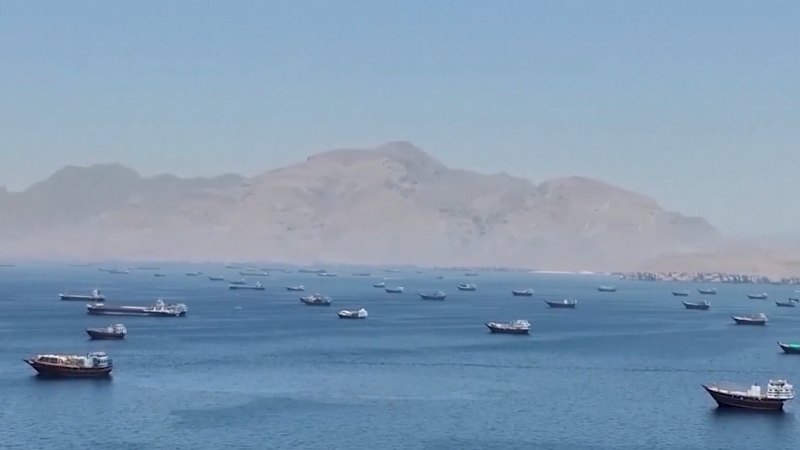
The United States said it expects Iran to respond to its latest proposal to end its war imminently, as clashes in the Strait of Hormuz threatened to further fracture a month-long ceasefire.
Iran has yet to give any indication whether it will accept President Donald Trump’s plan, sent Wednesday, which proposes that the Islamic Republic reopen the strait and that the United States end a blockade of Iranian ports over the next month.
Tehran’s response is “under review,” Foreign Ministry spokesman Esmail Baghaei told the semi-official Tasnim news agency, without giving a timetable.
Responding to US attacks on two Iranian ships in the strait on Friday, Iranian Foreign Minister Abbas Araghchi accused Washington of opting for a “reckless military adventure” just when a peace deal seemed close.
Trump told reporters at the White House on Friday night (US time) that he was still waiting for a response “tonight.” Asked if Iran was intentionally delaying the process, he said: “We will know very soon.”
“We will take a different path if everything is not signed and settled,” Trump said.
“We can go back to Project Freedom if things don’t happen,” he added, referring to the brief US effort to break Iran’s maritime dominance and escort ships through the strait, “but it will be Project Freedom Plus, that is, Project Freedom plus other things.”
The one-page proposal implies that Iran’s acceptance would end the 10-week war, which has killed thousands of people across the Middle East and sent energy prices soaring, even though the two sides would still need to negotiate a deal on Iran’s nuclear program.
Oil rose as investors weighed whether new clashes would derail the fragile ceasefire. Global benchmark Brent crude closed at around US$101 ($139) a barrel, but still posted a weekly drop of around 6 per cent.
US Vice President JD Vance met with Qatar’s prime minister on Friday to discuss bilateral relations, the situation in Iran and regional security and stability, according to a Qatari readout of the meeting. The pair also discussed liquefied natural gas markets, according to a person familiar with the matter.
The White House and the vice president’s office did not immediately respond to requests for comment.
Qatar has served as a regional mediator between the United States and Iran. Axios previously reported on the meeting.
President under pressure
Trump faces intense domestic and international pressure to end the war, with Americans increasingly opposed to it and frustrated by rising oil prices.
China is among powers amplifying calls for an immediate reopening of the strait and an end to hostilities, ahead of a scheduled summit between President Xi Jinping and Trump in Beijing next week. Trump is expected to use the meeting to ask Xi to put pressure on Iran.
Without naming Trump, Xi last month criticized the US president’s failure to comply with international law as a “return to the law of the jungle.”
While China is pressuring Iranian officials to negotiate, it has refrained from doing more to help resolve a war that Beijing sees as Washington’s problem. In a meeting with Araghchi this week, Chinese Foreign Minister Wang Yi called for greater efforts to open the strait, but stressed that China supported Iran’s “legitimate right to the peaceful use of nuclear energy.”
Tensions worsened after a second day of fighting in the strait, with US forces carrying out airstrikes on two empty Iranian oil tankers. The ships were trying to break the blockade and enter one of the country’s ports, the US Central Command said.
In response, Araghchi posted on social media: “Every time a diplomatic solution is on the table, the United States opts for a reckless military adventure. Is it a crude pressure tactic? Or the result of a saboteur who once again misled the president into another quagmire?”
Iran’s Foreign Ministry said the skirmishes highlighted “the confusion and inability of the US ruling authorities to adequately understand the situation and find a reasonable solution to break the stalemate they themselves have created.”
Trump has threatened more intense attacks if Iran rejects his terms. Iran effectively closed the Strait of Hormuz, through which about a fifth of the world’s oil and liquefied natural gas normally flows, after war broke out with attacks by the United States and Israel in late February.
Bloomberg, Reuters
Get the story straight from our foreign correspondents on what’s making headlines around the world. Subscribe to our weekly What in the World newsletter.