The collapse of Spirit Airlines may indicate broader tension among low-cost carriers (LCCs), according to a report from aviation data platform IBA Insight.
Data from IBA’s Insight aviation intelligence platform found that in 2025, the airline reported a net loss of $2.8 billion, an EBIT margin of -23.6%. At the same time, it also experienced a widening gap between revenue per available seat kilometer (RASK) and cost per available seat kilometer (CASK) of -1.4 cents per ASK, highlighting the structurally negative unit economics before its collapse.
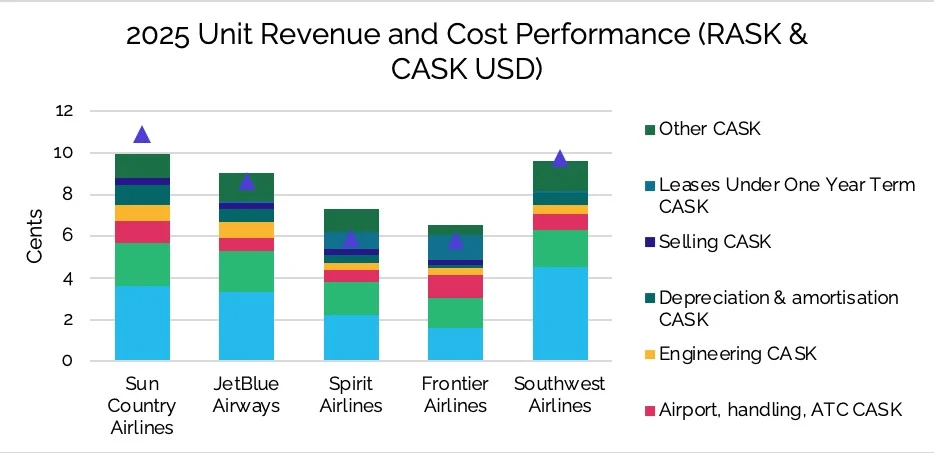
IBA’s analysis of the airline’s unit revenue and cost performance indicates that Spirit lost its cost advantage relative to its competitors in 2025, prior to recent fuel price increases. The chart above demonstrates that compared to other U.S. low-cost airlines (including Southwest Airlines, JetBlue Airways, Frontier Airlines, and Sun Country Airlines), Spirit’s cost base had moved closer to, and in the case of Frontier Airlines, surpassed, its competitors, eroding ULCC’s fundamental cost differential.
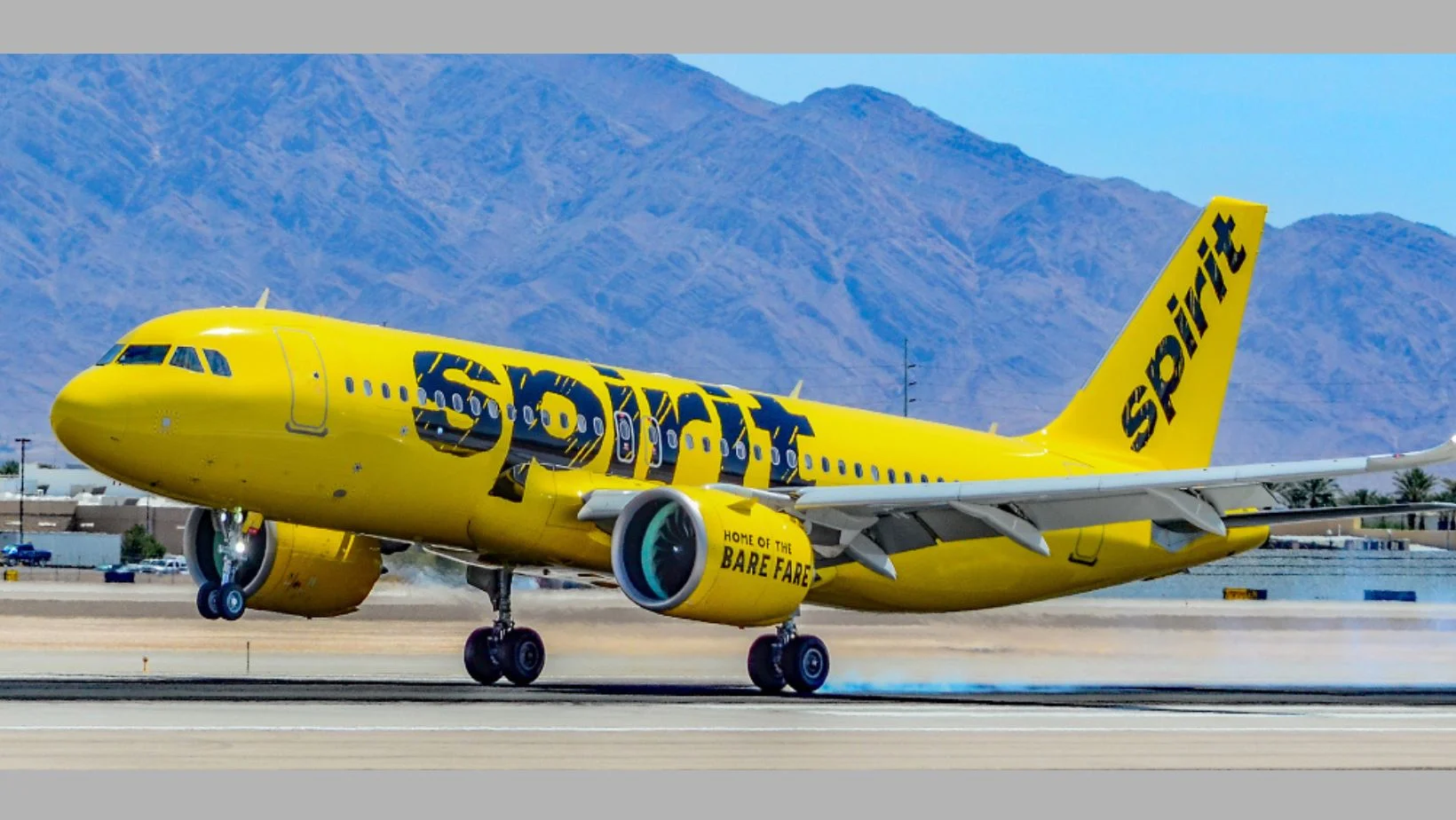
The assessment indicates that when Spirit Airlines ceased operations on May 2, it operated a fleet of 179 Airbus narrowbody aircraft with an average age of seven years. Approximately 83% of the fleet was leased.
READ: Spirit Airlines collapses as costs soar
The report highlights that while fuel acted as the final trigger, it was not the underlying cause of the airline’s collapse. Spirit’s financial position had already weakened significantly, with negative operating cash flow of $930 million and structurally negative unit margin, leaving little ability to absorb further increases in operating costs.
The strategic challenge for Spirit was that its ULCC model did not operate within a protected niche. The airline competed directly with traditional US carriers across much of its network, with only about 6% of capacity on dedicated routes, exposing it to sustained pricing pressure from airlines with stronger distribution, loyalty programs and schedules.
READ: Report finds Spirit Airlines has “significant structural and financial weaknesses”
IBA notes that the broader implication is that Spirit may not be an isolated case. Airlines with high leasing exposure, limited fuel coverage, weak liquidity and sustained negative unit economics are increasingly vulnerable in the current operating environment, particularly if fuel prices remain elevated or further external shocks emerge.
Dan Taylor, Head of Consulting at IBA, said: “The collapse of Spirit Airlines reflects a structural breakdown in its cost model rather than a single external shock. Airlines with heavily leased fleets and limited pricing power are particularly exposed when cost pressures increase, especially if the underlying unit economics have already deteriorated. In this environment, the combination of negative margins and limited financial flexibility can quickly become unsustainable.”