The twin-engine L-1011 was studied long before ETOPS reshaped aviation. Here’s why Lockheed’s TwinStar concept never flew.
The Lockheed L-1011 TriStar is remembered as one of the most technologically ambitious wide-body vehicles of its time. Its quiet cabin, advanced auto-landing capability, and distinctive S-shaped duct made it one of the most recognizable airliners of the 1970s and 1980s.
But did you know that the TriStar started out as a twin-engine concept?
In response to American Airlines’ 1966 requirement for a domestic widebody airliner, Southern California neighbors Lockheed and McDonnell Douglas jumped at the opportunity. As McDonnell Douglas began planning what would eventually become the DC-10, Lockheed initially studied a twin-jet design sometimes referred to in company materials as the CL-1011 (the “CL” stood for California Lockheed). The concept envisioned a short- to medium-haul twin-aisle aircraft powered by two high-bypass turbofans.
However, engine technology and regulatory limitations shaped the final configuration. Engine technology of the time was still maturing in terms of thrust and reliability. At the same time, the FAA’s “60-minute rule” limited twin-engine airplanes to routes within 60 minutes of a diversion airport. For airlines seeking maximum route flexibility, particularly on transcontinental or overwater segments, this restriction was significant. Performance requirements for hot, elevated airports and shorter runways also weighed heavily.
Lockheed eventually adopted a trijet configuration, adding the tail-mounted engine and S-duct that became the TriStar’s signature feature.
Revisiting the twin: studies from the early 1970s
By the early 1970s, engine performance had improved and airline economics were changing. Several sources indicate that Lockheed reviewed the idea of a twin-engine derivative of the TriStar.
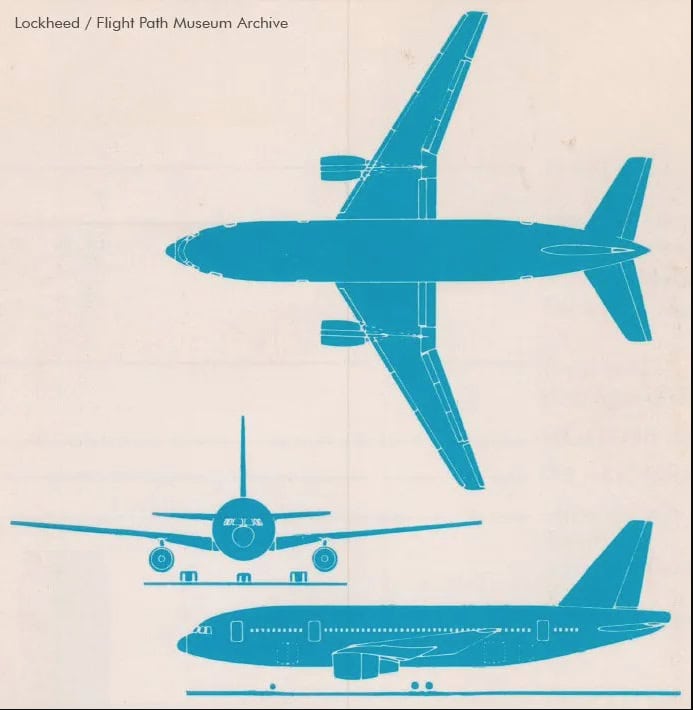
One study often referred to in enthusiast and archival discussions is the so-called CL-1600 or Model 1600. This appears to have explored the possibility of removing the mid-engine from the existing TriStar fuselage in search of lower operating costs and simplified maintenance. Accounts from the period suggest that the company believed that significant cost reductions could be achieved by eliminating an engine and its associated systems.
Some secondary sources suggest that such concepts may have been discussed informally with airlines such as Air Canada, although documentation of formal proposals remains limited in publicly accessible files.
These studies did not progress into a launched program. Removing the tail engine from an aircraft structurally and aerodynamically optimized around a trijet configuration posed non-trivial engineering challenges.
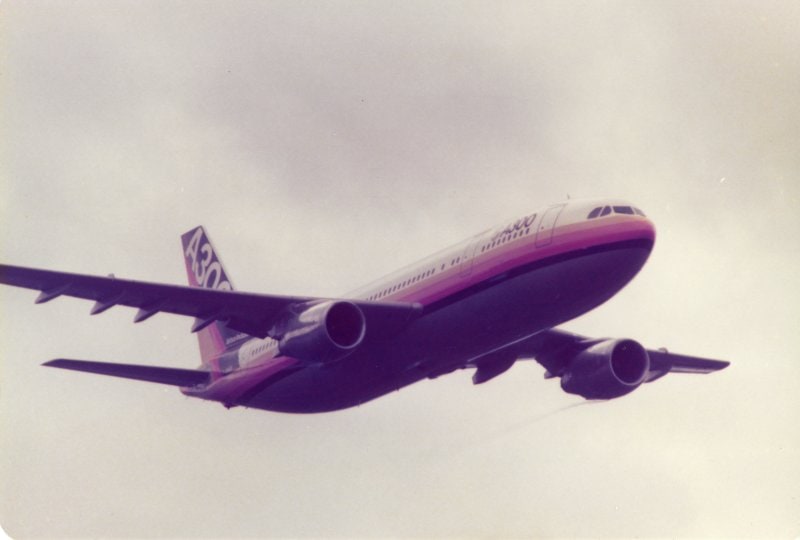
It is worth mentioning that while Lockheed was conceptualizing a twin-engine wide-body aircraft based on the TriStar, Airbus Industrie GIE (now Airbus) was launching its A300 program. The A300, which closely resembled what a twin-engine TriStar would have been, first flew in October 1971 and entered service with Air France in May 1974.
It would become the world’s first twin-engine, twin-aisle, wide-body airliner, and featured a 2-4-2 seating configuration. It carried between 250 and 300 passengers, except up to almost 370 passengers in a high-density configuration.
The L-1011-600: TwinStar or BiStar
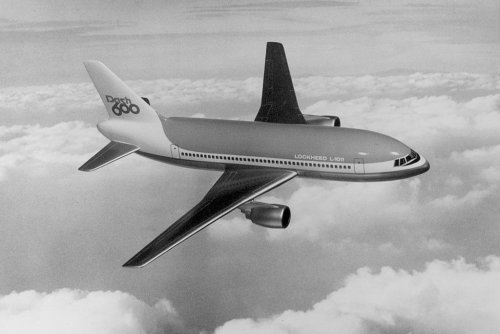
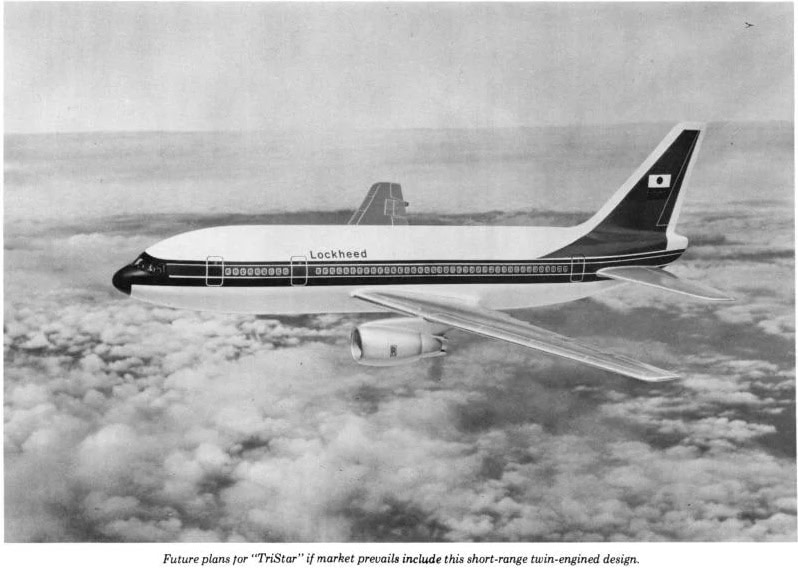
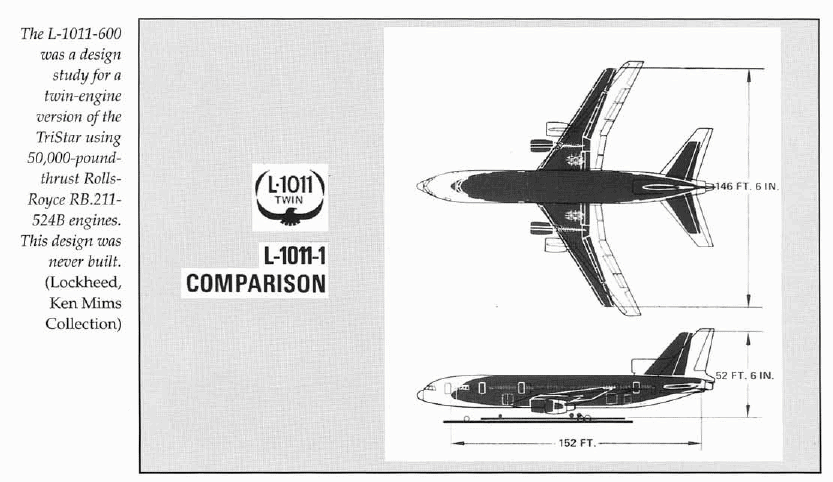
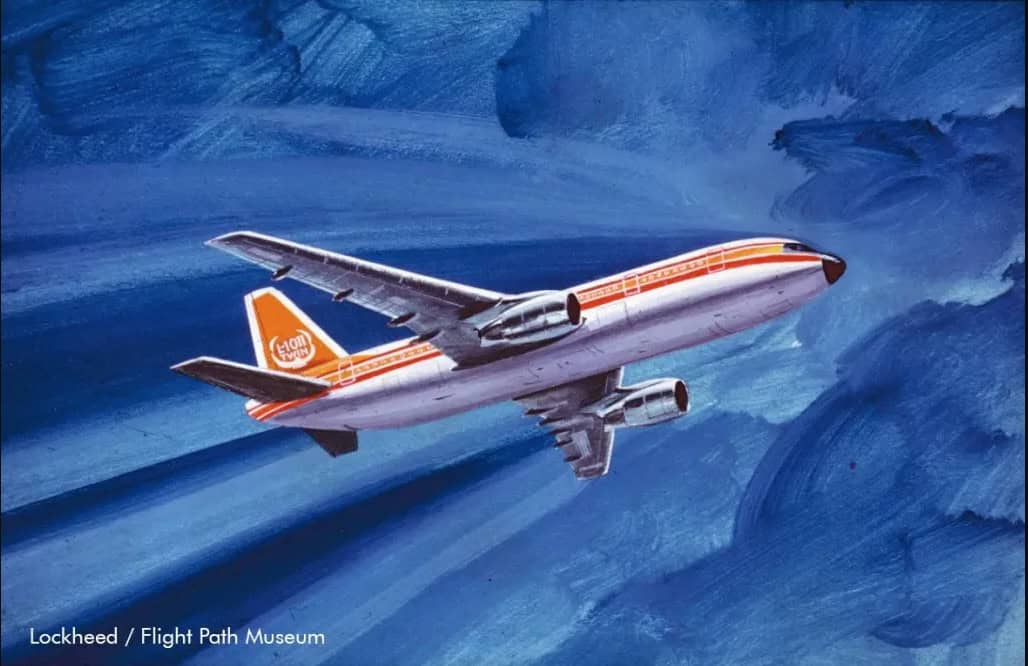
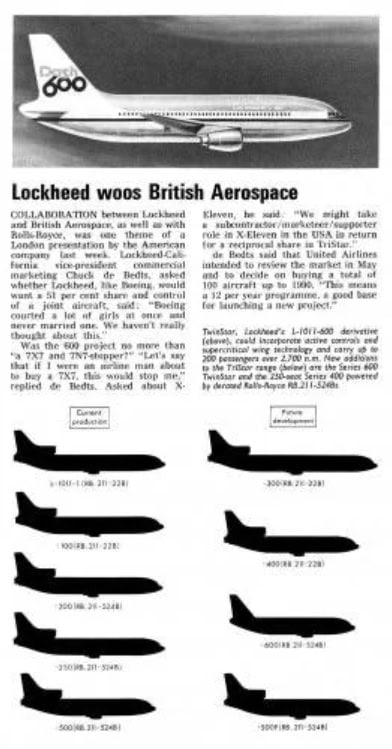
The more detailed twin-engine proposal associated with the TriStar is generally identified as the L-1011-600, sometimes referred to in period illustrations and later discussions as “TwinStar” or “BiStar”.
Developed in the mid-1970s as part of an extensive family of projected TriStar variants, the -600 was conceived as a twin-engine widebody optimized for shorter haul routes. The only member of the L-1011 family to reach production was the Lockheed L-1011-500.
The available summaries of the -600 concept describe:
- Two underwing Rolls-Royce RB211-524 series engines in the 50,000-pound thrust class
- Removal of the central tail motor.
- Wing refinements adapted to twinjet operation
- Alternative vertical stabilizer studies, including a faired S-duct configuration and a more conventional twinjet-style fin.
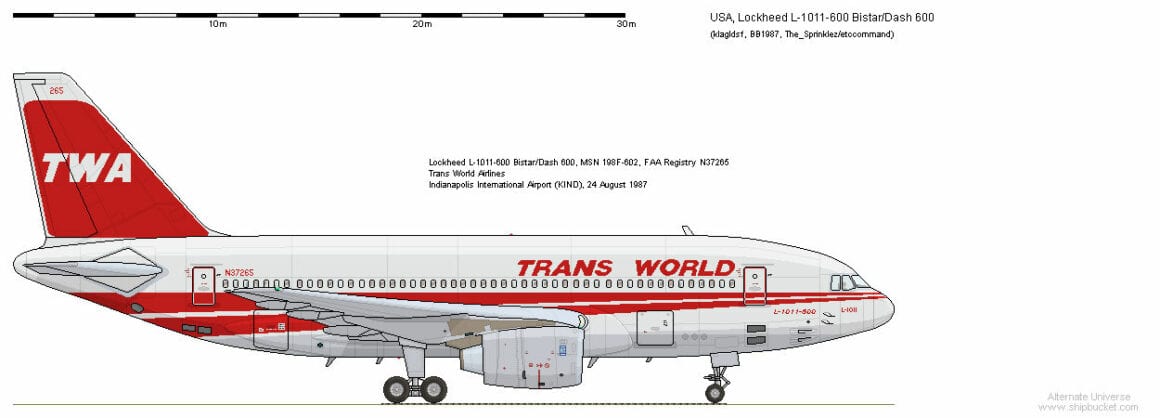
Proposed seats appear in most cases to be between 174 and 200 passengers, with a projected range of around 2,700 nautical miles. These figures should be understood as conceptual objectives and not as certified specifications.
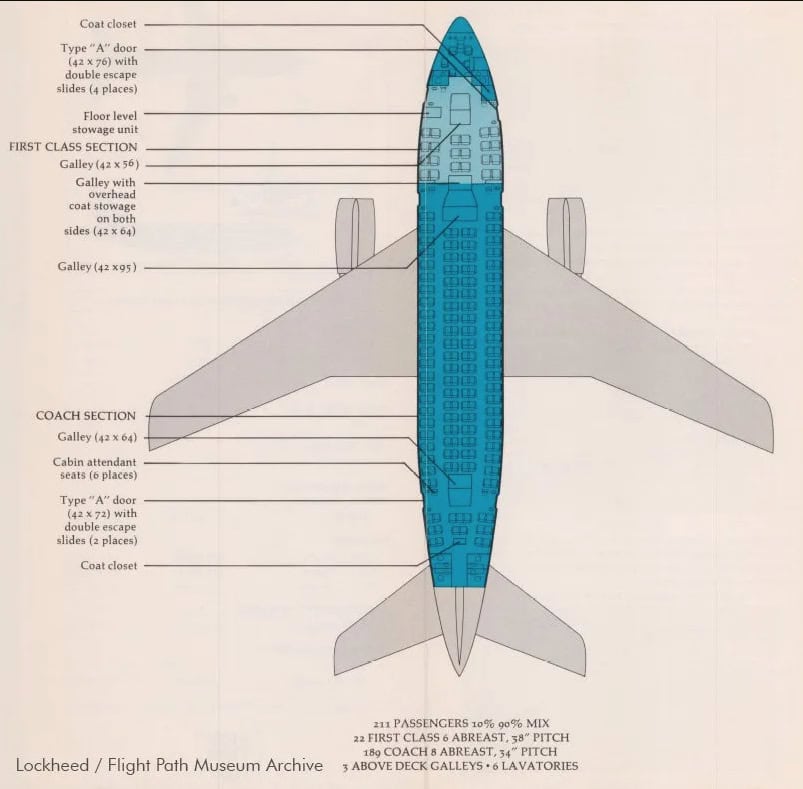
Artists’ renderings, three-view drawings, and desk models of the -600 circulated during the study period. However, no launch customer emerged and there is no evidence that the design has progressed beyond advanced study and marketing exploration.
So… Why wasn’t it built?
The reasons span two different eras of aviation development.
In the 1960s, regulatory constraints (such as the FAA’s “60-minute rule”) and the realities of engine performance favored three- and four-engine configurations for widebody aircraft. By the time engines like the RB211-524 made high-capacity twins more viable, the competitive landscape had changed dramatically.
The Airbus A300 had entered service. The Boeing 767 was on the horizon as a twin-cylinder engine optimized from the start to run on two engines. Meanwhile, the TriStar program had faced significant delays and financial strains, including the well-documented impact of the Rolls-Royce project. bankruptcy during engine development.
Airlines evaluating fleet decisions increasingly favored proven existing types or completely new-generation aircraft over heavily redesigned variants. Lockheed eventually decided to withdraw from the commercial aircraft market and concentrate on military programs.
As a result, no twin-engine L-1011 was ever built or flown. No production variant was certified. Subsequent speculative designations and engine upgrade scenarios remain hypothetical and are not supported by documented releases from the Lockheed program.
The legacy of the TriStar and its last flying example
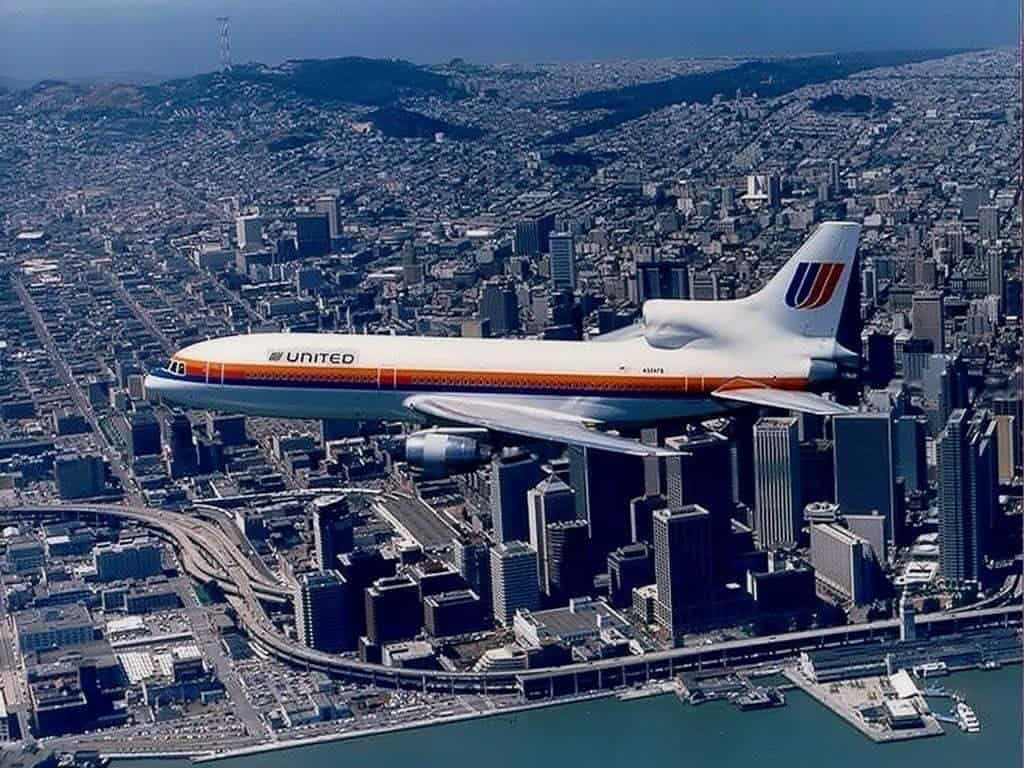
While the TwinStar never materialized, the TriStar left a notable legacy. It’s a legacy we’ve covered extensively here at Avgeekery.
MORE ABOUT THE TRISTAR ON AVGEEKERY
Built between 1968 and 1984, Lockheed produced about 250 of this type, operated by companies ranging from TWA and Delta to Cathay Pacific. Despite its advanced design, initial delays at engine suppliers and associated cost overruns slowed market entry and opened the door for competitors such as the McDonnell Douglas DC-10 to gain early sales. Lockheed never managed to reach the production volumes it needed to achieve commercial profitability and eventually withdrew from the civil aircraft industry.

That legacy continues in a unique way: one L-1011 remains airworthy today. The plane known as Astronomer – delivered in 1974 and originally operated by Air Canada – has been modified and operated as a pin-launched rocket mothership under companies now part of Northrop Grumman. Starting in 2026, Astronomer It is the only L-1011 that still flies and performs missions regularly from the Mojave Air and Space Port (MHV) in California, carrying Pegasus launch vehicles to altitude before launch.
A what if aviation?
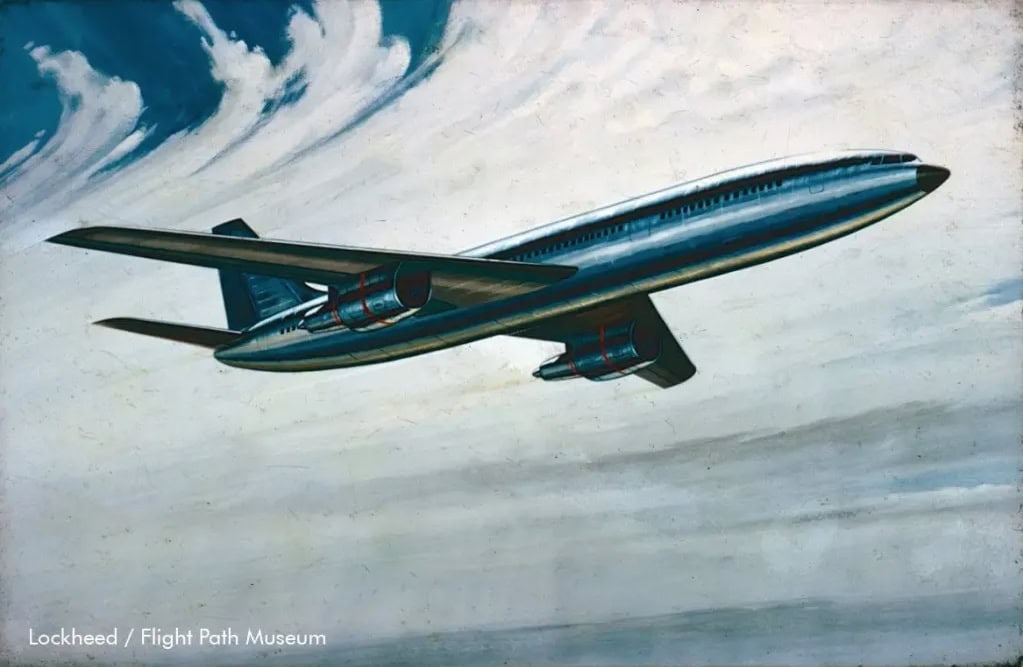
The twin-engine L-1011 remains one of commercial aviation’s most intriguing “what might have been” stories.
The concept was born during a time of transition in commercial aviation when widebody design philosophy was transitioning from three- and four-engine configurations toward the twin-engine dominance that would define later decades. The studies were real. The representations existed. Engineering was explored.
But the market moved faster than the concepts.
In the end, the TriStar’s third engine became its defining feature, and the twin remained a concept limited to drawings, desk models, and the margins of aviation history.