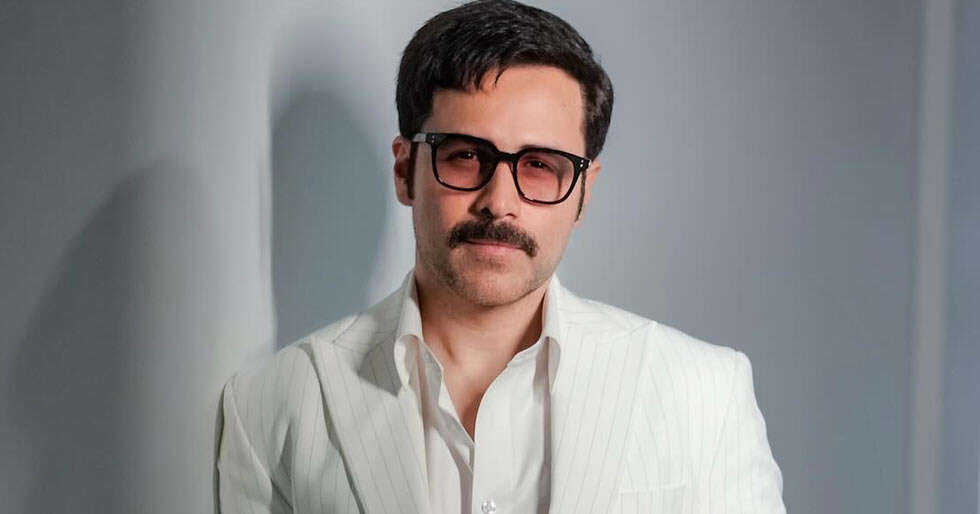
More than two decades into his career, Emraan Hashmi remains one of Bollywood’s most recognizable faces, but the serial kisser tag of his early years continues to follow him. In a recent interview with Hindustan Times, the Taskaree star spoke candidly about how the label came to define a phase of his journey, how he gravitated towards it and why he finally decided to move forward.
Hashmi made his acting debut with Footpath in 2003, but it was Murder (2004) that made him a household name. His relationship with Mallika Sherawat and the film’s bold romantic moments sparked widespread conversation, quickly cementing his bad boy image. As thrillers and sensual dramas followed, the actor became synonymous with intense roles and on-screen intimacy. A perception he admits was strategically amplified.
https://omg10.com/4/10736335
Looking back, Hashmi acknowledged that the image worked in his favor at the time. Talking about the same, he said, “I think this is not something that is very specific for me as an actor. It has happened to a lot of people in the West. You have seen comic actors who probably have trouble breaking through. The classic example is Jim Carey. So I think people like to place you.”
However, repetition eventually led to creative fatigue. Hashmi explained that audience preferences evolve every decade or so and that characters can only be expanded to a certain limit. He shared: “They were commercial successes and I was building up that image too. We were taking advantage of that through marketing. The press was involved.”
Realizing that his familiar mold had reached saturation, he felt it was essential to make a turn before becoming permanently locked in. That moment marked a conscious decision to reinvent himself.
The shift was reflected in projects like Jannat, Awarapan and Shanghai, where he explored layered character-based performances. Despite these efforts, Hashmi notes that the shadow of his former image still resurfaces, especially in public interactions.
Speaking about his desire to break away from this image, he explained: “After a decade of doing it, I realized that the audience changes. They say that every 10 to 14 years it changes. The next generation comes to the cinemas. It’s very important to reinvent yourself for that new audience. And every character, every mold, reaches the saturation point. You can only squeeze it out as much as possible. And I realized that I had squeezed it to the bottom, yes. So it was very important for me to change.”