We may receive a share of sales if you purchase a product through a link in this article.
There’s a moment in the season when the promise of a new beginning lingers, but real life has already begun to return. The next week comes into focus, routines are reaffirmed, and the simple logistics of daily life, like planning dinner, begin to ask for attention again.
Earlier this winter, I woke up to an unexpectedly quiet morning, the kind that disrupts the usual rhythm of the day. Classes were cancelled, the power went out, and the house felt colder than normal. At that moment, what I was most grateful for wasn’t the candles or the extra blankets: it was the refrigerator. The day before I had spent a couple of hours cooking simple building blocks: a pot of chicken and rice soup, washed and chopped vegetables, creamy hummus, and a batch of morning glory muffins ready to toast. Even with the interruption, they took care of us.
Simple meal prep tips for a quick start to the week
A friend once told me that “happiness is a refrigerator full of food” and I think about that often. It’s especially comforting to know that you’ve already made decisions that will help you in the future. Not in an overly ambitious or perfectly planned way, but in a calm, practical way that makes the rest of the week seem lighter.
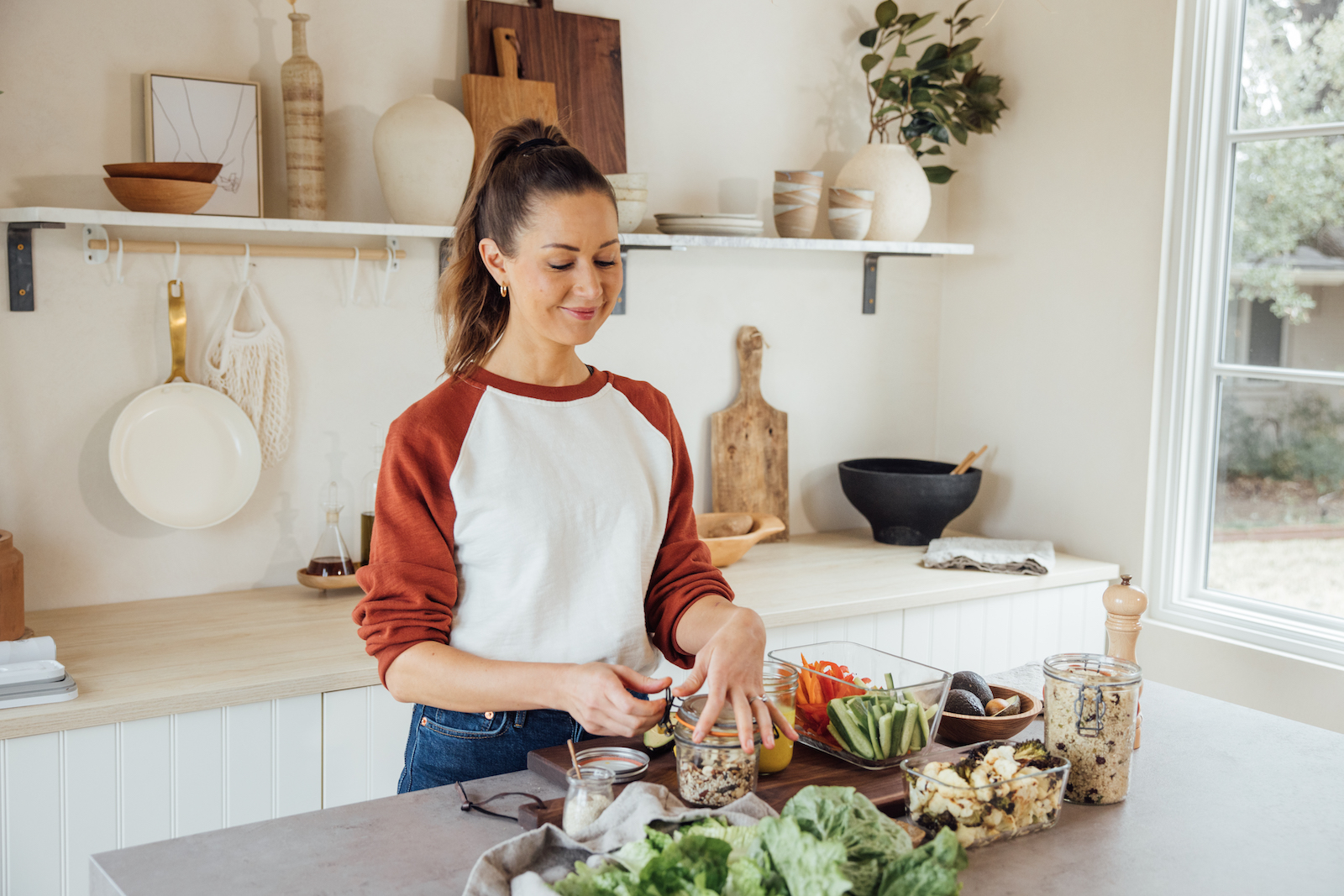
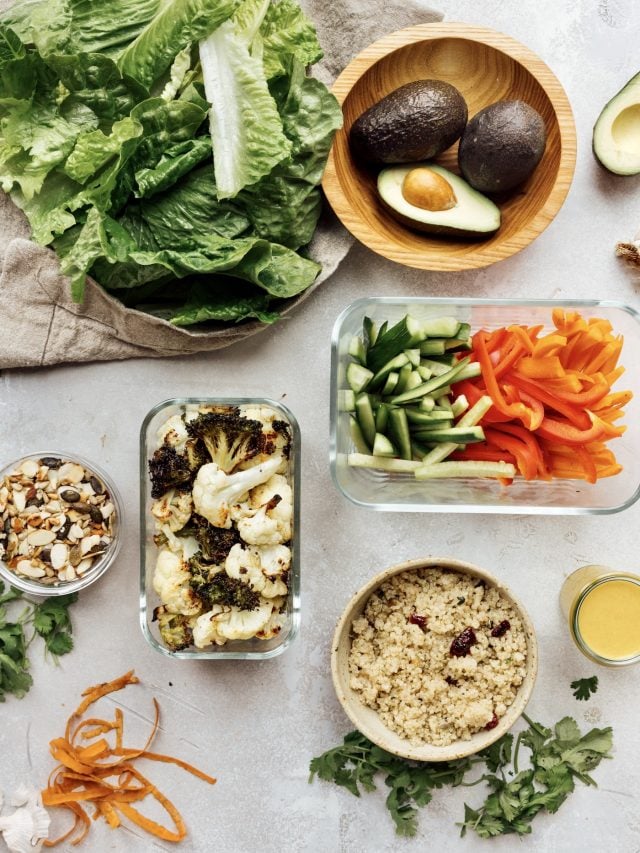
That’s the mindset behind my approach to easy meal prep tips. I don’t prepare full meals or follow a rigid plan. Instead, I spend about an hour creating a few versatile components that can be mixed, matched, and reinvented throughout the week. When dinner arrives, there’s no staring at the refrigerator wondering where to start—just simple building blocks that make it easy to whip up something nutritious.
These are the simple meal prep tips I return to again and again, especially during seasons when life feels full and energy is limited. It’s less about efficiency and more about care: taking a little time up front so my future can breathe a little easier.
Watch the video above to see exactly how I accomplish these five meal prep tasks in about an hour, then read on for exact instructions. But first, some tips for successful meal prepping:
5 Simple Meal Prep Tips for a Calmer Week
Before we dig in, here are some guiding principles that make this approach supportive, not overwhelming.
Get ready with the seasons
When deciding what to batch cook, I always start with what’s in season. Fresh lettuces, a brightly colored sweet potato, or perfectly ripe strawberries don’t take much effort to become something delicious. Seasonal ingredients tend to be tastier and more nutritious, which means less effort and more reward—exactly what I want when I cook ahead.

Make it a ritual, not a rush
If meal prepping seems like just another thing on your to-do list, it’s easy to skip. I found that treating it like a little ritual changes everything. I pour a glass of kombucha or wine, make a cup of tea, put on some music, and let myself enjoy the process. That feeling of opening the refrigerator later and seeing healthy options ready to go? It’s one of the simplest forms of self-care I know of.
Keep it simple
You don’t need fancy tools or hours in the kitchen; an hour or two is enough. Most weeks, all I use is a knife, a cutting board, and a baking sheet. While the vegetables roast and the grains simmer, I make a dressing or crunchy topping. Over time, you find your rhythm and the whole process begins to feel almost automatic.
Some friendly reminders
- Clean as you go – makes everything seem more manageable.
- Write a brief plan before you start so you don’t make decisions on the fly.
- Even preparing one or two The components make a noticeable difference. Do what you can.
These small changes are what make simple meal prep tips really stick: less pressure, more benefits, and a lighter week because of it.
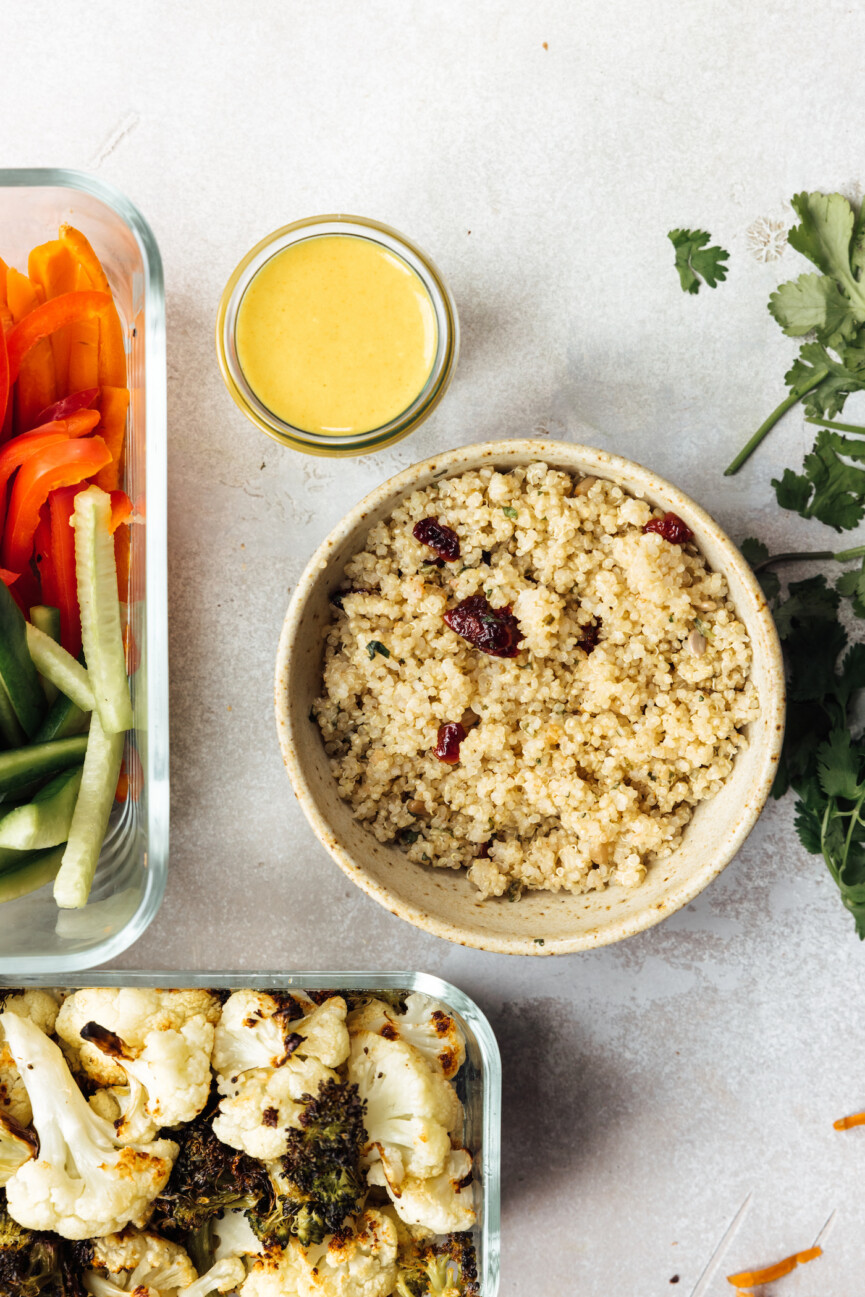
cook grains
A container of cooked cereal is one of the most versatile things you can keep in your refrigerator. They work as a side to any protein, form the base of cereal bowls, can be topped with an egg for a quick lunch or even warmed up with cinnamon nut milk for breakfast.
This week I’m using quinoa (I love its chewy texture and plant-based protein), but farro, buckwheat, rice, or amaranth work just as well.
How I cook quinoa:
- Rinse 1 cup quinoa in a fine mesh strainer and transfer to a small saucepan.
- Add 1 cup water and a pinch of salt; bring to a boil.
- Reduce heat to low, cover and simmer for about 20 minutes, fluffing halfway through.
- Once cooked, place a folded tea towel between the pot and the lid while it cools to absorb excess moisture.
Cooked quinoa keeps in the refrigerator for about five days. If I’m making more, I’ll freeze it on a baking sheet and then transfer it to a freezer-safe container – future dinners will be easy.
Roast the vegetables
Almost any vegetable improves with a trip to a hot oven. Roasting concentrates the flavor and adds that caramelized touch that makes simple meals satisfying.
Some of my favorite vegetables:
- yams
- Broccoli or cauliflower
- pumpkin
- beet
- Baby red potatoes
- Cabbage or Brussels sprouts
- Tomatoes or eggplants
I keep things interesting by changing the seasoning: taco spice one week, harissa or infused vinegar the next, or just olive oil, salt, and pepper. Once roasted, these vegetables easily slide into salads, bowls, tacos, and sandwiches all week long.
My basic roasting method:
- Drizzle with olive oil, season well and roast until caramelized and tender.
- Preheat oven to 400°F.
- Spread the vegetables on a parchment paper-lined baking sheet, leaving room for them to roast (not steam).
make a dressing or sauce
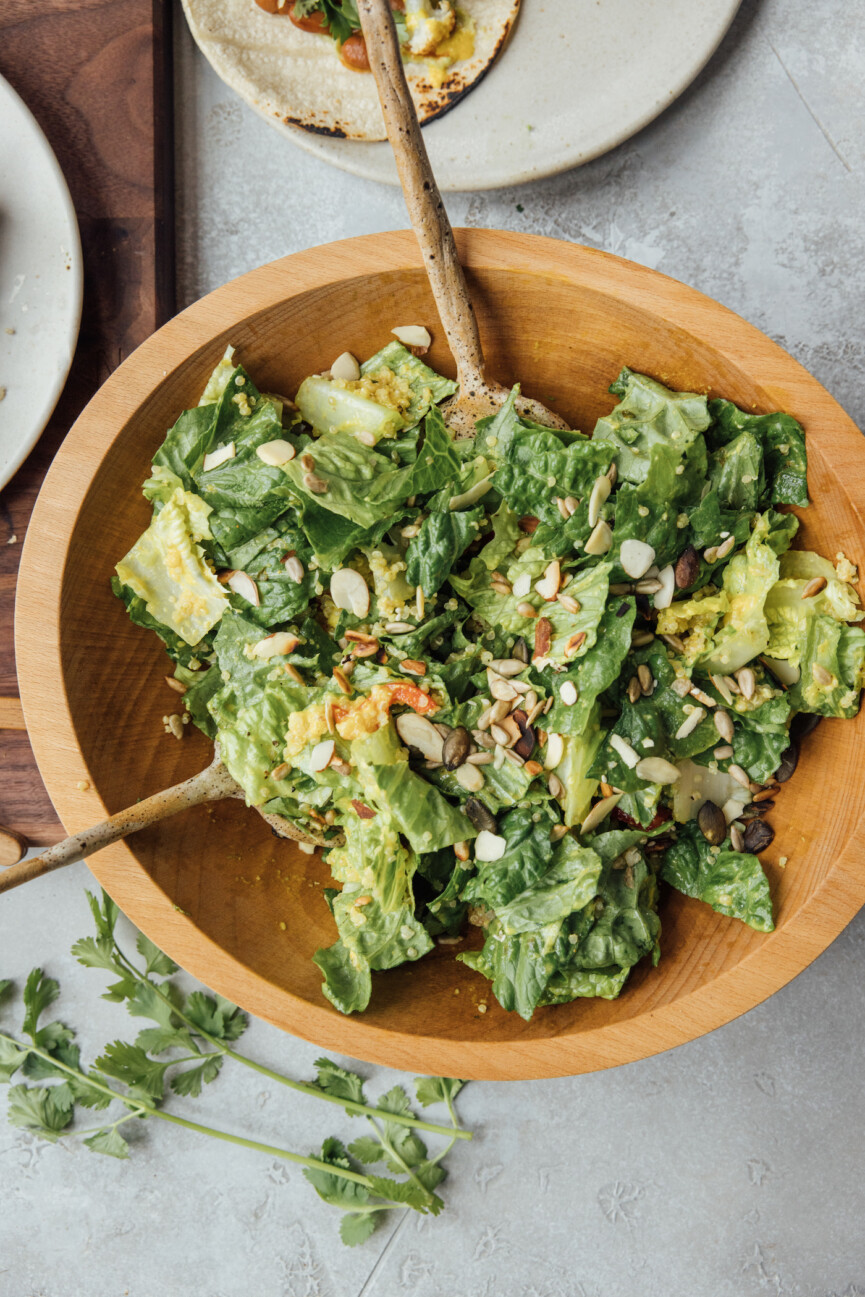
This is the step that gives life to everything. A good dressing turns grains and vegetables into something palatable, and having one ready means you’re never far away from enjoying a great meal.
This week I’m making my favorite turmeric vinaigrette. It comes together in minutes and works equally well in salads, drizzled over roasted vegetables, or as a dip.
Mix together:
- 1 shallot, peeled and cut in half
- 1 clove of garlic
- 2 tablespoons apple cider vinegar
- 2 tablespoons warm water
- 2 teaspoons Dijon mustard
- a splash of honey
- 1 teaspoon ground turmeric
- Large pinch of salt and pepper
- ½ cup extra virgin olive oil
Blend until smooth and store in a glass jar in the refrigerator.
Prepare vegetable salad and raw vegetables
I’m much more likely to eat vegetables when they’re already washed and ready, and the same goes for my kids. I keep a container of chopped carrots, cucumbers, and bell peppers in the refrigerator so that when snack time rolls around, there’s an easy yes waiting.
Preparing everything at once also saves a lot of mental energy during the week. After going to the supermarket, I will:
- Wash and dry the lettuce thoroughly in a salad spinner, then store it with paper towels in the crisper drawer.
- Peel and chop raw vegetables so they are ready for quick lunches, snacks, or salads.
It’s a small effort that pays off throughout the week.
make a crunchy seed mix
Crunch makes everything better. I love having a simple seed mix on hand to sprinkle on salads, bowls, or roasted vegetables; It adds texture and just enough interest to keep meals from feeling repetitive.
This mix is infinitely adaptable. Sometimes I add maple syrup or citrus zest, but this week I’m keeping it savory.
How I do it:
- Toast the pumpkin seeds, sliced almonds, and sunflower seeds in a small skillet over low heat.
- Once fragrant, add sesame seeds, a pinch of sugar, salt and coriander.
- Toast until lightly browned, then transfer to a jar and store in the refrigerator.
The takeaway
Batch cooking like this isn’t about perfection or rigid plans, but about preparing with care. Spending a little time on initial preparation creates space during the week to breathe, adjust, and enjoy meals without stress. When your refrigerator is stocked with simple, nutritious essentials, dinner becomes a stress-free addition to your day. And in times when life feels full, that kind of peace of mind can make all the difference.
This post was last updated on January 11, 2026 to include new insights.