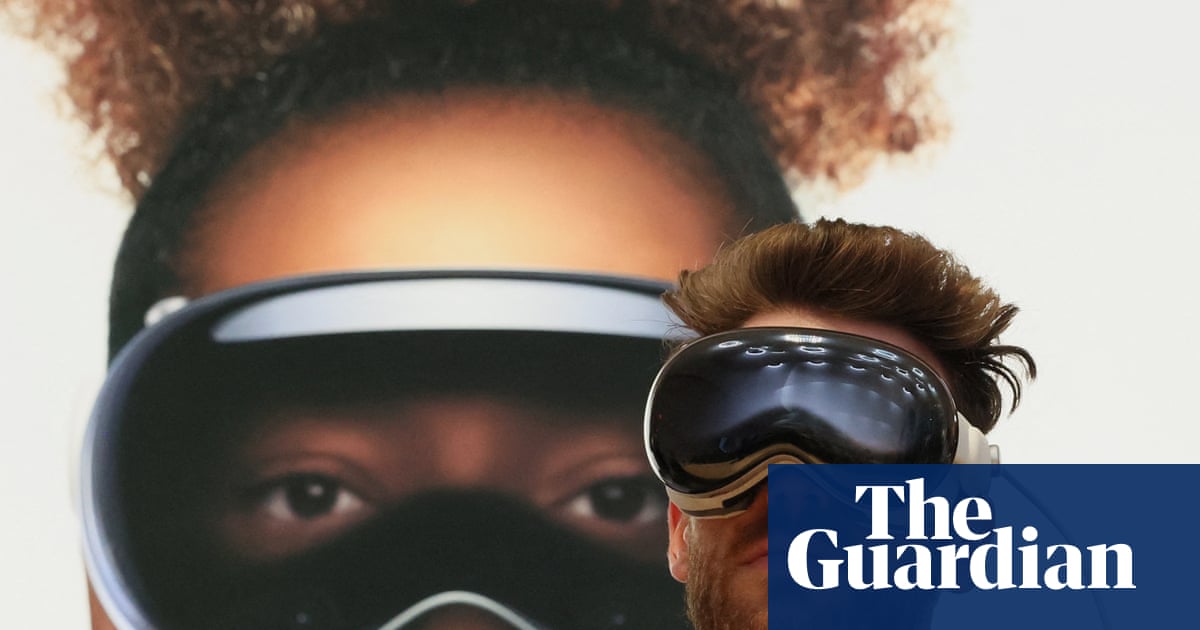
Poor sales have reportedly forced Apple to cut production of Vision Pro headsets that it hoped would herald a new era in “spatial computing.”
The technology company also cut Vision Pro marketing by more than 95% last year, according to market intelligence group Sensor Tower in figures first reported by financial time.
Apple continues to sell iPhones, iPads and laptops by the millions each quarter, but analysts say sales of the Vision Pro headphones, which cost at least £3,199 ($3,499) each, have been sluggish.
Apple has not published sales figures for the device, but market research group International Data Corporation (IDC) estimates that it will have sold only 45,000 in the final quarter of last year.
IDC said Apple’s Chinese producer Luxshare had stopped production of the headphones in early 2025 and that Apple has not expanded direct sales beyond 13 select countries.
Counterpoint Research has predicted a 14% reduction in annual sales of virtual reality headsets.
The apparent failure of Vision Pro has echoes of the ill-fated Google Glass of 2013. Users were dismissed as social outcasts or “glassholes.”
Despite these setbacks, technology companies persist with smart glasses. Apple is expected to release a cheaper version of the Vision Pro later this year, but now the emphasis is on AI-enabled devices.
Reports in the tech press said that Apple had halted its next planned iteration of virtual reality in favor of wearable AI devices. Mark Zuckerberg’s Meta is also expected to scale back its plans for a “metaverse,” which includes its Quest virtual reality headset. They are less advanced than Apple’s product, but at £419 each they are considerably cheaper and have cornered 80% of the market.
Meta confirmed last month that it was “transferring some of our investments from the metaverse to AI glasses and other wearable devices.”
Apple has declined to comment on reports that it is scaling back virtual reality headsets.
If confirmed, the Vision Pro cuts would represent a rare commercial failure for an Apple product.
When it launched Vision Pro in 2023, Apple hoped the devices, which allow users to interact with apps using eye movements, would be as successful as Macs and iPhones. At the product launch, Apple CEO Tim Cook said: “Your environment becomes an infinite canvas…Vision Pro blends digital content into the space around us. It will introduce us to spatial computing.”
But consumers balked at the price, and critics complained that the devices were heavy, uncomfortable and little more than a gimmick. There was also alarm when users were filmed wearing the headphones while driving.
Even enthusiasts admit that headphones only have a specific appeal and that the experience of using them can be better. isolate yourself from other people.
The limited number of apps available compared to phones and tablets is also believed to have limited interest in the Vision Pro.
Morgan Stanley technology analyst Erik Woodring summarized their problems. “We can say that the cost, form factor and lack of native VisionOS apps are the reasons why the Vision Pro never sold widely,” he told the Financial Times.
Apple says there are 3,000 apps available for the Vision Pro headphones. This is a relatively small number compared to the proliferation after the launch of the iPhone in 2007.