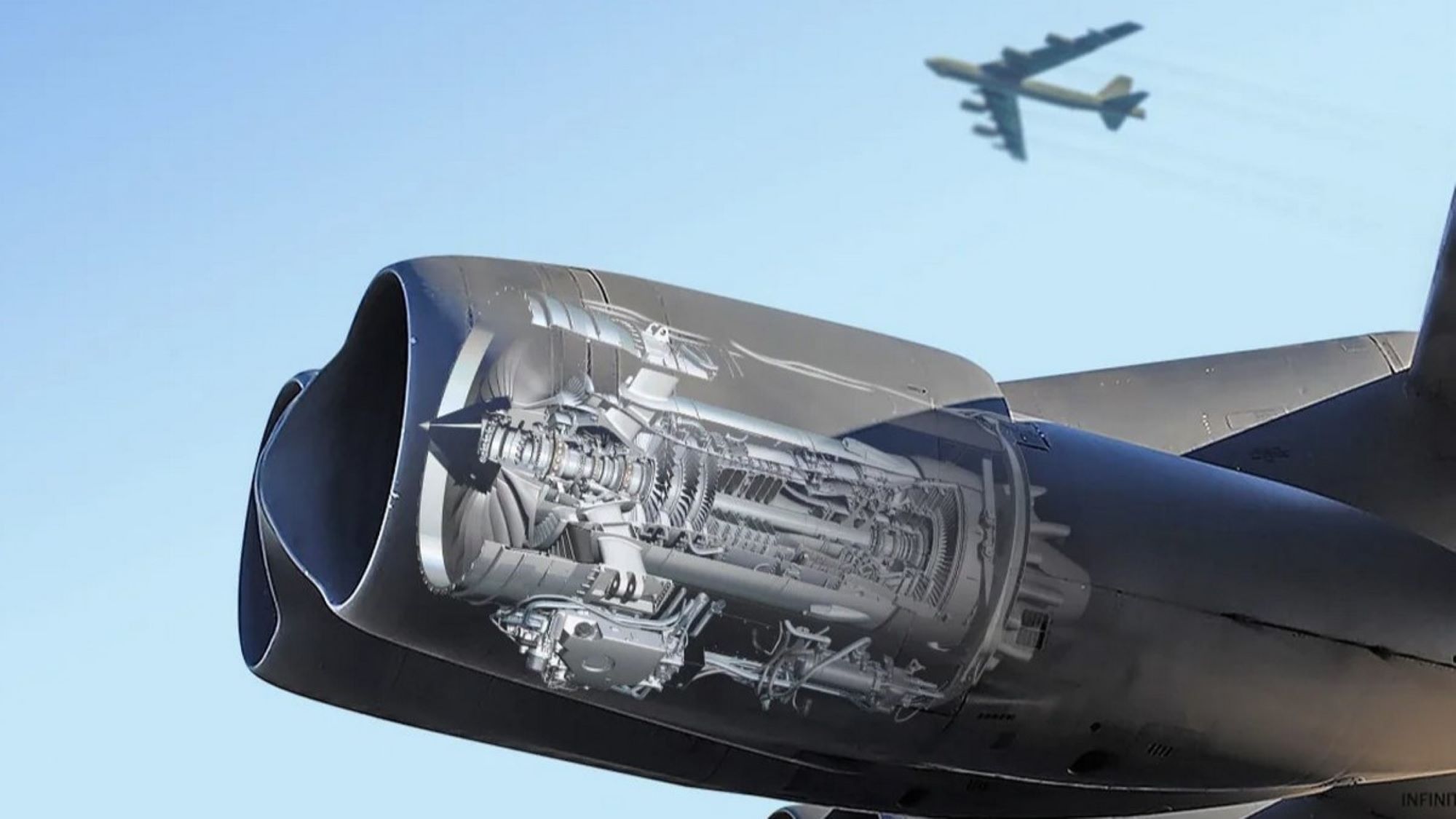
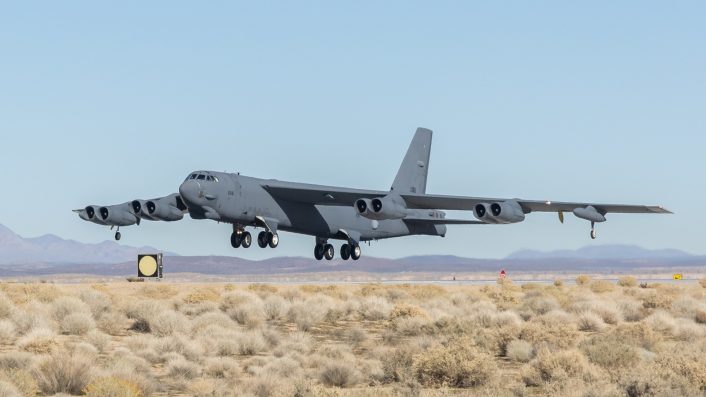
The new contract covers the post-critical design review phase of the B-52 Commercial Engine Replacement Program, which will replace the TF33 engines with the new F130s.
The US War Department awarded the December 23, 2024 a $2.04 billion task order to Boeing Defense Systems to continue work on the B-52 Commercial Engine Replacement Program (CERP). The contract covers the Post-Critical Design Review (CDR) phase of the program in which Rolls-Royce F130 engines will power the upgraded B-52J bomber.
Initial funding for the program will begin with $35.77 million in fiscal year 2026, covering research, development, testing and evaluation funds. Tinker AFB, Oklahoma, serves as the contracting activity for the project.
Under the award, Boeing will complete system integration, modification and testing work on two B-52 aircraft with the new engines and associated subsystems. Work, scheduled for completion May 31, 2033, will be performed at several locations, including Oklahoma City, Oklahoma; San Antonio, Texas; Seattle, Washington; and Indianapolis, Indiana.
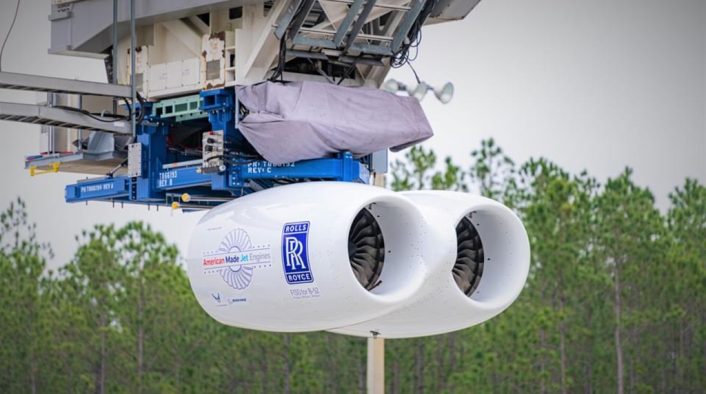
B-52J Upgrade Program with CERP and RMP
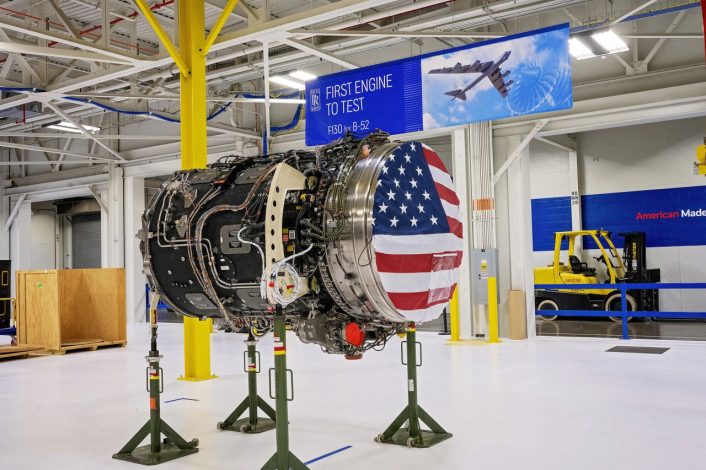
The CERP program is part of a broader effort that will upgrade the Air Force’s 76 B-52H Stratofortresses to the B-52J configuration, replacing the legacy but critical bombers’ eight out-of-production TF33 engines with eight Rolls-Royce F130s. The F130 completed its Critical Design Review (CDR) exactly one year ago, in mid-December 2024, with the final designs validated through review of analyses, simulations, schematics, software code and test results.
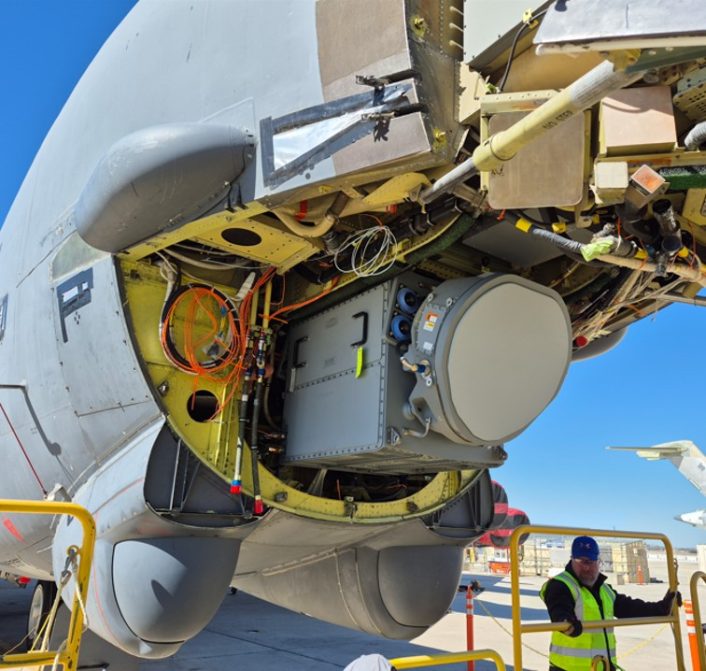
Another program within the broader effort is the B-52 Radar Modernization Program (RMP), which replaces the older AN/APQ-166 radars with the AN/APQ-188 Active Electronically Scanned Array (AESA) radar. The AN/APQ-188 is derived from the AN/APG-79 of the F/A-18E/F Super Hornet, with some other features found on the AN/APG-82 of the US Air Force F-15E and F-15EX.
A B-52 integrated with AN/APQ-188 was transported to Edwards Air Force Base, California, on Dec. 8, 2025, the base announced, as part of the RMP. The 49th Test and Evaluation Squadron at Barksdale AFB and the 419th TES at Edwards AFB will conduct extensive performance testing to validate the capability and performance parameters intended for the B-52J upgrade.
Together, the new radar and engine offer enhanced multi-mode radar features such as synthetic aperture scanning, indication of moving targets on the ground, air-to-air elemental detection, improved fuel efficiency, range and maintainability.
The B-52J program also involves an overall structural upgrade, a new suite of electronics, displays, navigation and avionics to keep the ‘BUFF’ bomber fleet in service through 2050. In the future, the Air Force intends to operate a two-aircraft strategic long-range bomber fleet with the B-52J and the incoming B-21 Raider, retiring the B-2 Spirit and B-1B Lancer.
Delays in CERP and RMP
The war zone has previously reported that the reengineering effort has exceeded deadlines, and operational use is now not expected before 2033, three years later than originally planned. The complete fleet restructuring may not be completed until 2036. Similarly, the RMP has also been hit by delays.
We previously reported here on The aviationist on the problems at the RMP: “Raytheon delivered the first radar to the Air Force almost two years ago, but flight testing, initially planned for fiscal year 2024, was postponed to fiscal year 2026. This delay also changed the expected initial operational capability from 2027 to a window between 2028 and 2030.”
CERP technical effort
The CERP program to modify and install the Rolls-Royce F130s on the two B-52Hs sees Boeing as the prime contractor, but requires extensive other technical infrastructure and material support from other defense suppliers for re-engineering, integration and subsequent testing with modification kits.
the original February 27, 2025 The Sources Sought synopsis notice, subsequently updated in March, April, May and July through the latest December 23, 2025, CERP award to Boeing, said:
“The B-52J CERP production phase requirements include: Procurement and/or production of aircraft components to support the installation of new engines and associated subsystems on the B-52 aircraft. (Engines will be provided separately by the Government). Construction, storage and delivery of aircraft modification kits to Tinker AFB or other designated locations, if necessary, as required during the production phase for up to 76 B-52H aircraft, including additional spare parts, tooling production and support equipment to support the facilities over a period of five to eight years, beginning in fiscal year 28.”
Boeing “will select suppliers of aircraft modification components; develop aircraft modification installation drawings; and install the modification on two B-52 test aircraft.” It also lists the “planned aircraft modification kits” and their original equipment manufacturers:
- Engine struts (OEM Spirit Aero)
- Integrated Drive Generators (OEM Collins)
- Hydraulic pumps (OEM Parker)
- Nacelles and engine fairings (OEM Spirit Aero)
- Generator Control Units (OEM Collins)
- Hydraulic tanks
- Engine throttle controls
- Power Distribution Boxes (OEM Boeing)
- Power wiring
- Engine Start Switches
- Air starting auxiliary unit (OEM Honeywell)
- Control wiring
- Engine Instrument Display (OEM L3 Collins)
- Air Start Auxiliary Unit Controller
- Fixing hardware
- Engine Data Concentrator Units (OEM Boeing)
- Hydraulic panel in cabin.
- Pneumatic precoolers
- Electrical panel in cabin.
- Pneumatic components and ducts.
- Anti-icing systems (OEM Liebherr)
- Air Data System Probes (OEM Collins Rosemont)
- True Air Temperature Sensors (OEM Collins Rosemont)