What you should know
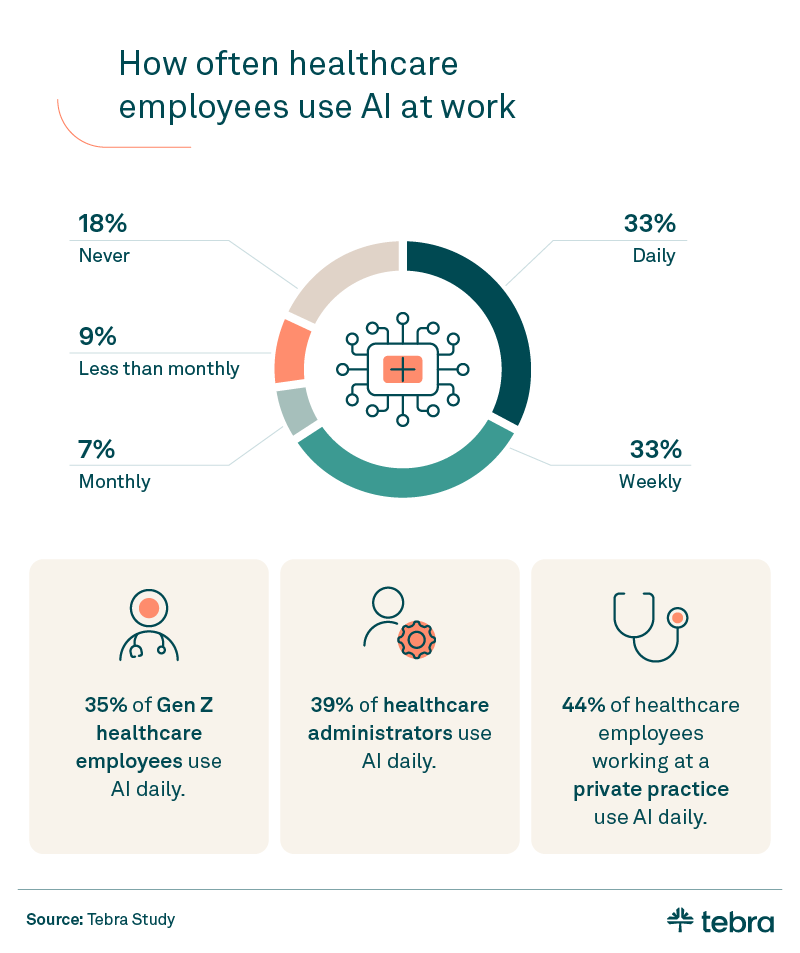
- The benefit: TO new surveyand of tebra reveals that 3 in 5 healthcare employees report that ChatGPT has reduced burnout by streamlining documentation and communication. In private practices, 44% of staff currently use AI daily.
- The Dependency: Efficiency has a psychological cost. 14% of respondents admit to feeling “emotionally dependent” on AI (checking it impulsively or feeling anxious without it), and 47% have used it for emotional processing.
- The risk: AI is now mission-critical infrastructure. 13% of staff say an AI outage is more stressful than an EHR failure, yet only 27% of organizations have a documented backup plan for when these tools stop working.
The antidote to burnout
First, the good news: AI is doing exactly what it promised to do. Three in five (60%) healthcare employees report that tools like ChatGPT have helped reduce burnout. By offloading “pajama time” tasks—documentation, note-taking, and patient communication—AI has become a vital pressure valve for an overworked industry.
Adoption is particularly aggressive in the independent sector. 44% of private practice employees use AI daily, compared to 33% of the general healthcare workforce. For these smaller organizations, AI is not just a tool; is the extra staff member they couldn’t afford to hire.
The “shadow” support system
However, the data reveal a complex psychological change. AI is not only used to compose emails; is being used to cope.
- 14% of employees admit to feeling “emotionally dependent” on AI, defined as controlling it impulsively or feeling anxious without access.
- 47% They have used ChatGPT or similar tools for “emotional processing.”
- 27% They have deleted entries for fear of being judged or for privacy reasons.
This suggests that for a significant minority of the workforce, AI has moved from productivity software to digital confidant. While 42% are aware of OpenAI’s new mental health barriers, less than half believe they go far enough to protect vulnerable users.
The new single point of failure
Perhaps the most alarming finding for IT leaders is the fragility of this new workflow. As AI becomes integrated into the daily rhythm, it becomes a single point of failure. 13% of respondents said an AI tool outage is more stressful than an electronic health record (EHR) failure. Even more surprising is that 12% consider an AI interruption to be more disruptive than a colleague calling out that they are sick. Despite this, preparation is dangerously low. Only 27% of healthcare employees know of a documented backup plan in case their AI tools go offline.